( @cdpony I’m tagging you because you were kind enough to tag me first to continue this conversation and because I used the first paragraph of your post as a structure for my responses. If you’re interested I’ve already made a post regarding the usefulness/downsides of including ages on blogs, adult responsibility, and teen knowledge.)
And for anyone else interested in learning a bit about fandom history:
Hello! Let’s start by tackling this first misconception, that “The history of adults in fandom spaces is not a good one.” Which, to be fair, isn’t technically a misconception so much as a pessimistic acknowledgement of a necessity, because fandom does not exist without adults. Full stop. To provide just a few and broad examples…
It was an adult by the name of Virgil who gave us the Aeneid, what we now view as one of the first transformative works (of The Iliad), and that’s if we’re not counting both The Iliad and The Odyssey as co-authored, fixed texts of whole generations of mythology. Sort of like the ancient greek equivalent of you watching all your friends on discord spew out ideas and headcanons before you consolidate it all into one fic. Only, you know, it took longer.
It was another adult, Johann Wolfgang, who wrote The Sorrows of Young Werther, a book so influential that it inspired not only a number of derivative works, but numerous suicides as well. This was one of the most well known precursors to modern day “celebrity culture,” wherein readers began emulating fictional characters to an alarming degree.
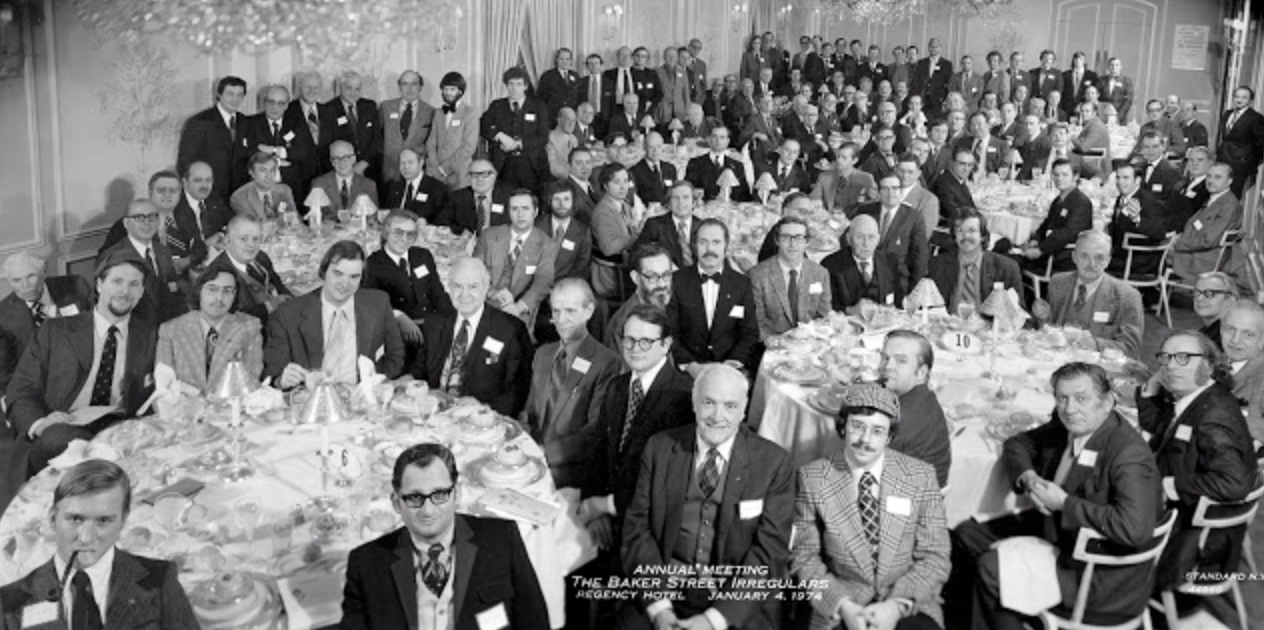
Sherlock Holmes needs no introduction. The Strand Magazine aimed for a family readership, but it was adults who somewhat apocryphally wore black armbands to mourn Holmes’ passing and who wrote - and still do - more pastiches than my poor bank account can keep up with.
(1974 meeting of the Baker Street Irregulars)
It was the science fiction magazine Amazing Stories that helped start bringing fans together in an organized manner, including a letter page where long-time readers could contact one another.
It was adults (primarily women) who organized letter campaigns to keep Star Trek on air, mailing groups to keep far-flung fans informed, fanzines to share their work, and conventions to spread their love of the show.