There’s always a lot of talk about feedback in fandom - how important feedback is as a driving force behind creativity, how much feedback people should leave, what kind of feedback is appropriate - and it made me wonder; how exactly did fic authors and fanartists get notes on their work before email or the internet existed?
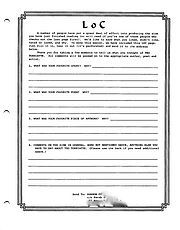
As it turns out, via a letter of comment or LoC*:
The above is the example of a formalized LoC, but many were informal: fans wrote letters to the publishers and editors of their favorite zines, which were in turn passed on to the creators of the work in question or were published in the next round of the zine (often in the back). There were debates about how to pronounce LoC much like our own ongoing gif debate:
“The letters were called LoCs, letters of comment, and few have ever agreed on how to pronounce the term. Some say “loke,” others, “lahk”; and some even speak out the letters, “el-oh- see”. (A situation very similar to the current controversy over how to say “.gif”. Is it gif as in “gift” or jif after the peanut butter? I’ve heard both sides claim that the inventor supports their interpretation.)” (from here)
And of course there were questions about what purpose it served, if any, to publish negative letters of comment. The discussion around negative feedback is still with us to this day.
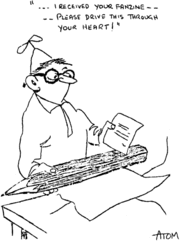
(Some LoC related humor by Arthur Thompson.)
Sometimes the zine publisher would forward the addresses of fans who wrote LoC’s (with permission) to the fanfic writer or fanartist so they could begin a correspondence.
If anyone who was active during this period of fannish history would like to add something to this post, I’d be very happy!
* All information, quotations and images taken from Fanlore.
I think what struck me when I starting reading the older zines and letterzines was how familiar the “good/bad feedback” arguments were. My favorite series of “LOC/review” discussions took place in a Starsky & Hutch letterzine from the 1980s. Several members wrote in complaining that critical discussions of stories would drive away new authors. Interestingly, for some fans, critique in an LOC was often considered more acceptable than writing a critical public “review” . But since some zines published LOCs, the line between the two blurred.
From 1982: “Judging from some of the comments in the last few issues of the l/zine, I’m not the only one who’s upset by the unnecessarily unkind and cruel reviews. I know everybody’s entitled to their opinions, but isn’t that what LoC’s are for? As opposed to reviews?… For God’s sake, reviewers, lighten up! …..[These harsh reviews] will discourage new writers… They’ll just opt to keep their stories to themselves. Even if they love and enjoy writing – as a hobby – they would not enjoy it any more if they did go to the expense and trouble of publishing only to have their work torn apart by shrill, thoughtless reviews. New writers should be so sensitive, you say, so easily discouraged? Face it, reviewers, whether you think they should be or not, I’m sure lots of them are. There’s probably a lot of fine stories out there that’ll never see the light of day, because the authors have been so intimidated by reviewers who could have just as easily stated their opinions in a much kinder and more constructive way.“