University of Iowa Libraries Begin to Digitize Decades of Fanzines
What a time to be alive!!!!
A note to media fans: the collection that is being digitized is a collection of amateur fanzines focusing on original science fiction and fantasy writing and not the type of fan fiction media fans have been producing for decades (fiction based on TV, movie and books using pre-existing characters). The Hevelin Collection has an awesome tumblr where you can follow along and see parts of the collection: http://hevelincollection.tumblr.com/
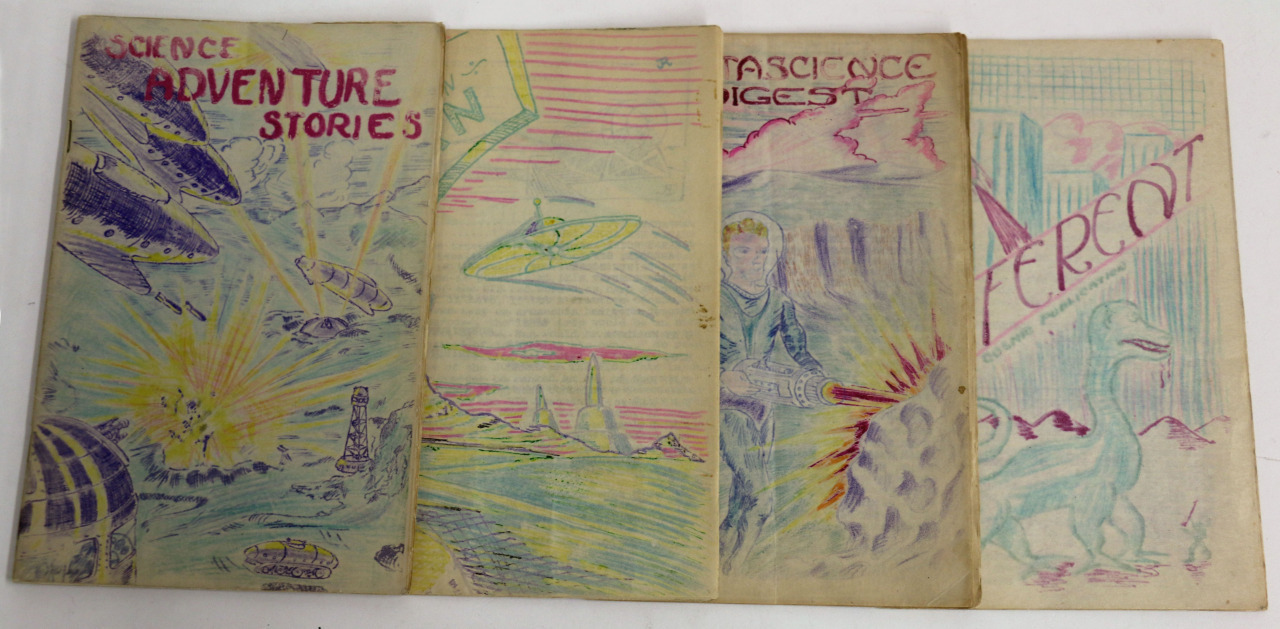
A note about the origins of Fanzines and Fan Fiction:
Fanzines and fan fiction originated in general science fiction and fantasy fandom in the 1930s. Decades later the practice of printing amateur fanzines and writing “fan fiction” were adopted by media fans. Today the phrase “fan fiction” almost exclusively refers to media fandom; however both sci-fi and media fandom still publish fanzines.
From Fanlore: “The term fan fiction is from science fiction fandom and according to Brave New Words antedates 1939. However, fan fiction originally meant either amateur science fiction published in a fanzine by a fan or fiction by a fan about fans…. Post-Star Trek, the original meaning of the term appears to have been completely supplanted by the new definition–fiction by fans using pre-existing characters and/or settings.”
Tech Dirt wrote this week about the origins of the term fanfiction: “…. the actual term “fanfiction” was coined in 1939 by the sci-fi community as a derogatory term to differentiate between crude, amateur sci-fi fiction and professional fiction, or “pro fiction.” (Even decades later, the same stigma holds true.)
It popped up again in a 1944 lexiconic fandom handbook titled Fancyclopedia, edited by John “Jack” Bristol Speer, the first noted fan historian. Then formalized as “fan fiction,” the entry defined fic as:“…[sometimes] improperly used to mean fan science fiction, that is, ordinary fantasy published in a fan magazine… occasionally bringing in some famous characters stf [science fiction] stories. […] Fictitious elements are often interspersed in account of fan activities, which may make them more interesting, but plays hob with a truth-seeker like [Greek philosopher] Thukydides. Round robins have been attempted in the fan fiction field.
This generalized description held sway from 1930-1950, during the reign of sci-fi titans like Isaac Asimov, until the first modernized fanfiction boom: the golden era of Star Trek fanfiction and its marriage partner, the fanzine.