July 2017

olderthannetfic:

expo63:

olderthannetfic:

expo63:

tppfandomstats:

Age and Experience in Fandom*

*English-reading online transformative fandom often using AO3 and tumblr and willing to complete surveys :)

This month’s @threepatchpodcast​ episode, When I’m 64, looks at fandom and aging. To go along with these discussions, here are some demographic stats from a few fandom surveys on the age distribution in our online fandom communities. 

CAVEAT: These surveys are not random samples of the transformative fandom population. All numbers come from voluntary online surveys distributed on social media and fandom media, and the limits of opportunity and inclination introduced biases (more on that for the F&S survey here). Still, it’s the best data we have, so here is what @fffinnagain​ is willing to infer.

From these survey results we can draw a few main points: 

  • Fans’ ages range from preteens to late sixties and beyond
  • Many (possibly most) are in their 20′s and 30′s
  • Most of us started engaging in things we fan over by the age of 19
  • But new fans can be of any age
  • For adult fans, there is a fairly even chance they’ve been in fandom for less than 3 years (~5-10% by our counts)

The usual plots and explanations below.

How old are these fans?

Whatever our expectations, responses to fandom surveys show that these fanfiction readers seem to be mostly in their twenties and thirties, but there is no apparent upper bound on age in these communities. 

From the 2013 AO3 census (11k participants), the average age was 25, with a median of 22-24, and a mode age of 21. 4% were under the age of 16 and 19% of participants in the the AO3 census reported being 30+.

However, the distribution of age depends a lot on community. Our small TPP listener survey in 2015 (230 participants) showed an older demographic: 55% of participants were 30 and above, with a strong mode between 28 and 32. Also, approximately 12% were over the age of 50.

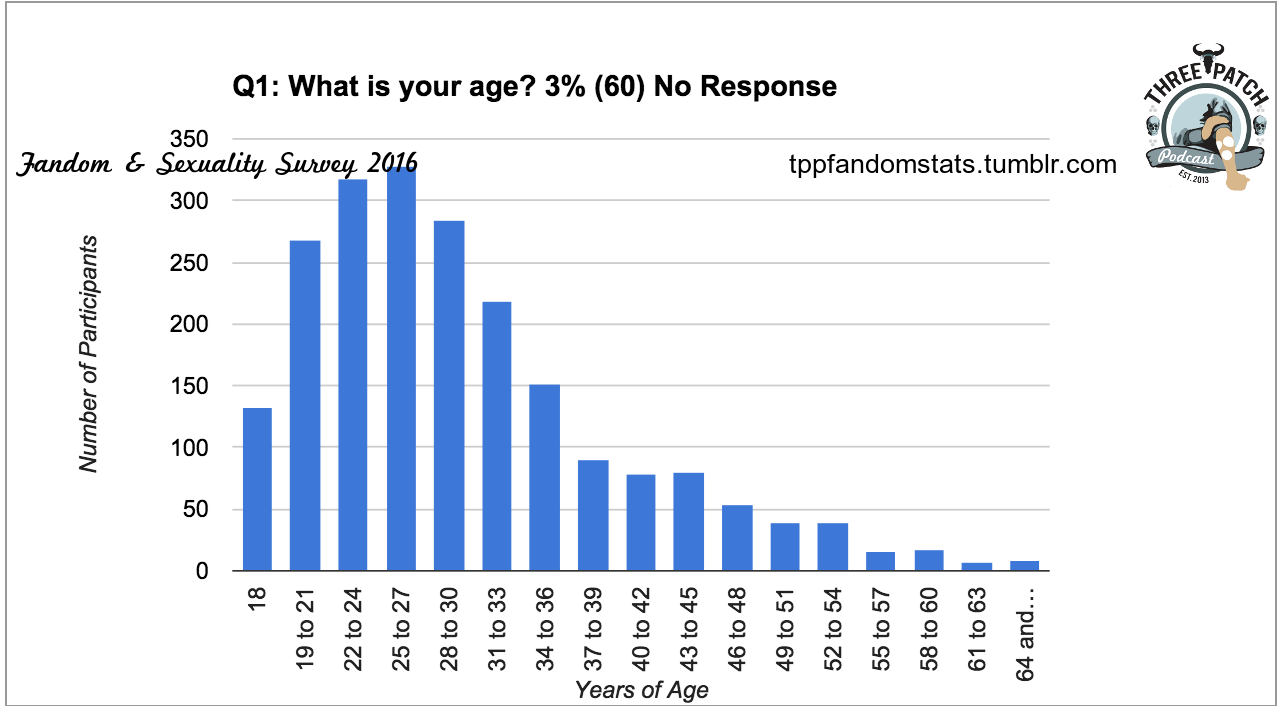
TPP’s fandom and sexuality survey (2195 participants) limited its participant pool to fans 18 and over, but the trends fall somewhere between these two. Average age of 28, mode of 25, and 40% over 30. The distribution of those responses is plotted above.

While none of these surveys capture these online fandom communities cleanly, the consistency of the pattern strengthens their claim: the largest age bracket are people in their 20′s, with substantial presence of teens and people in their 30′s. In all three surveys, more than 50% were between 20 and 40. Fans above the age of 40 are not as common, making up somewhere between 5% and 35% of the active population, depending on the community.

How long have these fans been in fandom?

The fandom and sexuality survey included questions about fans’ first experiences, including the age they started engaging with fandom stuff. 

image

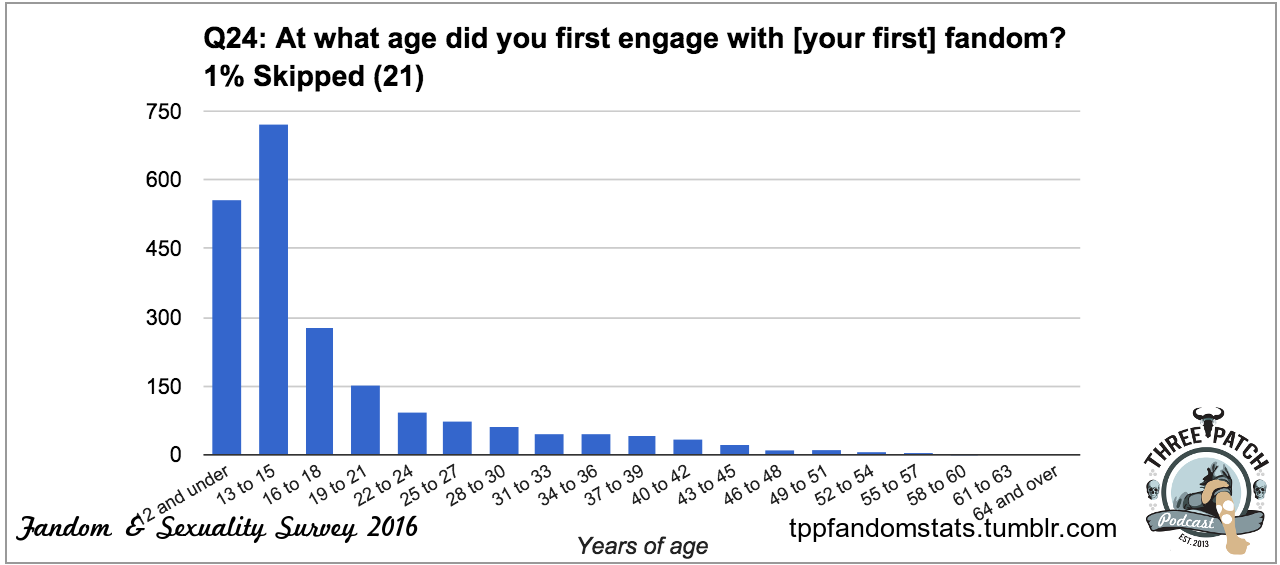
By 19, 70.9% of the F&S survey participants had begun their first forays into fandom life! These early experiences may not have been within the same communities they currently inhabit, but the enthusiasm for transformative works starts young, and opportunity may be an important factor in who gets involved when.

From this we can run a quick calculation: how long has it’s been since their first fandom experiences? Across these 2195 fans, the median time since first fandom was 11 years, mode of 15. We can’t assume that all participants have been consuming fanworks continuously since first contact, however these responses make it obvious that interest in fanfiction, fan art, etc., is not restricted to the eight years of teenage-hood.

There is a long tail in this graph, with small but tangible numbers of people coming into this part of fandom in the 40′s and 50′s. Are older fans more or less likely to be recent inductees?

image

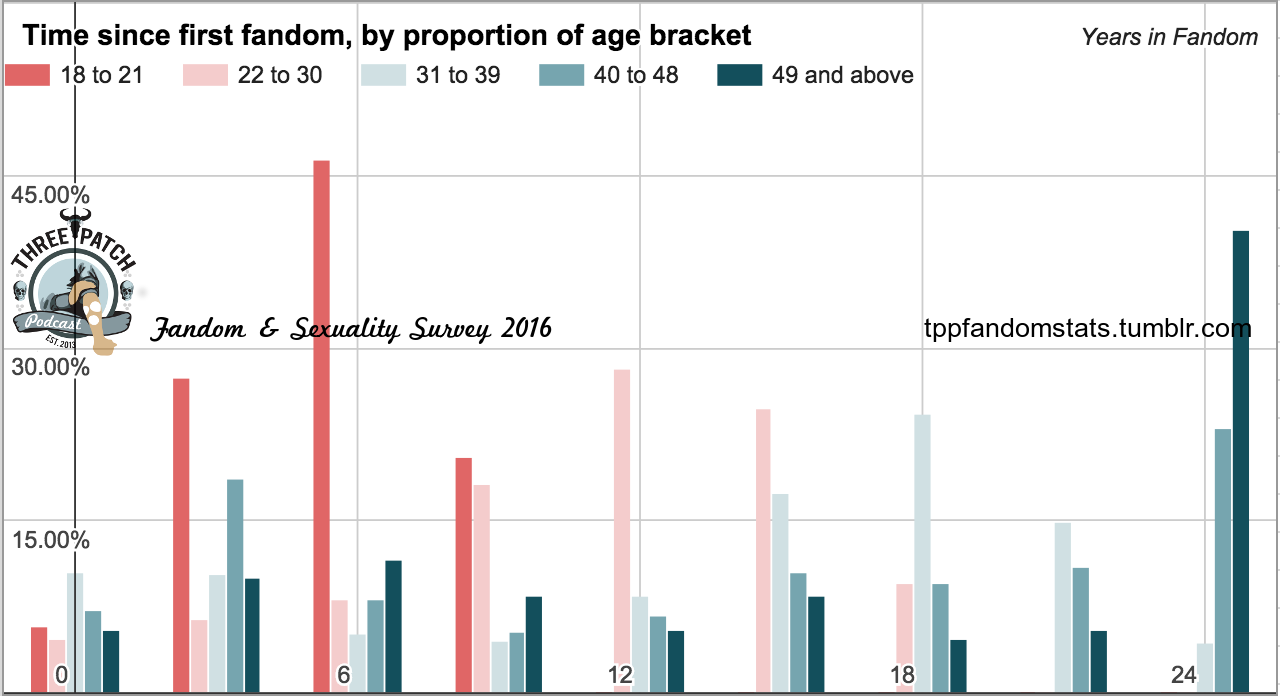
To look at this from a different angle, we broke the participants into age brackets. This figure reports the percentage of each age bracket with X number of years since their first fandom.

The most important spot here is the first clump of columns: fans that have been involved in fandom less than 3 years. These are the newbies. Quite strikingly, they are pretty even across these groups: ~5-10% survey participants in each bracket were relatively new to fandom!  

If I (@fffinnagain) were to hazard a guess, the ratio of active fans with less than 3 years experience is probably higher than 1 in 10. The F & S survey was long and serious and I can imagine a larger portion of newer fans would have felt unsure of whether their experience was relevant. Not everyone steps on to a scene and owns it within 12 months! However, I wouldn’t assume this factor would interact significantly with age, so it still seems fair to extrapolate that within these age bracket, the proportion of new fans is still consistent. Teenagers, however, would be a different story and this data sadly cannot speak to their experiences.

All this suggests that when we meet adult fans, be they in their 20’s, 30’s, 40’s, or older, there is a pretty even chance that they are still getting acclimatized to this culture. So be kind, and don’t assume one way or the other.

All this suggests that when we meet adult fans … there is a pretty even chance that they are still getting acclimatized to this culture’: *raises hand*

Hah. You know, I think you told me that, but I always think everyone is an old hand. Good on you!

@olderthannetfic Ha – well – there’s also a longer/more nuanced version of what I said above. But I’ve tried posting about that before – and the attempt did virtually nothing to shift my sense that I’m a chronic outsider in relation to ‘proper’ Big Media Fandom(s).

Much depends on how you define ‘involved in fandom’ – and I am absolutely one of the people ‘unsure of whether their experience was relevant’. 

Keep reading

Wow, I know Tumblr is not good at longform discussion, but I had forgotten that it gives you a readmore link on a reblog, so you have to keep the actual post open in another window to respond to it. (Damn it, tumblr!)

You make a good point about different experiences of fannishness. Once upon a time, we talked about “Media Fandom”, and while the term is hardly transparent to a modern audience, it did refer to a specific sort of community that isn’t terribly hard to define in practice. Now, I think people usually fall back on a fic-centric definition for lack of anything clearer. (So if I’m trying to define “in fandom” in some very narrow sense, I’ll do it in relation to communities that produce fanfic or the person in question producing/consuming fanfic. Anything else gets labeled ‘fannish’ or ‘geeky’ but possibly not ‘in fandom’ in this sense.)

Keep reading

unwrapping:

Age Ranges of Tumblr’s Global Audience:
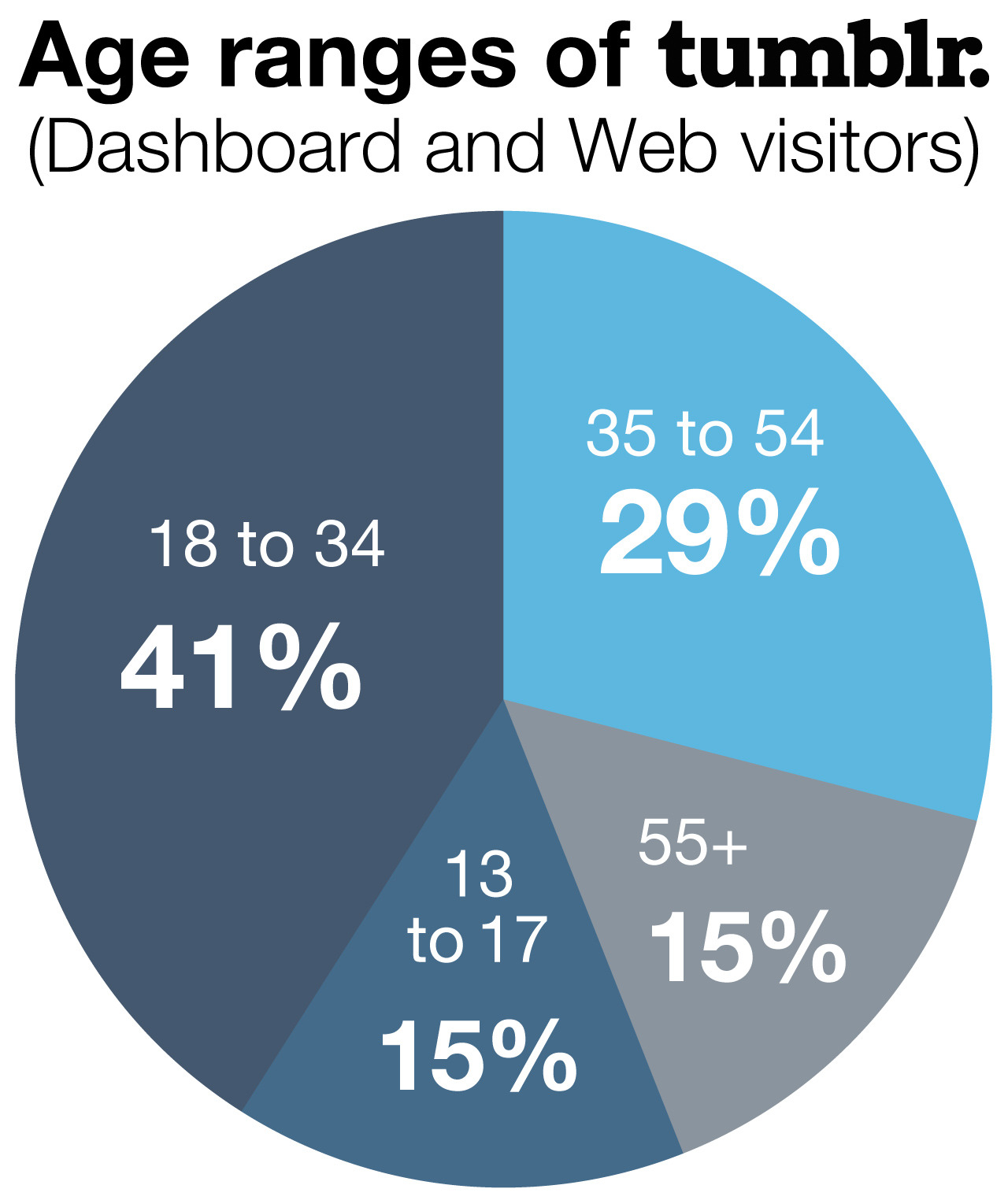
Tumblr sees about 150 million global unique visitors monthly. comScore, an Internet analytics firm, averaged Tumblr’s age ranges over the first quarter of 2014 for both Dashboard and blog network traffic worldwide:

“People are often really surprised to note that we have the same percentage of 55-plus-year-olds as we do 13-to-17-year-olds,” said Danielle Strle (strle), Tumblr’s director of product for community and content, in an NPR webinar. “But over half of our audience is solidly in the 13-to-34 demographic.”

thebibliosphere:

ryanlewisandclark:

darksilveraster:

anghraine:

As far as I’m concerned, the single most radical change from journal fandom is the idea that fandom is primarily a space for kids.

*shakes cane* in MY day, teen fans pretended to be adults while we walked uphill both ways!

#tumblr: i GUESS we’ll tolerate these gross old women LIKE OVER 25 UGH as long as they understand that fandom isn’t /for/ them

#lj: HOW DO YOU DO FELLOW ADULTS

@thebibliosphere

This is entirely too accurate.

olderthannetfic:

expo63:

tppfandomstats:

Age and Experience in Fandom*

*English-reading online transformative fandom often using AO3 and tumblr and willing to complete surveys :)

This month’s @threepatchpodcast​ episode, When I’m 64, looks at fandom and aging. To go along with these discussions, here are some demographic stats from a few fandom surveys on the age distribution in our online fandom communities. 

CAVEAT: These surveys are not random samples of the transformative fandom population. All numbers come from voluntary online surveys distributed on social media and fandom media, and the limits of opportunity and inclination introduced biases (more on that for the F&S survey here). Still, it’s the best data we have, so here is what @fffinnagain​ is willing to infer.

From these survey results we can draw a few main points: 

  • Fans’ ages range from preteens to late sixties and beyond
  • Many (possibly most) are in their 20′s and 30′s
  • Most of us started engaging in things we fan over by the age of 19
  • But new fans can be of any age
  • For adult fans, there is a fairly even chance they’ve been in fandom for less than 3 years (~5-10% by our counts)

The usual plots and explanations below.

How old are these fans?

Whatever our expectations, responses to fandom surveys show that these fanfiction readers seem to be mostly in their twenties and thirties, but there is no apparent upper bound on age in these communities. 

From the 2013 AO3 census (11k participants), the average age was 25, with a median of 22-24, and a mode age of 21. 4% were under the age of 16 and 19% of participants in the the AO3 census reported being 30+.

However, the distribution of age depends a lot on community. Our small TPP listener survey in 2015 (230 participants) showed an older demographic: 55% of participants were 30 and above, with a strong mode between 28 and 32. Also, approximately 12% were over the age of 50.

TPP’s fandom and sexuality survey (2195 participants) limited its participant pool to fans 18 and over, but the trends fall somewhere between these two. Average age of 28, mode of 25, and 40% over 30. The distribution of those responses is plotted above.

While none of these surveys capture these online fandom communities cleanly, the consistency of the pattern strengthens their claim: the largest age bracket are people in their 20′s, with substantial presence of teens and people in their 30′s. In all three surveys, more than 50% were between 20 and 40. Fans above the age of 40 are not as common, making up somewhere between 5% and 35% of the active population, depending on the community.

How long have these fans been in fandom?

The fandom and sexuality survey included questions about fans’ first experiences, including the age they started engaging with fandom stuff. 

image

By 19, 70.9% of the F&S survey participants had begun their first forays into fandom life! These early experiences may not have been within the same communities they currently inhabit, but the enthusiasm for transformative works starts young, and opportunity may be an important factor in who gets involved when.

From this we can run a quick calculation: how long has it’s been since their first fandom experiences? Across these 2195 fans, the median time since first fandom was 11 years, mode of 15. We can’t assume that all participants have been consuming fanworks continuously since first contact, however these responses make it obvious that interest in fanfiction, fan art, etc., is not restricted to the eight years of teenage-hood.

There is a long tail in this graph, with small but tangible numbers of people coming into this part of fandom in the 40′s and 50′s. Are older fans more or less likely to be recent inductees?

image

To look at this from a different angle, we broke the participants into age brackets. This figure reports the percentage of each age bracket with X number of years since their first fandom.

The most important spot here is the first clump of columns: fans that have been involved in fandom less than 3 years. These are the newbies. Quite strikingly, they are pretty even across these groups: ~5-10% survey participants in each bracket were relatively new to fandom!  

If I (@fffinnagain) were to hazard a guess, the ratio of active fans with less than 3 years experience is probably higher than 1 in 10. The F & S survey was long and serious and I can imagine a larger portion of newer fans would have felt unsure of whether their experience was relevant. Not everyone steps on to a scene and owns it within 12 months! However, I wouldn’t assume this factor would interact significantly with age, so it still seems fair to extrapolate that within these age bracket, the proportion of new fans is still consistent. Teenagers, however, would be a different story and this data sadly cannot speak to their experiences.

All this suggests that when we meet adult fans, be they in their 20’s, 30’s, 40’s, or older, there is a pretty even chance that they are still getting acclimatized to this culture. So be kind, and don’t assume one way or the other.

All this suggests that when we meet adult fans … there is a pretty even chance that they are still getting acclimatized to this culture’: *raises hand*

Hah. You know, I think you told me that, but I always think everyone is an old hand. Good on you!

Archive your fandom stuff

thebyrchentwigges:

As we sit on the cusp of changes to the Internet, after your other activities to support Internet freedom, archive your fandom stuff.

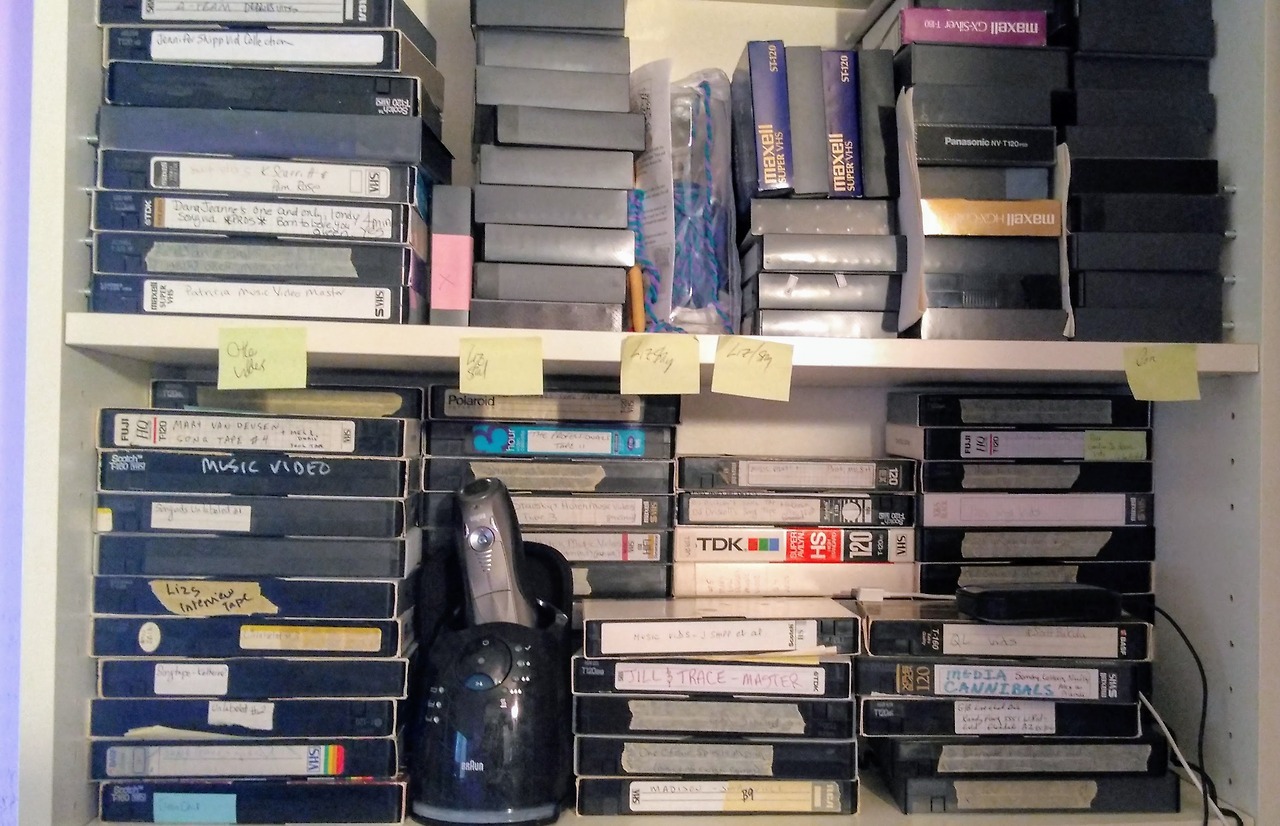
Save the electronic files of your favorite online fandom works. Consider print-outs of your favorite online material. And save paper ephemera from fandom events.

Why save? Because you put the effort into a fanwork. Because you may be surprised when a fandom stays alive for years, or gets revived, or when an academic asks to cite your work. Because it’s stupidly hard to find items on Tumblr. Because, lo, in ages past, many fandom archives have risen and fallen, taking favorite fics off the ‘Net. Because it made you happy, makes you remember. Because you never know.

What can you save?

Behind the cut…saving from Tumblr and AO3, delving into lost web sites, how to save computer files for the long term, and why I’m glad I saved physical fandom items from 10+ years ago.

Keep reading

UPDATED: CONTACT HAS BEEN MADE (Need To Get Into Contact With The Mods For The Gossamer Archives)

meeedeee:


UPDATE: I heard from them. The archive is closed to new submissions but the admins are still there and can be reached via their Help Desk. There are no plans to move the archive.


UPDATE: I heard from them. The archive is closed to new submissions but the admins are still there and can be reached via their Help Desk. There are no plans to move the archive or to transition it over to AO3.

UPDATED: CONTACT HAS BEEN MADE (Need To Get Into Contact With The Mods For The Gossamer Archives)


UPDATE: I heard from them. The archive is closed to new submissions but the admins are still there and can be reached via their Help Desk. There are no plans to move the archive.

I think it's worth saying to the antis who are mad at us "gross adults" that many of us got on the internet when we were their age and - guess what - we shipped hella problematic ships, including lots of age difference ships. Because it was OUR fantasy. We wanted to put ourselves in the place of the teenage girl courted by the hot older guy. It did not mean we were going to jump into bed with any random older creep. We knew the difference between fiction and reality. (1/2)

freedom-of-fanfic:

I think there is in fact a generational difference here, and Bush, and 9/11, and I think also the Janet Jackson “Nipplegate” controversy and subsequent anti-sex backlash have a lot to do with it. We remember a world before that. Most antis don’t.

I agree that there’s a generational difference.  Young people, perhaps particularly young Americans, are growing up in a very different world with very different values than those of us who remember the 90′s, 80′s, and earlier. It’s much scarier, much closer and easier to access, and much more confusing.

But that very generational difference is why I think it’s condescending to tell young anti-shippers ‘when we were your age, we could tell the difference between fiction and reality.’ (It’s not that they can’t differentiate, after all - it’s that they assume that nobody else can.)  They’re facing a whole new set of social challenges, existing in a world that has had internet as long as they’ve been alive and growing up on social media platforms designed to bring user everything, whether they want it or not.

It’s not really about ships: it’s about having a space that they can control in a world that has always been a mouseclick away, huge and uncontrollable and unknowable. The internet was what opened our horizons and helped us find others who are like us when we needed it; we reveled in finding out that we weren’t alone in our fantasies (no matter how fucked up).  Today’s teens grew up with their horizons already expanded, never knowing a world without internet, and their social media experience has been wrestling web 2.0 for the ability to create a smaller, safer, space to rest in (which web 2.0 actively resists).

And in a social environment that’s wildly partisan and ‘post-truth’, with a world that’s so big and with values so relative, where every voice seems equally likely to be telling the truth or lies, is it any wonder that the exclusionist and authoritarian voices start to become comforting? Is it at all strange that young people especially start to rally around people that guide them in who to filter out and who to trust, or causes that simplify the world into ‘good’ and ‘evil’, ‘helpful’ and ‘harmful’?  That gives people a group to dehumanize and say, ‘they are the cause of all my troubles, and I will destroy them’?  I think it’s pretty common.  Anti-shipping is just one of many forms this radicalization of worldview takes (and a particularly mild version of it.)  

In short: young people today are facing the same challenges as everyone else on the net, but with less life experience, less fixed principles, and a very different frame of reference on the whole. It’s different enough that I think it’s unfair to compare our teenage experience to theirs.

It’s the technology. The platform shapes our cultural norms instead of the other way around . And until we address this issue, will continually be circling and snapping at each other .

Personal Fandom History

thepalmtoptiger:

I’m way too young to be a fandom oldie but sometimes I feel ancient. But when I say I’ve been involved in fandom for years and when I was far too young to get as involved as I did, I’m really not joking.

Keep reading

I am glad that images and photomanips are going to be allowed, I really am. Some of them are quite good and funny. Some of them are complete crap. Still more are completely inappropriate for this forum even though David has give the topic an okay. Do you hear that, people? Post your funny and amusing manips. Do not, for the love of all that is holy, post slash or het manips. Sure, I’ll let the vaguely slashy/het ones slide, but oh my god keep it in the proper fan-related sites/communities! There are a million of them.

It seems to me that a lot of the newer fandom participants are lacking any sort of proper internet etiquette that I remember people having when I started in online fandom in 1998. You didn’t just run off at the mouth or post things that would embarass you or the subject you were speaking of. If you did, you were publically embarassed and never did it again.

A fan bemoaning the fact that an actor was allowing photomanips to be posted to his forum (aka “ Fandom and Messageboards (or, How the Internet Has Warped Social Behavior)“ (2006)

Dear Diary: 2006 seems so far away sometimes

rapacityinblue:

kaciart:

rocket-sith:

francisperfectionbonnefoy:

vulgarweed:

hiddenlacuna:

fluffmugger:

madmaudlingoes:

tygermama:

every time I see more of the ‘ao3 is evil’ crap circulating I think, ‘well, tumblr is evil too and I don’t see you stop using it’

You know, the more I think about this, the more I think the real complaint isn’t that AO3 hosts “evil” content, it’s that it doesn’t allow harassment/dogpiling of “evil” creators as easily as Tumblr. Abuse won’t remove or even re-tag a work except in a handful of very specific cases, but they will suspend or ban users for harassment, including filing repeated unfounded Abuse reports. Authors also have at least some ability to screen/block comments on works, and there’s no direct messaging system outside of commenting on works through which to pursue harassment. You can follow a creator but you can’t block them (much less encourage others to do the same).

Tumblr, by contrast, generally ignores any abuse report that doesn’t involve the DMCA, and aggressive anons can and have driven bloggers off the site entirely. The fact that the same tactics are used by social justice bloggers and neo-Nazis (for instance) doesn’t matter – they’re the affordances of the site, by accident or design, and an entire fannish generation have gotten very used to performing their fannish (and moral) identity in this fashion.

(I thinks it’s relevant that AO3 was designed by fandom’s LJ generation and in some respect mirrors the affordances of LJ circa 2010. Tumblr is a very different site and that, moreso than age differences, seems to be at the root of this – though of course age intersect with site experience in a non-trivial way.)

ding ding ding ding.

Ao3 requires you to police your own consumption of content.  Ao3 won’t let you destroy someone’s online presence simply because you don’t like it.   Ao3 won’t let you impose your own morality on other without cause.

If you have issues with this, and the fact that Ao3 requires you to have responsibility and agency,  then you seriously need to sit down and have a damned good long hard look at yourself.

The question I usually fail to see being answered when people bitch about the content on AO3 is - so who gets to decide?

You? Me? A committee of my friends? Of yours? Of those who have the most kudos? Of those who have no interest in fandom, but want to protect other people from dangerous content, whatever it may be? Who gets that power, and how long will they have it?

Who are you comfortable with giving the power of regulating all the content? What happens in grey areas? What happens when something you like isn’t liked by the Decider? Is there an appeal? Who gets to make the arguments for and against something?

The world is complex and there are no easy answers.

The impossibility of creating a censorship board that curates based on content is a great reason why those things don’t exist, and shouldn’t.

Certain people are screaming that AO3 is bad because it’s not a “safe space.” The real problem they have, though, is that AO3 was created to be a safe space - for writers. And it does a pretty good job of that. It was designed to be a place where writers are safe from arbitrary content rule changes, random and unwarned deletions, and abuse-report abuse (which is common on ff.net). The Four Big Warnings + CNTW system is beautiful in its fairness and simplicity.

Antis can’t take control of it. And because control-freakdom is at the heart of their “movement,” this drives them into frenzies. Good. It motivated me to dig a little deeper into my pocket to donate on the last drive. For all the pleasure AO3 has given me over the years, that’s money well spent.

The real problem they have, though, is that AO3 was created to be a safe space - for writers. 

Preach it loud and hard!

I’m a member of the LJ generation, and when I first came to Tumblr (grudgingly and out of desperation, I might add, since it tragically seems to be the only place to really connect with other fandom peeps) I was horrified at how people here had established this sort of fucked up bully culture, where nobody is responsible for monitoring their own consumption, and rather they expect everyone else to custom tailor content to the whims and desires of the Shrieking Banshee Masses. And woe be to the person who doesn’t bend and break! “I’m going to bully you while accusing you and your Big Mean Poopie Content of being the actual bully, so I can hopefully distract you and others from realizing I’m being a royal intrusive asshat who failed Astronomy 101 b/c I clearly believe the world revolves around me.”

The irony here is that this in itself is an abuse tactic - victim blaming with a side of gaslighting. Pot, meet kettle.

And it’s the exact same mentality that drives right-wing lunatics to kick up a fuss about the existence of icky cootie gay people in media because we need to “protect family values”, or who take to screeching at Starbucks because their particular religious symbolism isn’t portrayed on the winter holiday cups and OMG WAR ON CHRISTMAS, STARBUCKS STOP OPPRESSING ME BY NOT CATERING TO MY PERSONAL TASTE.

The mentality is one and the same - “Cater to ME ME ME or FACE MY DIVINE WRATH even if it means taking away other people’s freedom!” while hiding behind a flimsy-ass shield of faux righteous anger.  

And when these bozos find an environment or situation where they’re unable or not allowed to bully people into silence and submission, they stomp their feet and pitch a tantrum and claim that they’re the ones being oppressed. Identical shit, different pile, and it’s the exact same infantile, schoolyard rubbish no matter which side it’s coming from.

This was a really interesting read. The last poster in particular but all of it.

Okay, so I find the history behind this discussion really interesting, because there are two things that stand out to me. One is the thought AO3′s culture is equivalent to LJ circa 2010. This is almost true, except you actually have to go back further. Ao3 and Dreamwidth are both specifically trying to recreate the fan culture of Livejournal from 1999-2007, and I can say that with some authority because A) I was there (olllld) and B) both were founded in 2008/09 as a direct response to the shit happening on LiveJournal and Fanlib. 

The other thing is the idea that anon-harassment culture started with Tumblr. Because, kiddos, did it ever not. Tumblr is very much Fanfiction.net circa 1998-forward. (That’s right, FF.N was basically always awful.) But how we got from there to here is actually really interesting And tangly. And long.

Up to the late 1990s, fan communities were often small and decentralized because there was a huge fear that fans would be targeted by content creators if they drew too much attention. Since several authors (Anne Rice, Mercedes Lackey, Anne McCaffery) actually DID issue cease&desists to fan creators, it’s kind of understandable where the fear came from. It’s also why you still see fanfic floating around with disclaimers, something young!tumblr loves to mock.

Harry Potter changed *everything*. Like, I really can’t emphasize how much. Fanfiction was always there, being shared on email lists or privately hosted or literally mailed cross country. But Harry Potter hit BIG in 1997. It had a massive crossover appeal that hadn’t been seen since probably the original Star Trek, and the baby Internet was all. over. it. If you weren’t there, imagine Twilight. But bigger. And J.K. Rowling stood out from other creators by condoning fanfiction in her very early interviews. Not to mention there was a lot of down time between books and, as you might know, the fans do not do well unpoliced. 

This led to, I’m not kidding, an explosion of sites like FF.N. I don’t think a lot of younger users get how revolutionary AO3 is: not just because it created a safe space, but because of how much it’s done to centralize fanfiction on the internet. We used to get our fix through webrings and e-serves, so in the late 90s/early 00s we thought nothing of having dozens of scattered fanfic sites.

At the same time, the Digital Millennium Copywrite Act was coming down. The legality of fanworks was getting more and more complex. And no one knew how to handle these questions, because they had literally never come up before. When it was just authors going after individual fans, things usually went quick and brutal. Fans had neither the money nor the legal teams to stand up to creators, even if (as we were slowly beginning to realize) we had a strong case to create and share fanworks. So, if you got hit with a takedown notice, you took your fic down and laid low, hoping to avoid any further interest. 

But now the legal burden was shifting from individuals to well-funded corporations. Fanfic.net and LJ didn’t want to shut down their fan-contributors, who were creating a huge stream of free content and bringing in advertising revenue. At the same time, they didn’t want to get shut down by a lawsuit if Lucasfilm found Han/Chewie smut and decided to go after the real money. The next 10 years were basically all of us – authors, fan creators, website executives – stumbling through brand new legal territory and figuring it out by trial and error. FF.N erred on the side of caution by becoming more and more restrictive. They shut down the entire Anne McCaffrey and Anne Rice sections, and eventually banned “pornographic” fanfiction from the site in an attempt to cover their legal rears. (It backfired, unsurprisingly, because say what you will about fandom: we like our smut. Also, FF.N had other issues that we won’t get into here will discuss shortly.) A bunch of other sites folded or waned in popularity as fandom wars divided the fan population. Authors scattered to the winds, and a lot of them ended up on LJ. 

LJ started out very user friendly. We’re talking an open source code, an almost entirely volunteer staff. Even after it was sold to 6Apart in 2005, LJ was pretty permissive. A lot of that had to do with the aforementioned DMCA, which protected ISPs and hosting corporations. Like I mentioned above, a lot of the migration from FF.N to LJ (as a place for fanfiction SPECIFICALLY) came when FF.N started banning explicit fanworks. Why? Because FF.N targeted these fanworks based entirely on user reports. “Tell us if you find porn,” FF.N said, “And we’ll take care of it.”

Backup real quick. LJ, in many ways, set the standard for online privacy in a way that was far ahead of its time. Friendslocked journals were the norm rather than the exception and many, many communities disallowed anonymous commenting. (I’m not saying LJ wasn’t toxic as fuck, by the way. It is 2017 and let’s all have a moment of acknowledgement for how terrible LJ culture actually could be.) But LJ, on the whole, was much, much better at self-policing than FF.N. On FF.N, all of your stuff was out in the open. It was just there. Anyone could read it, anyone could report it.

And these two sites coexisted. All BNFs had a private journal and a public FF.N page. So if I hated someone and I wanted to harass them off the internet, on LJ, I’d have to make multiple sock puppets and concoct elaborate multi-journal ruses to do it on LJ (haha, who would do THAT?). What am I to do? Simple: Head off to FF.N and anonymously flame them there!

FF.N became synonymous with anonymous hate long before the anti-smut censorship came down. But once those rules were in place, the system was rife for abuse by the Purity Police or grudgewankers. Waaaaaaaaaaaaaay before it was cool to dm “kill urself” to someone on tumblr, it was happening on FF.N. All you, the early internet user, had to do was post a report link for your rival’s FF.N account on your LJ. Hate a pairing? A kink? Why not post a scathing rant, link included, to this captive audience of ALL YOUR FRIENDS.

Yeah, this system had no room for abuse.

So. FF.N opened the door and fandom came rushing through like the raging assholes we are. Certain Fandoms Alluded To Previously got so deeply divided that they split and formed their own fanfiction archives that occasionally rained hate on each other. Everyone else slowly withdrew to LJ, where locked communities offered some level of protection. Then, irony of ironies, fandom as a whole got targeted by the purity wankers. And of course, of course, it came back to Harry Potter. 

It’s 2007. Things have quieted down since 2001, when certain unnamed people’s fics were targeted for plagiarism and deleted from FF.N even though, just to be clear, they actually were plagiarized and, while there was an element of mob persecution, the actual fact remains that the work in question was legitimately in violation of FF.N’s TOS.

Ahem. It’s 2007. And everyone’s fairly chill. Creators are far more comfortable with fanfiction and fan creators are confident in posting their work so long as they aren’t profiting directly from it. Hosting sites, meanwhile, are profiting from fanworks, but they’ve got the legal shield of the DMCA to hide behind, so they’re feeling A-OKAY. And then Warriors for Innocence appears. WfI existed before strikethrough, and they existed after, but they made their mark on fandom when they reported upwards of 500 journals, most of them fan journals and communities, to LJ. The theory runs as follows: 6A, the company who’d bought LJ 2 years prior, realizes that the DMCA didn’t protect them if the fan works in question are “indecent”. Compounding this, 6A is already trying to clean up the famdomier aspects of LJ. Either they’re looking for a sale, or sites like ONTD are bringing in massive amounts of hits. WfI brings 6A a perfect hit list, and 6A goes to work.

So one morning we all wake up and find that hundreds of journals, including the pornish_pixies community and several BNF’s personal journals, have been deleted. Literally gone: a lot of the media stored on these communities has been purged forever. Hope you had backups. Also gone: large swaths of the Pretty Gothic Lolita community, Lolita book discussion groups, and rape survivor communities. 

In a quest to rid LJ of “pedophilia,” 6A wiped out a large swath of ethically questionable fanfic, and woke a beast. Again: We like our porn. 6A took a step back and restored some of the deleted journals, but the damage had been done. AO3 was already being discussed as a response to Fanlib, a hosting site that wanted to charge for access to fanfiction. (Yes, if you’ve been following along, that was a terrible idea. But that’s a post for another day.) But as AO3 began to change and grow, creators specifically wrote provisions into the TOS that guaranteed a strikethrough-esque event could never happen on the site. A specific kink or pairing would never be considered a violation of the TOS. The onus was on the reader, not the author, to protect themselves with the information given. Basically, AO3 took the early fandom nugget “Don’t like, don’t read” and made it policy. When peole say AO3 grew out of Livejournal, they’re specifically referencing this. One event that proved ALL OF OUR LONGSEATED FEARS WERE TRUUUUUUUUUE.

Rising from the ashes of LJ, you also had Dreamwidth. I’m actually kind of surprised DW wasn’t mentioned in the OP, since it grew out of the same ideology as AO3. Run by fans, for fans, because LJ (which at this point had been sold to SUP Media) had no idea what it was doing. Also like AO3, DW went to extreme lengths to make a safe fan culture inherent to the structure the site. Stay within the law, and DW and AO3 will back you up.

It’s worth noting that Tumblr actually predates Strikethrough. But Tumblr, unlike DW and AO3, wasn’t designed for fans. It didn’t carry the legacy of Strikethrough with it the way AO3 and DW did. So I guess– I have no evidence, but I’m surmising – that’s how it fell into the role of Natural Successor to Fanfic.net and Livejournal. It’s kind of inevitable, actually, that since neither LJ nor Tumblr was made for fans, they ended up falling into the same black hole of fandom collision. Kinkshaming people off the internet for literally as long as there’s been an internet. And then, on the other hand, you’ve got DW and AO3, who’ve watched fandom rip itself apart AT LEAST 3 times and are determined not to let it happen again. DW and AO3: We haven’t cared about the filthy shit you’re into since 2008.

That’s it, folks. Fandom mom wrote almost 2k words on early fandom and now she needs a nap.

This last entry is worth reading.

I believe that this policing bullshit causes the most harm to people who are accessible, or are perceived as accessible, rather than the people with privilege or who are using their identity to gain power in SJ circles. 

Fanfic authors, indie authors, webcomic authors and podcast hosts get clobbered regardless….

It’s a trend mirrored on the social right through movements like Gamergate who claim “Journalistic integrity” while pursuing primarily small time creators who are easily accessible through the internet.

Darthcontusion (2017) 

The SJ model has been unstable and destructive from its inception–it narrows possibilities instead of broadening them, lifts things up selectively and conditionally and tears them down with vicious finality.

Shinelikethunder  (2017)

I have been reading and reblogging some of your posts and wanted to thank you for that detailed account. I have been out of fandom for a while, and antis really baffled me at first. But now I have a question: Could you talk some more about how current antis relate back to the LJ social justice scene and when the morph from debating fanworks to dissing people happened? Thank you!

shinelikethunder:

freedom-of-fanfic:

I’m glad you’ve been enjoying this blog!

I think this reddit post does a nice job of summarizing the history of fandom and how it’s led to our current point. But I’m going to go more into how tumblr’s very structure led to a ‘race to the bottom’ sort of enacting of punishment via social justice.

Almost all of this is from personal observation, having been here since late 2010.

To get more into the actual history of it: Racefail ‘09 is the name given to the big, public 2009 debates about racism in genre fiction (published fantasy and sci-fi), which happened primarily on livejournal and private websites. (Racefail was itself the result of the rising awareness of social justice in the real world thanks to the democratization of information via the internet.) Racefail raised a couple of big questions: were non-white (and non-straight/non-cis/non-male) creators being silenced and erased in published genre fiction? And were the stories being told primarily racist/sexist/homophobic and lacking in representation for non-white/Western cultures (and LGBT+/queer/female stories)?

From everything I’ve read I feel like a lot of good came out of these talks; in particular, it greatly raised the awareness of social justice in genre fiction and fandom spaces - which had been there before, but not quite so prominent.  But one major bad came out of it: it revealed, via the shitty behavior of one member of the genre fiction community, how social justice could easily be used as a silencing tactic by applying arguments meant to dismantle power structures to individuals who may (or may not!) benefit from those power structures.

Fast-forward to 2010-2012 tumblr. LJ has undergone multiple journal purges and partial restorations, been bought out by a Russian company, and - final straw - changed the way anonymous threaded posts were handled, ending its value as a space for anon memes like kinkmemes. Fandom dispersed. A not-insignificant number of us eventually end up on tumblr, and those of us coming from LJ have brought with us a greater awareness of social justice, particularly lgbt/queer culture and feminism.

At the same time, Facebook has opened its doors to everyone instead of only allowing college students to use it. Facebook has almost single-handedly popularized the notion of making your offline life publicly available online.  Gone are the days of keeping your age, real name, and offline identity hidden; we share everything except maybe last names and exact locations.

Tumblr democratizes the fandom experience like never before. Livejournal and forums had moderators; tumblr has none.  Communities are gone - instead we have tags where people gather to talk about shared interests. People who previously felt shut out, forced to be ‘lurkers’ because they had nothing to say, could now have a blog and share the work of others via reblogging. The main way to gain social capital is by having the most followers and therefore the most widespread content.

But tumblr is a weird experience compared to other blogging sites because at the time it was the only one with a ‘reblog’ function. any one post can go absolutely viral and the people who see it beyond your immediate circle will lack the context of the rest of your blog. This means that either every single post needs to be entirely self-contained … or get wildly misunderstood. (Guess which one happens.) It also means that that the posts that spread the fastest and furthest are the short, witty ones or - you guessed it - the controversial ones. Finally, people tend to not fact-check - if something is interesting and seems believable, people reblog it uncritically. Tumblr’s dashboard structure actively encourages people to not leave their dash to look at provided external links - you’ll lose your ‘place’ on your endless-scrolling dash, and the little ‘home’ button in the corner is reminding you how many new posts have been created since you last refreshed. You don’t have time to fact-check.

Controversy without context is polarizing - without the original context, people provide their own context and agree or disagree based on a bunch of assumptions. Tumblr is a breeding ground for this. Opinions don’t get more nuanced - they get more vitriolic, more sharp and quick-witted.  And with people not bothering to fact-check or click linked information, misinformation spreads like wildfire.

The early experience of fandom on tumblr is one of widespread acceptance. Possibly because FB does this, people feel safe to share their age, sexuality, and gender on their tumblr profiles - and those identities get more and more specific as people learn more about gender identities and sexual orientations that are off the gender binary. People spread educational posts about queer/LGBT+ culture, feminist theory, and racism alongside fandom posts.  The importance of minority representation in the media is a hot topic and posts that criticize media for their lack of (or bad) representation get thousands of notes. Social justice theory - fighting the appropriation of colonized cultures by imperialists, promoting the voices of the oppressed over those of the privileged, the right to be angry because of the oppression and trauma you’ve experienced, not tone-policing people who have been hurt, and not erasing the experiences of others - are widely discussed.

A lot of good came out of this, too, but I believe a natural backlash resulted. Earnestly working to promote the voices of the least privileged and trying to avoid silencing or erasure, what started as an effort to even out the social strata gradually became a kind of reversed social strata. People who were oppressed on any axis could not be corrected by anybody of lesser oppression - it was considered to be silencing. People could not say their feelings had been hurt by a marginalized person’s word choice - that was tone policing. 

And this led to a secondary, and probably lesser conclusion: people who identified as ‘privileged’ - that is, white, cis, straight, mentally well, able-bodied, (and male) - felt guilty for all the privilege they had. and the promotion of marginalized voices over their own - the tendency to tell people, regardless of the validity of their points, that if they were privileged their voice did not matter - to escape their privilege, at least on tumblr.

I think we hit Peak Tumblr in 2012-2013-ish. Non-human and nonbinary identities proliferated. Asexuality awareness exploded, as did other lesser-known sexualities and paraphilias.  People wondered what it meant to be trans in a world with no gender binary. People self-diagnosed severe mental illnesses.  And this unto itself wasn’t a bad thing!   Probably many people learned a lot about themselves from the openness and acceptance.

However: there’s no way to know how much of this was from people self-discovering and how much was from people who realized that unless they had some axis of oppression they could point to they could be silenced.  And people were extremely open about these identities as well: despite all of the talk about social awareness, interactions on tumblr suggested that most people still assumed that everyone else was white, cis, straight, able-bodied and mentally well (and therefore completely unaware of social issues and in need of education). And due to how tumblr’s reblogging system could separate posts entirely from the context of the original poster’s blog and personal details, this assumption happened a lot!

Whatever the actual numbers of people who were self-discovering versus self-deluding, this extreme acceptance got its own natural backlash. It wasn’t possible for everyone on tumblr to be oppressed, but everyone on tumblr seemed to be finding some way to be marginalized - they weren’t cis, they were ‘a demigirl’. They weren’t straight, they were ‘gray asexual’.   There had to be some way to distinguish the real marginalized people from the fakers.*

Enter gatekeeping - which seems reasonable enough at first, given the sheer number of people who are claiming to be part of the marginalized club. People start making fun of ‘transtrenders’ and ‘starselves’ and say ‘heteroromantic demisexuals’ are ‘just normal’.  People call one another ‘cishet’ specifically to erase their gender identity/sexual orientation.

This environment makes tumblr ripe for radfems, who greatly benefit from people putting limits on what identities other people can have. And radfems feed the gatekeeping mentality, leading to more and more policing of one another on tumblr instead of acceptance.  Instead of trusting others to be honest about their gender identity, sexual orientation, race or mental health, people increasingly decide the identity and experiences of others based on whether or not they say and do the right things.  Conversely, if you say or do the wrong things you are ostracized and your identity is erased using the reverse social strata of tumblr: ’cishet’ becomes shorthand for ‘ignorant asshole’ - and ignorant assholes are not to be listened to.

One no longer has to identify wrongly to have the wrong identity to be worth listening to. One only has to do the wrong thing.

So how does this tie back to debating fanworks vs dissing people?  Well: tumblr isn’t just the home of social justice. It’s also the home of fandom, and these two spaces heavily overlap.

Like our genre fiction friend that I mentioned back at the beginning of this long-ass post, tumblr had already begun - with the best of intentions - to silence people for having the wrong level of marginalization.  And when radfems and gatekeepers entered the scene, one’s level of marginalization became a function of how you behaved.  Now you had to behave right to have the right to be listened to - and fanworks, far from being the exception, are the rule for determining if people behave ‘right’ in fandom spaces.

In other words: debating fanworks/fan opinions and dissing people have become the same thing.  If a fanwork is for the wrong pairing, that makes a person a bad person.  And bad people are only able to create bad fanworks.

This attitude is how you get things like ‘if you ship [x] you’re straight’ and ‘oh, you ship [x], your opinion on this unrelated social justice issue is invalid’ or ‘i’m not surprised to find that this person is [x]-phobic, they created problematic fanworks.’

And that’s where we’re at today.

Man this is much. I’m sorry for your eyes.

*And in case it isn’t obvious, I think policing sexual orientations and gender identities is nonsense - demigirls and gray-ace people count as much as everyone else.

This is a good writeup, but I feel the need to clarify something about pre-Racefail ‘09 fandom, and the loose web of creative and nerd communities that surrounded it: it was overwhelmingly socially liberal. The presence of reactionaries, social conservatives, and the occasional ranting right-wing nutjob was a lot more tolerated, because toleration was one of the core values of that brand of liberalism. But it was on an “as long as you more-or-less behave yourself in public” basis, and the social norms and power structures of Nerd Culture were reasonably resistant to being co-opted for conservative agendas. Because in the pre-Facebook era, one of the cardinal rules of nerd culture was “on the internet, nobody knows you’re a dog.” The social norms were extremely hostile to discrimination and double-standards based on the traditional group-identity divisions–race, gender, sexual orientation, religion–because it was explicitly acknowledged that all you knew about someone’s identity status was what they told you, which might or might not be a lie.

The Achilles heel of this kind of liberalism is a kind of false equivalence between prejudice against groups that have traditionally been marked out for discrimination, and prejudice against the unmarked ‘default’ group that’s traditionally been the one discriminating. At its worst, it leads to the hostility-to-chauvinism norm kicking in against highly visible displays of minority-group membership, especially if they don’t pay adequate respect to the value of “no discrimination, not even reverse discrimination.” And because of the marked/unmarked distinction, visible-minority anything gets saddled with defusing the suspicion that it’s playing identity politics, as well as having to swim upstream against whatever unconscious biases might be at play. On the internet nobody knows you’re a dog–but what happens when you want to talk about how awesome playing fetch is in a room full of cat people?

So that’s a tension that exists within liberal social models, and a place where they were genuinely in need of reform. But it was a vast improvement on the environments most of us were coming from, and the tension wasn’t enough to break social cohesion–as long as the norm of toleration held. The one that said “you can believe any damn fool thing you want and get up to whatever ideological antics you feel like, even if I think your ideology is the cancer killing modern society–as long as you aren’t a dick to the other members of the community.”

SJ was not a reform. SJ took a flamethrower to the norm of toleration and the norm of nondiscrimination, and set up a system where social norms on a person-to-person and small-community scale were dictated by adherence to, and active participation in, a political ideology that demands that social power, credibility, and guilt be assigned based on group membership in society-wide conflicts. It’s been a decade-long slow-rolling trainwreck that devastated some portions of LJ fandom from the moment it took hold. Every new development in Tumblr fandom has come, not from perversions of SJ’s underlying logic, but from perfecting its idea of how power should be allotted and deployed, finding new and fun places to apply it to, and dragging us ever further down the slippery slope.

Gatekeeping is a reaction to the inevitable results of making power depend on marginalized-group status, then lashing out so hard against reverse-discrimination taboos that it carves out a giant zone of impunity where horrific mistreatment “doesn’t count” if it’s against majority groups. Antis are just SJ media criticism abandoning its last holdover inhibitions against categorical thinking, the last vestiges of “we’re not saying nobody can write this just that structural oppression makes it very hard not to do it Wrongly” giving up the ghost. They weren’t even the ones who obliterated the distintion between an opinion and a demand for control–that happened a long time ago.

The liberal model of the 90s to mid-00s had structural flaws on top of the inevitable conflicts that come from humans being human. But it was generally a stable system, and it led to a great flowering of internet culture and creativity. The SJ model has been unstable and destructive from its inception–it narrows possibilities instead of broadening them, lifts things up selectively and conditionally and tears them down with vicious finality. Even the art by and about marginalized groups that’s emerged since it gained dominance has been a trickle rather than a flood, produced anxiously under immense pressure to “perform” politically, constantly under fire from both the circular firing squads within SJ communities and from the reactionaries in the anti-SJ backlash. It’s not sustainable, and it’s not even fixing the problems it sold itself as the solution to.

I think if there’s a solution, it’s some kind of liberalism-with-modifications–an awareness of the marked/unmarked blind spot + a norm against double standards that accounts for skewed standards that already exist, and allows more (but not infinite) room for un-skewing them. But after the cultural devastation of the past decade, it would have to come armed to the teeth with defenses against the quasi-totalitarian factionalism that the latest generation of SJ and anti-SJ warriors have grown up with.
Who says there is no debate on Tumblr?

read this except from the reply above:

SJ was not a reform. SJ took a flamethrower to the norm of toleration and the norm of nondiscrimination, and set up a system where social norms on a person-to-person and small-community scale were dictated by adherence to, and active participation in, a political ideology that demands that social power, credibility, and guilt be assigned based on group membership in society-wide conflicts. It’s been a decade-long slow-rolling trainwreck that devastated some portions of LJ fandom from the moment it took hold. Every new development in Tumblr fandom has come, not from perversions of SJ’s underlying logic, but from perfecting its idea of how power should be allotted and deployed, finding new and fun places to apply it to, and dragging us ever further down the slippery slope.”

I have been reading and reblogging some of your posts and wanted to thank you for that detailed account. I have been out of fandom for a while, and antis really baffled me at first. But now I have a question: Could you talk some more about how current antis relate back to the LJ social justice scene and when the morph from debating fanworks to dissing people happened? Thank you!

freedom-of-fanfic:

I’m glad you’ve been enjoying this blog!

I think this reddit post does a nice job of summarizing the history of fandom and how it’s led to our current point. But I’m going to go more into how tumblr’s very structure led to a ‘race to the bottom’ sort of enacting of punishment via social justice.

Almost all of this is from personal observation, having been here since late 2010.

To get more into the actual history of it: Racefail ‘09 is the name given to the big, public 2009 debates about racism in genre fiction (published fantasy and sci-fi), which happened primarily on livejournal and private websites. (Racefail was itself the result of the rising awareness of social justice in the real world thanks to the democratization of information via the internet.) Racefail raised a couple of big questions: were non-white (and non-straight/non-cis/non-male) creators being silenced and erased in published genre fiction? And were the stories being told primarily racist/sexist/homophobic and lacking in representation for non-white/Western cultures (and LGBT+/queer/female stories)?

From everything I’ve read I feel like a lot of good came out of these talks; in particular, it greatly raised the awareness of social justice in genre fiction and fandom spaces - which had been there before, but not quite so prominent.  But one major bad came out of it: it revealed, via the shitty behavior of one member of the genre fiction community, how social justice could easily be used as a silencing tactic by applying arguments meant to dismantle power structures to individuals who may (or may not!) benefit from those power structures.

Fast-forward to 2010-2012 tumblr. LJ has undergone multiple journal purges and partial restorations, been bought out by a Russian company, and - final straw - changed the way anonymous threaded posts were handled, ending its value as a space for anon memes like kinkmemes. Fandom dispersed. A not-insignificant number of us eventually end up on tumblr, and those of us coming from LJ have brought with us a greater awareness of social justice, particularly lgbt/queer culture and feminism.

At the same time, Facebook has opened its doors to everyone instead of only allowing college students to use it. Facebook has almost single-handedly popularized the notion of making your offline life publicly available online.  Gone are the days of keeping your age, real name, and offline identity hidden; we share everything except maybe last names and exact locations.

Tumblr democratizes the fandom experience like never before. Livejournal and forums had moderators; tumblr has none.  Communities are gone - instead we have tags where people gather to talk about shared interests. People who previously felt shut out, forced to be ‘lurkers’ because they had nothing to say, could now have a blog and share the work of others via reblogging. The main way to gain social capital is by having the most followers and therefore the most widespread content.

But tumblr is a weird experience compared to other blogging sites because at the time it was the only one with a ‘reblog’ function. any one post can go absolutely viral and the people who see it beyond your immediate circle will lack the context of the rest of your blog. This means that either every single post needs to be entirely self-contained … or get wildly misunderstood. (Guess which one happens.) It also means that that the posts that spread the fastest and furthest are the short, witty ones or - you guessed it - the controversial ones. Finally, people tend to not fact-check - if something is interesting and seems believable, people reblog it uncritically. Tumblr’s dashboard structure actively encourages people to not leave their dash to look at provided external links - you’ll lose your ‘place’ on your endless-scrolling dash, and the little ‘home’ button in the corner is reminding you how many new posts have been created since you last refreshed. You don’t have time to fact-check.

Controversy without context is polarizing - without the original context, people provide their own context and agree or disagree based on a bunch of assumptions. Tumblr is a breeding ground for this. Opinions don’t get more nuanced - they get more vitriolic, more sharp and quick-witted.  And with people not bothering to fact-check or click linked information, misinformation spreads like wildfire.

The early experience of fandom on tumblr is one of widespread acceptance. Possibly because FB does this, people feel safe to share their age, sexuality, and gender on their tumblr profiles - and those identities get more and more specific as people learn more about gender identities and sexual orientations that are off the gender binary. People spread educational posts about queer/LGBT+ culture, feminist theory, and racism alongside fandom posts.  The importance of minority representation in the media is a hot topic and posts that criticize media for their lack of (or bad) representation get thousands of notes. Social justice theory - fighting the appropriation of colonized cultures by imperialists, promoting the voices of the oppressed over those of the privileged, the right to be angry because of the oppression and trauma you’ve experienced, not tone-policing people who have been hurt, and not erasing the experiences of others - are widely discussed.

A lot of good came out of this, too, but I believe a natural backlash resulted. Earnestly working to promote the voices of the least privileged and trying to avoid silencing or erasure, what started as an effort to even out the social strata gradually became a kind of reversed social strata. People who were oppressed on any axis could not be corrected by anybody of lesser oppression - it was considered to be silencing. People could not say their feelings had been hurt by a marginalized person’s word choice - that was tone policing. 

And this led to a secondary, and probably lesser conclusion: people who identified as ‘privileged’ - that is, white, cis, straight, mentally well, able-bodied, (and male) - felt guilty for all the privilege they had. and the promotion of marginalized voices over their own - the tendency to tell people, regardless of the validity of their points, that if they were privileged their voice did not matter - to escape their privilege, at least on tumblr.

I think we hit Peak Tumblr in 2012-2013-ish. Non-human and nonbinary identities proliferated. Asexuality awareness exploded, as did other lesser-known sexualities and paraphilias.  People wondered what it meant to be trans in a world with no gender binary. People self-diagnosed severe mental illnesses.  And this unto itself wasn’t a bad thing!   Probably many people learned a lot about themselves from the openness and acceptance.

However: there’s no way to know how much of this was from people self-discovering and how much was from people who realized that unless they had some axis of oppression they could point to they could be silenced.  And people were extremely open about these identities as well: despite all of the talk about social awareness, interactions on tumblr suggested that most people still assumed that everyone else was white, cis, straight, able-bodied and mentally well (and therefore completely unaware of social issues and in need of education). And due to how tumblr’s reblogging system could separate posts entirely from the context of the original poster’s blog and personal details, this assumption happened a lot!

Whatever the actual numbers of people who were self-discovering versus self-deluding, this extreme acceptance got its own natural backlash. It wasn’t possible for everyone on tumblr to be oppressed, but everyone on tumblr seemed to be finding some way to be marginalized - they weren’t cis, they were ‘a demigirl’. They weren’t straight, they were ‘gray asexual’.   There had to be some way to distinguish the real marginalized people from the fakers.*

Enter gatekeeping - which seems reasonable enough at first, given the sheer number of people who are claiming to be part of the marginalized club. People start making fun of ‘transtrenders’ and ‘starselves’ and say ‘heteroromantic demisexuals’ are ‘just normal’.  People call one another ‘cishet’ specifically to erase their gender identity/sexual orientation.

This environment makes tumblr ripe for radfems, who greatly benefit from people putting limits on what identities other people can have. And radfems feed the gatekeeping mentality, leading to more and more policing of one another on tumblr instead of acceptance.  Instead of trusting others to be honest about their gender identity, sexual orientation, race or mental health, people increasingly decide the identity and experiences of others based on whether or not they say and do the right things.  Conversely, if you say or do the wrong things you are ostracized and your identity is erased using the reverse social strata of tumblr: ’cishet’ becomes shorthand for ‘ignorant asshole’ - and ignorant assholes are not to be listened to.

One no longer has to identify wrongly to have the wrong identity to be worth listening to. One only has to do the wrong thing.

So how does this tie back to debating fanworks vs dissing people?  Well: tumblr isn’t just the home of social justice. It’s also the home of fandom, and these two spaces heavily overlap.

Like our genre fiction friend that I mentioned back at the beginning of this long-ass post, tumblr had already begun - with the best of intentions - to silence people for having the wrong level of marginalization.  And when radfems and gatekeepers entered the scene, one’s level of marginalization became a function of how you behaved.  Now you had to behave right to have the right to be listened to - and fanworks, far from being the exception, are the rule for determining if people behave ‘right’ in fandom spaces.

In other words: debating fanworks/fan opinions and dissing people have become the same thing.  If a fanwork is for the wrong pairing, that makes a person a bad person.  And bad people are only able to create bad fanworks.

This attitude is how you get things like ‘if you ship [x] you’re straight’ and ‘oh, you ship [x], your opinion on this unrelated social justice issue is invalid’ or ‘i’m not surprised to find that this person is [x]-phobic, they created problematic fanworks.’

And that’s where we’re at today.

Man this is much. I’m sorry for your eyes.

*And in case it isn’t obvious, I think policing sexual orientations and gender identities is nonsense - demigirls and gray-ace people count as much as everyone else.

antishipping as the cool new trend, or: why are most antis under 25 years old?

freedom-of-fanfic:

fandomisnotyoursafespace:

freedom-of-fanfic:

freedom-of-fanfic:

I really think that antishipping is a movement that’s gaining ground with the younger & newer arrivals to fandom spaces; a kind of ‘cool trend’, so to speak. In aggregate, antishipping culture is beautifully constructed to be particularly appealing to teenage or college-age people - and especially American people - who are marginalized, oppressed, often social outcasts in real life and often under-educated about their own marginalized identity, and I kind of wanted to get into why.

the other day I posted to talk a little about why I think antis tend to be young (and American). To sum up & simultaneously add a little more:

  • escaping religious/Christian fundamentalist tenets but not their mindset: for a religion supposedly based on forgiveness, organized Christianity is not very forgiving. Everyone is a sinner & a single sin is enough to doom you to eternal hellfire, if you don’t do the right thing you’ll face Judgement in heaven/your salvation is always uncertain, and sinners must be cast out from your midst: the moral/communal purity that organized Christianity often demands can take years to deprogram (and this is not to mention the gender essentialism, homophobia/queerphobia, and anti-sex/anti-kink messages, accompanied by a strong undercurrent of anti-intellectualism to discourage self-education on these subjects!) teens just breaking away from this toxicity are especially unequipped to untangle themselves & tend to take the same purity standards with them to a more liberal cause instead (such as enforcing ‘social justice’ in shipping), with a side-order of internalized, unexamined anti-lgbt/sex/kink/etc rhetoric that dovetails rather neatly with exclusionist rhetoric.
  • the particularly adolescent vulnerability to peer pressure (the need to belong & the fear of being ostracized): teens are particularly inclined to be influenced by friendships and maintaining social ties. antishipping is a highly cohesive, insular culture with enforced rules of conduct, striking clear in/out lines & engaging heavily in use of peer pressure. antishippers are encouraged to break ties with those who don’t conform to their rules of conduct, so existing friends are pressured to become antishippers themselves or risk losing their friendsgroup. once ‘in’, friends will abandon you for not keeping the party line & persecution of outsiders is encouraged, further strengthening the need to conform. to stop antishipping is to lose your entire social media community/support structure and potentially endure a hate-mob of your former associates. In other words: it’s easy to become an anti in order to keep your friends and almost impossible to quit without losing everything, and teens are especially vulnerable to this kind of social structure.
  • an American (and to a lesser degree, western European) post 9/11 cultural shift from prioritizing personal freedom to prioritizing communal safety; those under the age of 20 were 3 or younger or not yet born when the shift happened. antishipping prioritizes communal ‘safety’ (‘bad’, ‘dangerous’, or ‘inappropriate’ things must never be mentioned to protect people from hearing about them and being either corrupted or harmed) over personal freedom (allowing ‘bad’/’dangerous’ things to be  discussed, and it is up to the individual to personally decide what content to avoid).

of course, all of this is conjecture based on my own experiences and observations, and it’s not a set of rules - just circumstances that I believe absolutely encourage young fandom members to end up falling headfirst into antishipping and either never notice how hurtful it is or never get the courage to leave it behind. And I think there’s a lot more the popularity/prevalence of antishipping today, but this post is already longer than I meant it to be.

(I always go light on racism when i talk about antishipping because while antis frequently accuse shippers of racism, it’s disingenuous to class racism as the same kind of oppression as lgbt+-phobia & misogyny, particularly in America - they’re related, but not the same. Centering non-white (and especially black) voices does not get the same focus as centering lgbt and women’s voices in fandom, and I think it’s easy to dismiss legitimate charges of racism as ‘anti bullshit’ when we class all these types of marginalization together.)

added some sources to the original post. I figured if I was going to make this many assertions, I should provide at least a few links.

Yeah, let’s not include aces in with the actual LGBT people, given how disgustingly homophobic (as well as misogynist) ace Tumblr is, and how it deliberately distorts LGBT history to invite itself into a community it despises. “Reactionary exclusive gatekeeping” my fucking ass.

Also, while LGBT issues definitely get more focus in fandom than racism does, the bunch who came up with the term “klandom” for people who ship, say, Steve/Bucky instead of Steve/Sam and who rail against Rey for “taking the focus off” their pweshus cinnamon roll Finn are antis pure and simple. Nobody is obliged to ship anyone they don’t want to.

I like how out of everything in this post you honed in on the mention of ace identities as being part of the LGBT community and decided to take that apart - a passing, brief mention in conjunction with a lot of other identities - and following it immediately with taking my closing comment about racism in bad faith.  I mean, if that alone doesn’t speak about your priorities … 

Anyway, I guess it’s time to play Oppression Olympics because we’re all so fond of it.

That’s a beautiful example of respectability politics you’ve engaged there - the argument that unless a group behaves ‘correctly’, they don’t deserve protection or recognition. Let’s not decide who is and isn’t ‘actual LGBT people’ based on how some people in a group behave as if their behavior has any relationship to how straight and cis they are.  This is the same argument that antis (and exclusionists) use to decide who they listen to: you’re not a ‘real’ survivor/gay person/mentally ill person/whatever-the-fuck unless you behave the way they want you to. It’s also been used to oppress pretty much all marginalized groups throughout history. 

Is the person you linked being disgusting? yes. Are there many ace people on tumblr who say disgusting things? also yes. Should they be called out and stop being assholes? Fuck yes!  Does that mean that all ace people are magically no longer ace? no, that’s absurd, and your argument is idiotic.

This continuous insistence that ace people are indistinguishable from straight people and experience minimal social difficulties or discrimination, and never belonged to the queer community before is factually incorrect, and the arguments used to vault them out of the queer community are identical to the ones used against bisexual people.  

I enjoyed your second link immensely - I’d recommend everyone read it, especially to get a nice clear picture of how trans people were (and continue to be) misunderstood even within the community, how people whose identity didn’t exactly fall in the Major 4 were still largely invisible, and how bisexuality used to (and still does) only ‘count’ if you’re in a wlw/mlm relationship.  (and how this guy has completely forgotten that queer went through an intense reclamation process in America in the 80′s/90′s and went on to be used in a mainstream way to refer to the community as a whole for the last 15-20 years or so.)  It’s great to see the perspective of a gay man who lived a lot of that history, because it’s pretty different from the views of people who were in the community but still invisible - it’s a viewpoint that doesn’t get enough discussion on tumblr.

So: let’s not with the ‘who belongs here’ gatekeeping rhetoric, please? But hey, fail-fandomanon (from which you hail) harbors a solid community of biphobic lesbians, TERFs, and ace-exclusionists, so your position is not a surprise!

(For the record, I enjoy fail-fandomanon a lot and have enjoyed a lot of your posts here on tumblr, but this is a point on which we’re just not going to agree anytime soon.)

To your second point: of course there are antis that misuse accusations of racism to discredit people who ship things they don’t approve of, but let’s be real: fandom has a racism problem. There’s absolutely a bias towards shipping white characters over POC (especially black) characters. And who can wonder? it’s almost like there’s a lengthy American history of being really fucking gross to POC and thinking of non-white bodies in oversexualizing or desexualizing or stereotypical ways.  (This problem gets aggravated by anti-shipping applying pressure to fandom and raising the stakes of criticism to insane levels for everyone, but it would exist even if antis weren’t here making it worse.)

in conclusion: There’s value to making the effort to deprogram your brain in light of white bias in media, but that’s not the same thing as making people ship things they don’t want to.

My dislike of this whole patreon and writing commission thing* is that there should be somewhere in one’s life that is pure gift and without the expectation of money and advertising. Once profit comes into the mix, then power dynamics and motivations shift. Not that there isn’t power of other sorts in fandom, but the whole appeal for me is its off-the-grid, thumb-the-nose-at-the-Man, free agency, you-can’t-tell-me-what-to-do, subversive elements. Once it’s paid gig in any way, it just becomes part of the machine I want to get away from.

Fandom and its storytelling is taking power back and sharing it around a campfire. Once you start charging admission, you’re not only boring but also predictable.


If people want to create art and fic for money, feel free, but don’t do it on the backs of the original creators, and on your fellow fans. That’s hardly ground-breaking and subversive.

Source of the Quote: Fanlore: Fandom and The Gift Economy

* PSA: DON’T MENTION COMMISSIONS/PATREON ON AO3

I have been reading and reblogging some of your posts and wanted to thank you for that detailed account. I have been out of fandom for a while, and antis really baffled me at first. But now I have a question: Could you talk some more about how current antis relate back to the LJ social justice scene and when the morph from debating fanworks to dissing people happened? Thank you!

freedom-of-fanfic:

I’m glad you’ve been enjoying this blog!

I think this reddit post does a nice job of summarizing the history of fandom and how it’s led to our current point. But I’m going to go more into how tumblr’s very structure led to a ‘race to the bottom’ sort of enacting of punishment via social justice.

Almost all of this is from personal observation, having been here since late 2010.

To get more into the actual history of it: Racefail ‘09 is the name given to the big, public 2009 debates about racism in genre fiction (published fantasy and sci-fi), which happened primarily on livejournal and private websites. (Racefail was itself the result of the rising awareness of social justice in the real world thanks to the democratization of information via the internet.) Racefail raised a couple of big questions: were non-white (and non-straight/non-cis/non-male) creators being silenced and erased in published genre fiction? And were the stories being told primarily racist/sexist/homophobic and lacking in representation for non-white/Western cultures (and LGBT+/queer/female stories)?

From everything I’ve read I feel like a lot of good came out of these talks; in particular, it greatly raised the awareness of social justice in genre fiction and fandom spaces - which had been there before, but not quite so prominent.  But one major bad came out of it: it revealed, via the shitty behavior of one member of the genre fiction community, how social justice could easily be used as a silencing tactic by applying arguments meant to dismantle power structures to individuals who may (or may not!) benefit from those power structures.

Fast-forward to 2010-2012 tumblr. LJ has undergone multiple journal purges and partial restorations, been bought out by a Russian company, and - final straw - changed the way anonymous threaded posts were handled, ending its value as a space for anon memes like kinkmemes. Fandom dispersed. A not-insignificant number of us eventually end up on tumblr, and those of us coming from LJ have brought with us a greater awareness of social justice, particularly lgbt/queer culture and feminism.

At the same time, Facebook has opened its doors to everyone instead of only allowing college students to use it. Facebook has almost single-handedly popularized the notion of making your offline life publicly available online.  Gone are the days of keeping your age, real name, and offline identity hidden; we share everything except maybe last names and exact locations.

Tumblr democratizes the fandom experience like never before. Livejournal and forums had moderators; tumblr has none.  Communities are gone - instead we have tags where people gather to talk about shared interests. People who previously felt shut out, forced to be ‘lurkers’ because they had nothing to say, could now have a blog and share the work of others via reblogging. The main way to gain social capital is by having the most followers and therefore the most widespread content.

But tumblr is a weird experience compared to other blogging sites because at the time it was the only one with a ‘reblog’ function. any one post can go absolutely viral and the people who see it beyond your immediate circle will lack the context of the rest of your blog. This means that either every single post needs to be entirely self-contained … or get wildly misunderstood. (Guess which one happens.) It also means that that the posts that spread the fastest and furthest are the short, witty ones or - you guessed it - the controversial ones. Finally, people tend to not fact-check - if something is interesting and seems believable, people reblog it uncritically. Tumblr’s dashboard structure actively encourages people to not leave their dash to look at provided external links - you’ll lose your ‘place’ on your endless-scrolling dash, and the little ‘home’ button in the corner is reminding you how many new posts have been created since you last refreshed. You don’t have time to fact-check.

Controversy without context is polarizing - without the original context, people provide their own context and agree or disagree based on a bunch of assumptions. Tumblr is a breeding ground for this. Opinions don’t get more nuanced - they get more vitriolic, more sharp and quick-witted.  And with people not bothering to fact-check or click linked information, misinformation spreads like wildfire.

The early experience of fandom on tumblr is one of widespread acceptance. Possibly because FB does this, people feel safe to share their age, sexuality, and gender on their tumblr profiles - and those identities get more and more specific as people learn more about gender identities and sexual orientations that are off the gender binary. People spread educational posts about queer/LGBT+ culture, feminist theory, and racism alongside fandom posts.  The importance of minority representation in the media is a hot topic and posts that criticize media for their lack of (or bad) representation get thousands of notes. Social justice theory - fighting the appropriation of colonized cultures by imperialists, promoting the voices of the oppressed over those of the privileged, the right to be angry because of the oppression and trauma you’ve experienced, not tone-policing people who have been hurt, and not erasing the experiences of others - are widely discussed.

A lot of good came out of this, too, but I believe a natural backlash resulted. Earnestly working to promote the voices of the least privileged and trying to avoid silencing or erasure, what started as an effort to even out the social strata gradually became a kind of reversed social strata. People who were oppressed on any axis could not be corrected by anybody of lesser oppression - it was considered to be silencing. People could not say their feelings had been hurt by a marginalized person’s word choice - that was tone policing. 

And this led to a secondary, and probably lesser conclusion: people who identified as ‘privileged’ - that is, white, cis, straight, mentally well, able-bodied, (and male) - felt guilty for all the privilege they had. and the promotion of marginalized voices over their own - the tendency to tell people, regardless of the validity of their points, that if they were privileged their voice did not matter - to escape their privilege, at least on tumblr.

I think we hit Peak Tumblr in 2012-2013-ish. Non-human and nonbinary identities proliferated. Asexuality awareness exploded, as did other lesser-known sexualities and paraphilias.  People wondered what it meant to be trans in a world with no gender binary. People self-diagnosed severe mental illnesses.  And this unto itself wasn’t a bad thing!   Probably many people learned a lot about themselves from the openness and acceptance.

However: there’s no way to know how much of this was from people self-discovering and how much was from people who realized that unless they had some axis of oppression they could point to they could be silenced.  And people were extremely open about these identities as well: despite all of the talk about social awareness, interactions on tumblr suggested that most people still assumed that everyone else was white, cis, straight, able-bodied and mentally well (and therefore completely unaware of social issues and in need of education). And due to how tumblr’s reblogging system could separate posts entirely from the context of the original poster’s blog and personal details, this assumption happened a lot!

Whatever the actual numbers of people who were self-discovering versus self-deluding, this extreme acceptance got its own natural backlash. It wasn’t possible for everyone on tumblr to be oppressed, but everyone on tumblr seemed to be finding some way to be marginalized - they weren’t cis, they were ‘a demigirl’. They weren’t straight, they were ‘gray asexual’.   There had to be some way to distinguish the real marginalized people from the fakers.*

Enter gatekeeping - which seems reasonable enough at first, given the sheer number of people who are claiming to be part of the marginalized club. People start making fun of ‘transtrenders’ and ‘starselves’ and say ‘heteroromantic demisexuals’ are ‘just normal’.  People call one another ‘cishet’ specifically to erase their gender identity/sexual orientation.

This environment makes tumblr ripe for radfems, who greatly benefit from people putting limits on what identities other people can have. And radfems feed the gatekeeping mentality, leading to more and more policing of one another on tumblr instead of acceptance.  Instead of trusting others to be honest about their gender identity, sexual orientation, race or mental health, people increasingly decide the identity and experiences of others based on whether or not they say and do the right things.  Conversely, if you say or do the wrong things you are ostracized and your identity is erased using the reverse social strata of tumblr: ’cishet’ becomes shorthand for ‘ignorant asshole’ - and ignorant assholes are not to be listened to.

One no longer has to identify wrongly to have the wrong identity to be worth listening to. One only has to do the wrong thing.

So how does this tie back to debating fanworks vs dissing people?  Well: tumblr isn’t just the home of social justice. It’s also the home of fandom, and these two spaces heavily overlap.

Like our genre fiction friend that I mentioned back at the beginning of this long-ass post, tumblr had already begun - with the best of intentions - to silence people for having the wrong level of marginalization.  And when radfems and gatekeepers entered the scene, one’s level of marginalization became a function of how you behaved.  Now you had to behave right to have the right to be listened to - and fanworks, far from being the exception, are the rule for determining if people behave ‘right’ in fandom spaces.

In other words: debating fanworks/fan opinions and dissing people have become the same thing.  If a fanwork is for the wrong pairing, that makes a person a bad person.  And bad people are only able to create bad fanworks.

This attitude is how you get things like ‘if you ship [x] you’re straight’ and ‘oh, you ship [x], your opinion on this unrelated social justice issue is invalid’ or ‘i’m not surprised to find that this person is [x]-phobic, they created problematic fanworks.’

And that’s where we’re at today.

Man this is much. I’m sorry for your eyes.

*And in case it isn’t obvious, I think policing sexual orientations and gender identities is nonsense - demigirls and gray-ace people count as much as everyone else.

kvotherelar:

I’ve been so outside of fandom this summer and I was feeling like such a functional adult and then I saw a fanlore page and got instantly and vividly transported back into all the fandom history and terminology… I will never escape knowing more than the average person about historical fandom discourse

nyxelestia:

An Archive of Their Own: A Case Study of Feminist HCI and Values in Design
Casey Fiesler, Shannon Morrison, Amy S. Bruckman

CHI ‘16: ACM Conference on Human Factors in Computing Systems
Session: HCI and Gender

Abstract
Rarely are computing systems developed entirely by members of the communities they serve, particularly when that community is underrepresented in computing. Archive of Our Own (AO3), a fan fiction archive with nearly 750,000 users and over 2 million individual works, was designed and coded primarily by women to meet the needs of the online fandom community. Their design decisions were informed by existing values and norms around issues such as accessibility, inclusivity, and identity. We conducted interviews with 28 users and developers, and with this data we detail the history and design of AO3 using the framework of feminist HCI and focusing on the successful incorporation of values into design. We conclude with considering examples of complexity in values in design work: the use of design to mitigate tensions in values and to influence value formation or change.

DOI:: http://dx.doi.org/10.1145/2858036.285…
WEB:: https://chi2016.acm.org/

Recorded at the 2016 CHI Conference on Human Factors in Computing Systems in San Jose, CA, United States, May 7-12, 2016

Do you know my fondest wish?

dancinbutterfly:

I want to be able to come out about my fandom self so publicly that I can talk about it on facebook where even employers could see it. 

i wonder if i’ll ever be able to do it? it’s been 17 years. i never liked hiding. it makes me hurt. 

I’ve started thinking about it because, um, I’ve been thinking about running for political office some time in the next few years - once I have a solid career under my feet to work off. Nothing kills political aspiration faster than trying to hide and we’re only as sick as our secrets. 

this secret isn’t a sick one. Dancinbutterfly is my truest self and I want her to be someone everyone knows. i’m desperately proud of what i’ve accomplished as her and the only thing stopping me is what i’ve seen happen to people, including me, when you reveal aspects of yourself that touch on taboos (unconventional sexuality, extreme violence, non-consensual contact, human rights violations described with vivid acuteness). 

i want her to stop being Her and start being Me.

i just can’t seem to decide

anon ask is open. i’m seriously asking. the more of you respond the better. I need a lot of opinions on this. there are over 800 of you who follow this blog who aren’t bots or porn blogs but only about 10 of you talk to me. please don’t be shy. I really need to hear you. 

thanks. 

Rachael 

What 35 years of vidding history looks like. I still have 6 banker’s boxes of videotapes to digitize.

I think I am going to need a bigger house. I wish we had a home for these VCR era  vids along with more recent fanvids. We have AO3 and the Fanzine Archives (actually we have 2 “fanzine archives” - one in Iowa and one in Texas).

But nowhere do we have a Vid of Our Own. I’d love to see a fanvid archive run for fans by fans. And I’d love to see a FanVid Library (either fan run or run by a university).

Looking for Leia Sneak Peek from What Do We Want Films on Vimeo.