Anyone have examples of where social justice activism was seen as a positive influence on a fandom (or fandom in general). Links needed to be used as cites.
I weirdly love that there are crotchety fandom elders around who say shit like “in my day, (insert fandom term) meant this specifically, but now you kids just use it to mean any old thing.”
It seriously gives fandom such a sense of heritage and family, like yes grandma, tell me more about how you had to write fic uphill both ways in the snow when you were my age.
I’m approaching crotchety old grandma.
No but this is me.
DRABBLES ARE EXACTLY 100 WORDS NO MORE NO LESS AND DON’T FUCKING TRY TO TELL ME OTHERWISE.
This is me also. A crackship is NOT the same as a rarepair and the two terms canNOT be used interchangeably.
YOU CAN ONLY HAVE ONE OTP.
It’s literally right there in the name. It is your ONE true pairing.
WE HAD TO HANDCODE OUR PORN KIDS. NONE OF THIS FANCY INSTANT LAYOUT SHIT. WE HAD TO HANDCODE THE WEBSITES TO HOUSE OUR PORN.
Now, run down to the corner store and get granny a candy bar. Here’s enough money to get something for yourself, and you will keep the change and put it in your piggybank.
If you were underage and you wanted to get on the smut mailing list, you had to lie about your age, and act more mature than the actual legal adults on the mailing list.
You kids with your creator acceptance and Canon ships. Back in my day we had to put a thousand word disclaimer about how the characters were not mine and we HAD TO LIKE IT! Now go make me a cup of tea my bones are acting up again
We didn’t have your fancy YouTubes to hold all our videos. We married two VCRs (that’s Video Cassette Recorder, chirren. Google it) together and prayed generation degredation didn’t kill the quality, and we appreciated it!
You want videos on the Internets, you say? Well, we paid one nice lady to host a site where we could all download .mov files, but none of them were very long, because our DIAL UP MODEMS couldn’t handle the bandwidth, and we didn’t want to wait days at a time to download 20GB.
Granny’s GERD is flaring. Go get me a peppermint.
Not even crotchety fandom elders agree on things, though. As a veteran of The X-Files fandom, I initially thought of drabbles as being 155 words.
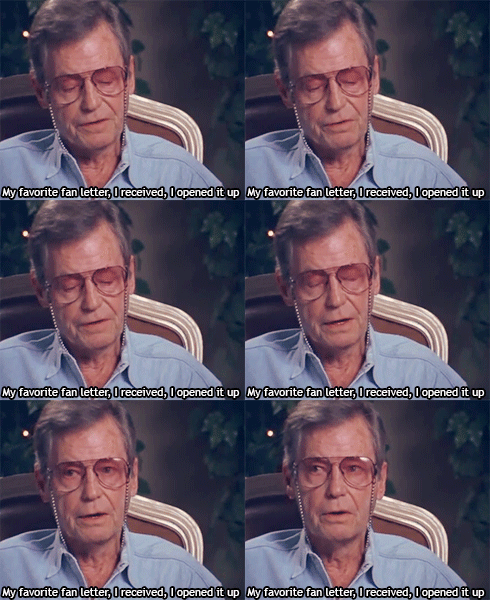
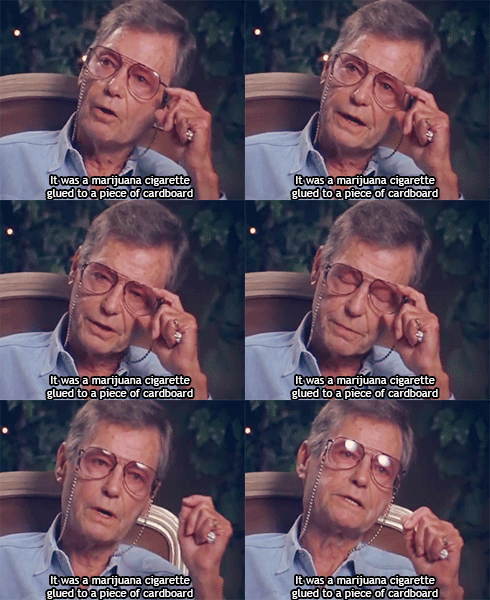
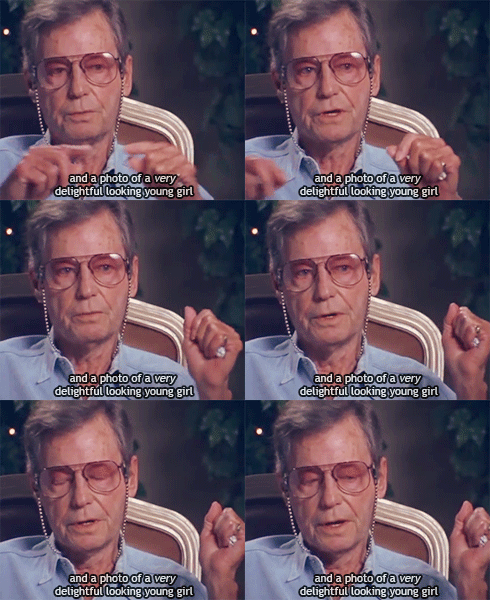
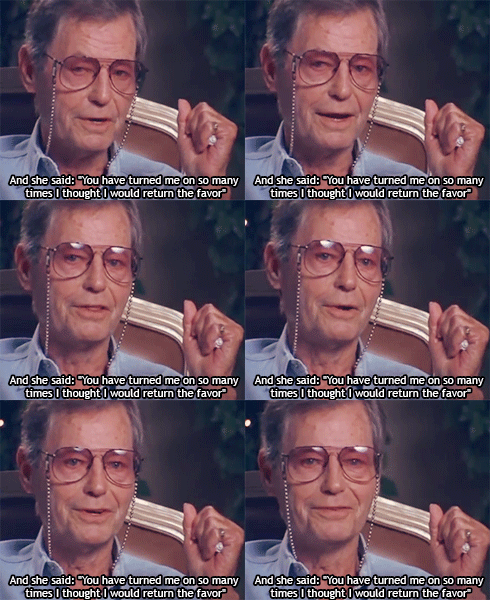
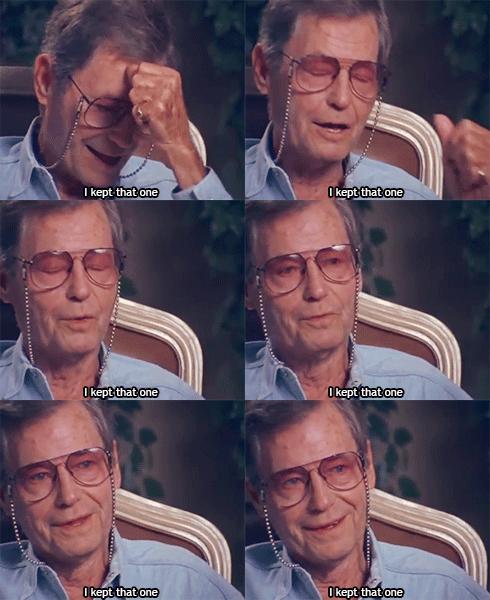
“My favorite fan letter, I received, I opened it up and it was a marijuana cigarette glued to a piece of cardboard, and a photo of a very delightful looking young girl. And she said “You have turned me on so many times I thought I would return the favor” — I kept that one”
I’m not sure if people today realize how deeply weird some of the older fandoms were in the pre- and early-internet days.
Take, for example, the Pern fandom. There were rules for writing fanfic in this fandom, very strict rules, laid down by The Great Anne Herself, and woe be unto you if you dared break any of them. I’m not sure I remember all of them, but these are the ones I do remember:
Thou Shalt Not Use Anne’s Characters, Ever. OCs only. Which…fanfic, I know. Like I said, the weird was strong in this one.
Thou Shalt Not Use Certain Specific Locations on the planet. Ever. Those were Anne’s Exclusive Playgrounds.
Stories taking place during the same time periods as any of the books? Right Out. A hundred years before or after is totally fine.
Pern dragons come in different colors. There were strict rules about what gender/sexuality combos could be pair with which colors of dragon. The dragons knew what people’s sexualities were, because gay pheromones.
Seriously gay pheromones I will never be over this
Thou Shalt Not Get Creative with The Colors of One’s Dragons. Book colors ONLY. Except that one book color, that’s right out too.
Do Not With The Porn, despite rapey mating flights being canon
There were more, relating to how characters could be named and other such things. And this was SERIOUS BUSINESS, I knew dozens of people who were hit with C&Ds from her lawyers because they made fanart or broke the Sacred Fanfic (??) Rules. I have no idea how many lawyers she had, but they were extremely busy people.
(And THANK ALL THE DEITIES that my terrible Pern fanfic was restricted to paper ‘zines and unlikely to ever again see the light of day…)
“….I think a lot of people don’t notice how broad and long term the effects of fandom’s existence…..really are. There is a generation of published authors that have come out of fandom, and right now a new generation is writing their first fanfic and getting their first feedback comment. There are TV writers who didn’t know what slash was 5 years ago but now consider slashers an essential part of their audience. Research of online fannish communities is a growing field in Social Sciences departments in universities all over the world. Every day I see more and more awareness and acknowledgment of fandom in the real world, every day it seems like more people are paying attention and more people are taking part in this community. When I was 9 years old, I didn’t have a computer; when my sister was 9 years old, she was posting her fanfic on fanfiction.net. Taking that in mind, I can’t think of a fannish community I’m familiar with that hasn’t been affected by the "social justice” issues that have recently become more and more mainstream in my corner of fandom. And the communities that haven’t been touched by it at all, will likely be touched by it in 5-10 years’ time.
-scans_daily started as a place to talk about homoerotic subtext in comics, today they have a How Not to Fail 101 post they make their community members adhere to. The campaign to protest the Avatar: The Last Airbender movie was as successful as it was, had the broad effect that it did partially because of the social justice work that had previously been done in fandom and because more people were receptive to issues like whitewashing in Hollywood ……Around 2006 someone came into a fan community for the US scifi show “Stargate: Atlantis” and expressed the opinion that the show was sexist and treated its female characters poorly. In 2006 that post had several pages of comments flaming that person and reciting various bingo squares on how it’s nobody’s problem but her own. Today that kind of reaction would be unthinkable in the same corner of fandom….. and many of the people you saw on the flamming side in 2006 are today regularly speaking out about feminism and other issues in media.
-I’ve seen people say that they don’t see the kind of awareness and understanding about social issues in their RL interactions as they do in fandom. And to that, honestly, all I have to say is look around. Again, 5 years ago you wouldn’t have been having these conversations in fandom. 10 years from now some kid is going to publish their novel who grew up reading non-faily fic about trans characters…… I see the effects all of this is having on the world; I don’t know how you can see them. And I know this is not just a “product of the times,” it’s the result of a lot of hard work from a lot of dedicated people, and if they - we - weren’t doing this, it wouldn’t happen by itself (and it won’t, in future).“
comments
x-posted to morgandawn | comment there
Anonymous commenting enabled or use OpenID to log in to comment.
can you imagine if tumblr was around when the original star wars came out and in the two year gap between movies there were heated arguments between luke/leia shippers and han/leia shippers and all kind of vague posts and fandom wank and thousands of luke/leia fics on ao3 and people devotedly making gifsets of luke/leia with florence + the machine lyrics only for it be revealed that they were SIBLINGS like can you imagine the fallout
like i’m imagining something akin to the great ron/hermione vs harry/hermione ship war of 2011 and all the thousands of words of meta and hate blogging debates over the dancing scene in deathly hallows, like if all that had happened and people became so deeply entrenched in their points of view and then jk rowling was like “word of god is that harry and hermione are long lost twins” like IT WOULD BE INCREDIBLE
But this sort of stuff DID HAPPEN.
fandom shit WAS THERE since 1977 and onwards. Just because the technology was different doesn’t mean it wasn’t there.
There were fan clubs like The Royal Order of the Rebel Forces, started in 1977 by “Paula Truelove”. There was an official newsletter Bantha Tracks that published fan art and meta.
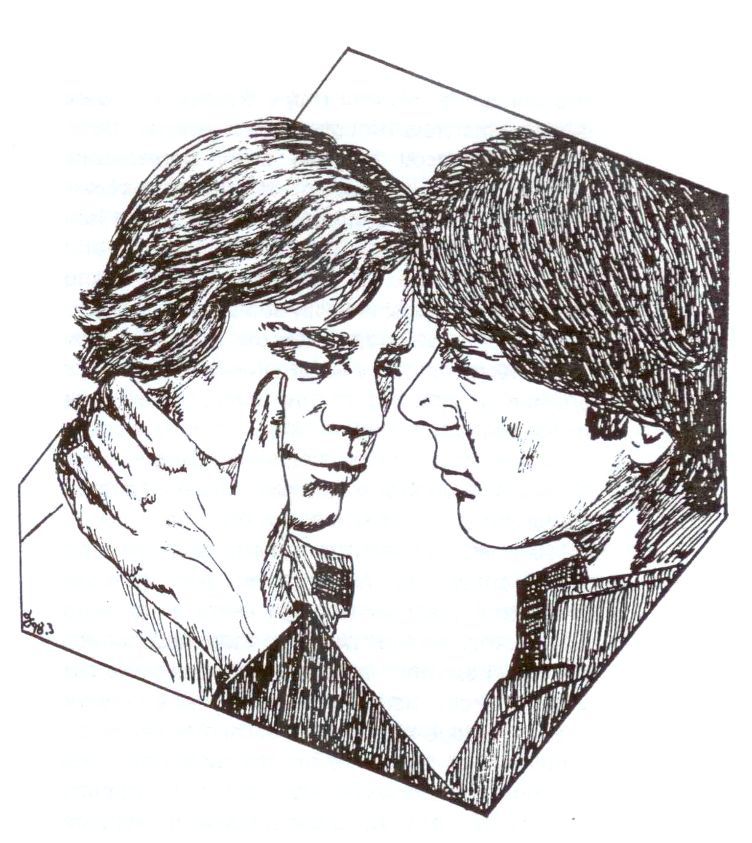
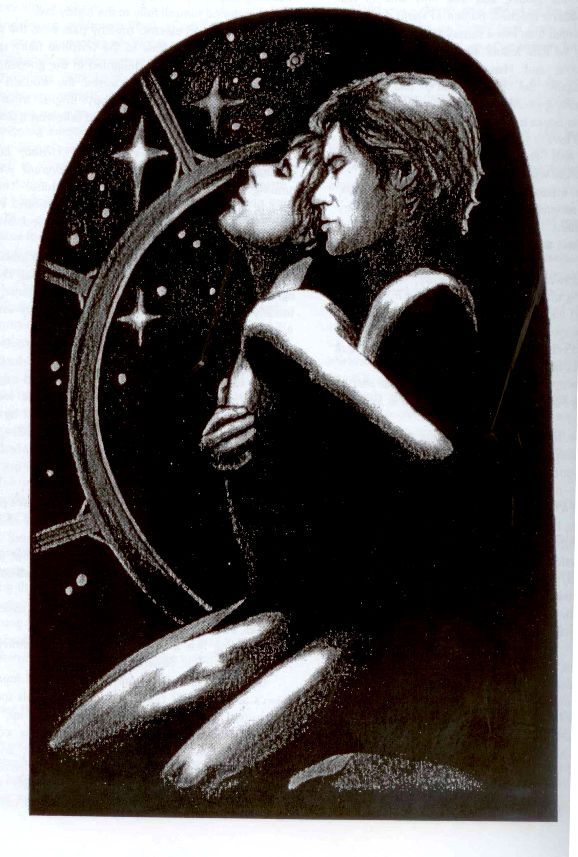
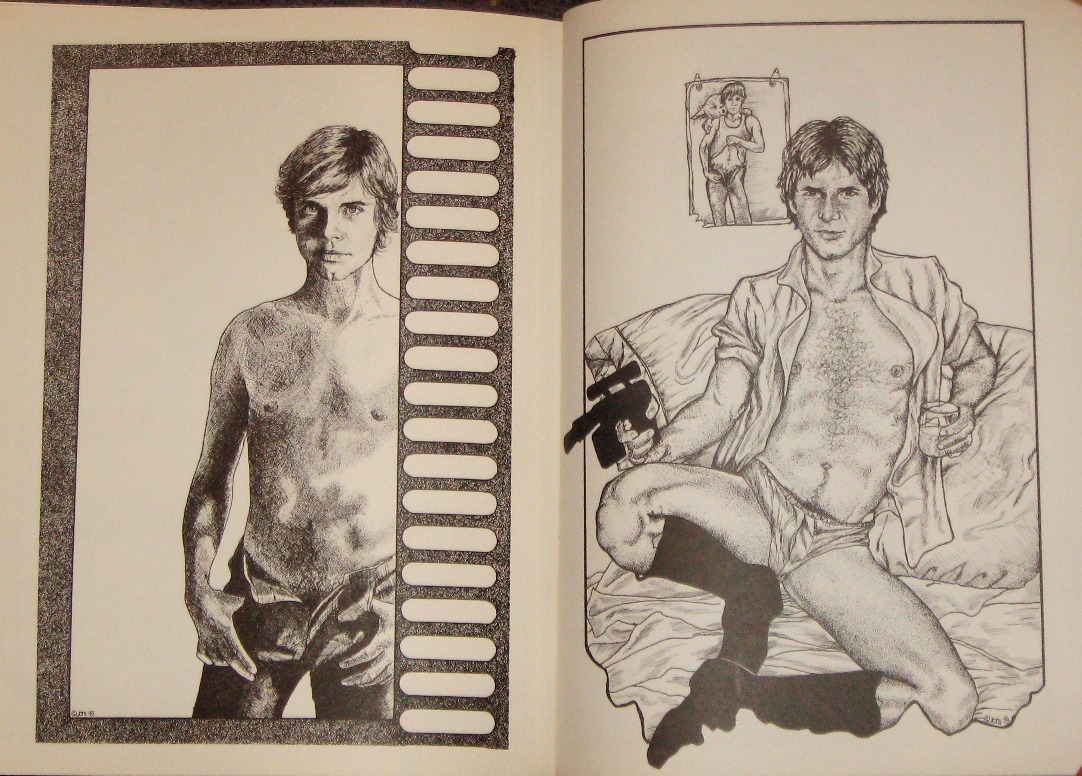
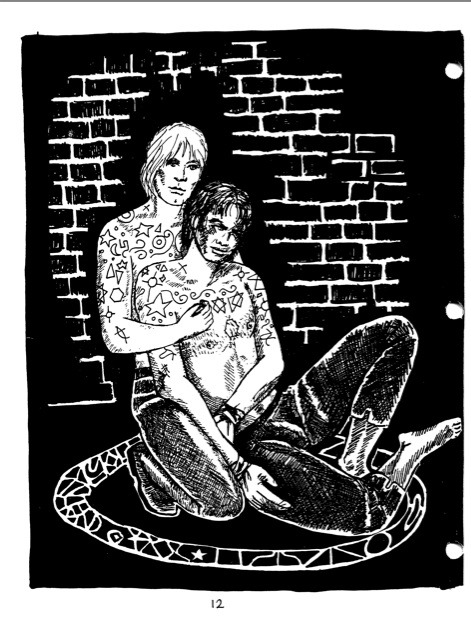
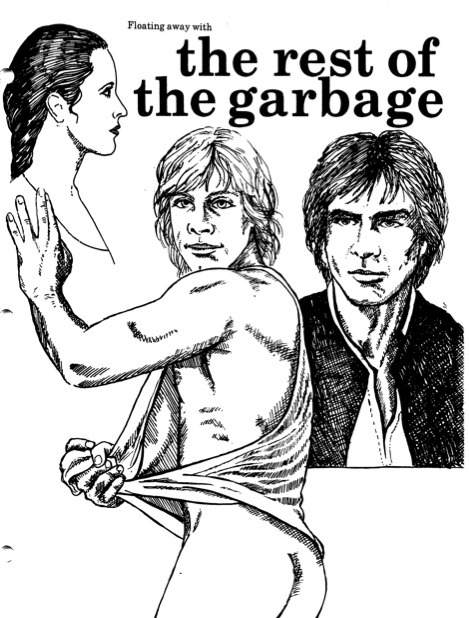
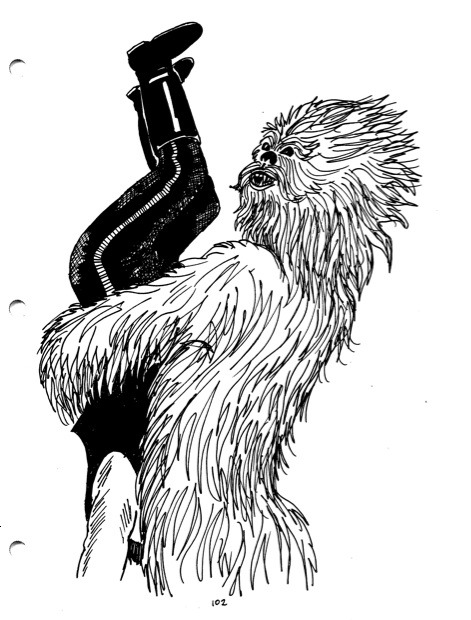
There was adult het and slash (Han/Luke) themed fan fiction since the early 1980s, much of which (especially the latter), had to be circulated privately bc of the uproar it caused with some of the fandom and Lucasfilm.
“Before the internet, fans kept in contact via regular mail and letterzines, which were small, cheaply produced zines that printed letters from the subscribers, often including new zine announcements, meta discussions and essays, and flame wars as well as friendly chat and news about the movies and the fan community. Some fan club groups also produced their own letterzines, some including members’ fan fiction and fan art.” Check the vintage zines out, they’re still selling on ebay
Attention: slash fans! If a weekend of fannish conversation, vids, fanart, and the giddy joy of IRL facetime with your fandom friends sounds like a good time to you, think about attending Escapade, held next month in sunny Southern California!
I always wonder what people who make these comments think middle-aged people do. Like, sit around, doing their taxes and talking about escrow 24/7?
Do they really expect not to have any fun or waste any time after age 30? Or maybe they think that people are just not awesome enough to be able to have a professional job, a family, and still waste time on Tumblr.
Well, I’m here, friends, to tell you that it is possible! You can have it ALL — the career, the family, and the incredible time-suck of fandom!
Oh middle aged WOMEN in particular are just… not allowed to have fun, I think? We’re supposed to be past it, pathetic and devote the remaining dregs of our time, energy & attention to caring for others, and studiously avoiding anything that someone might find worthy of mockery. Then we die (or become invisible). (I mean, maybe we’re allowed to have fun if it’s APPROPRIATE fun. Like, a small sherry after an age-allowed exercise class? A couple of hours of watching BBC2? Not fandom. Never fandom!)
This post has reminded me I still need to do my tax return. But that’ll take an afternoon, not my whole 40s.
Also middle-aged (because I don’t figure on living much past 90) and here reblogging and yelling at stupid people on Tumblr, sharing beautiful art and writing. I wanted this when I was a teen and I’m SURE gonna enjoy the hell out of it now!
Wow, I am middle-aged now? Who knew?
Yeah, I have a Tumblr, too. I do Tumblr when I am not casting spells, watching Marvel movies, or talking to my Beast Herd.
In the spirit of clarification I would like to point out that I am not middle aged but rather a ageless and deathless dread-beast of the underdark, which is entirely different. But I do have something to say, and it is this:
Time is an anchor. Time is a weight. Time is a dog that has picked up your scent. Time is a vampire. Time is a screw. Time is the god that you don’t choose to worship, but you are the flesh that is burned on his altar.
You are not young. You are a visitor. You have lingered in this country, but your visa is expiring.
You are standing on the deck and you are in the sunlight. You are watching the coast go by, the castles on the bank. Do you see the flowers, darling? Do you see the children waving? Wave back at them, darling. Wave as they pass. The current sweeps one way. The current runs downstream.
You will never return to the school bus, the board-books, the faith in the wisdom of your elders. It has passed. It has gone. You saw it as you fell, and you are still falling. There is no return, darling. There is no falling up again.
You will grow old and your body will be a stranger’s. You will grow old and men’s eyes will pass over you. You will grow old and you will learn what you’re made of. Will you know yourself, darling? Will you love who you have become?
You can lay back, darling. You can let yourself be carried. You can sink to the deep with the anchor round your neck.
Or you can decide that you don’t give an everloving fuck and reblog a bunch of GIFs if you damn well feel like it, because one of the benefits of not being a puerile youth is that you’re not hysterically concerned with what other people may or may not think about your hobbies.
Child, I’ve been spreading porn via social network since before you were born.
“Well, do you do that consciously?“ Daily Alice asked, only partly of Cloud.
“Do what?” Cloud said. “Grow up? No. Well. In a sense. You see it’s
inevitable, or refuse to. You greet it or don’t – take it in trade,
maybe, for all you’re going to lose anyway. Or you can refuse, and have
what you’ve got to lose snatched from you, and never take payment –
never see a trade is possible.”
― John Crowley: Little, Big
I grow old, and I stand with the power of decades in my blood and the legacy of centuries of women behind me, and I can look at the delightful shifting passions of youth and think, glad someone has the energy for all that, and also, when you have a moment to rest, sit beside me, and I will tell you of your foremothers and their passions… how they paid for the right of two women to kiss in public with blood and pain; how they built entire technologies to show their friends the thoughts that burned in their hearts when they saw the tv shows where the only true trust and love was between men; how they shared stories and songs and art with each other when all these things were hard and took irreplaceable resources–not just the fic and filk and pics, but the sharing itself.
Find me when your ex-best-friend has called you a pervert for imagining a particular romance, and I will tell you of the letterzines where the very existence of slash was cause for shock and outrage. Find me when a teacher berates you for the “frivolous waste of time” of writing fantasy stories, and I will remind you that JK Rowling was a single mom on welfare. Find me when someone calls you a “fake geek girl” for liking costumes more than collecting action figures, or for playing Portal and not Call of Duty, and I will share my stories of playing Dungeons and Dragons when schools and libraries were trying to ban it for being “Satanic”–and everyone assumed the girl would always play the healer. (Guess what? If you play a dark elf cleric with no healing spells, the rest of the party gets really upset. You’re the girl; you’re playing the priestess; HEAL ME DAMMIT. Heh.)
And in return, you can show me the fics buried in quizzes, and the vids that show up overnight when a new fandom appears (so quickly! it all moves so fast now!), and the way that twitter conversations and text messaging can create stories and art with an immediacy we never had, when I was young and fandom was new to me.
Fandom belongs to neither the young nor the “old” (for some of you, that’s anyone over 25, which makes me giggle–Google didn’t exist when I was 25; we found our fic through web rings…); if you let it, fandom will be a home and an adventure all at once, for the rest of your life.
But you’re going to miss a lot of the good stuff if you waste your energy–which is limited, I assure you, and you’ll figure that out soon enough–telling other people we don’t belong in this fannish location, or should not have that fannish hobby, or must not create some particular kind of fanworks.
We may not have speed and agility anymore, but wow do we have stamina. And patience. And time is on our side… we can wait you out, but that doesn’t work the other way around. If you wait, you’ll eventually join us.
@eeyore9990, this post has come around on my dash at least half a dozen times and each time it has new and wonderful commentary.
Lol, I read them all through the power of notes, heh. And the thing is, it’ll go MONTHS with no likes or reblogs and then suddenly get a thousand new, wonderful stories in a single day. I love the way a little bit of fandom history gets added with each iteration.
I actually have more to say: Every person on this thread… We need to go ahead and build our retirement home. A place we can go when our eyes have failed and our arthritic fingers can no longer type or draw. When age really has taken our ability to do this thing we love so much.
We will sit in our rocking chairs, eating our jello, and shriek at each other – because hearing aids only do so much – about what a nice, round ass that boy on the television has. Or what gorgeous lips that girl has. Or maybe we’ll just discuss the fanfics of old. We’ll reminisce about fandon wank we survived. We’ll hang our favorite, framed fan art. We’ll watch holographic fanvids of the newest iteration of Sherlock or the Harry Potter reboot or WHATEVER.
But this is my dream. To live and die on the Fannish Road.
So let us all gather at ConValescence, The fannish retirement con, And true to our habits, like drumming pink rabbits, It keeps going on and on …
Where the Art Show has pictures of Dorian Gray, Where the Tully and oxygen’s pure, And where we will party, flirt, filk, shmooze, and SMOF Till the Con Suite runs out of Ensure.
Okay, people, we need more panel suggestions. It’s boring to vote if there isn’t a good variety to choose from. What meta topics are missing? What fandoms deserve a panel but haven’t had one proposed yet? (I propose like half the panels myself, and I’m often not in the big stuff, but the people who forgot to get their nominations in on time very well might be.) What how-to topics have you always wanted to see at a con?
And if you’re going “???”, Escapade is a great slash con in LA at the end of February. Hope to see you all there!
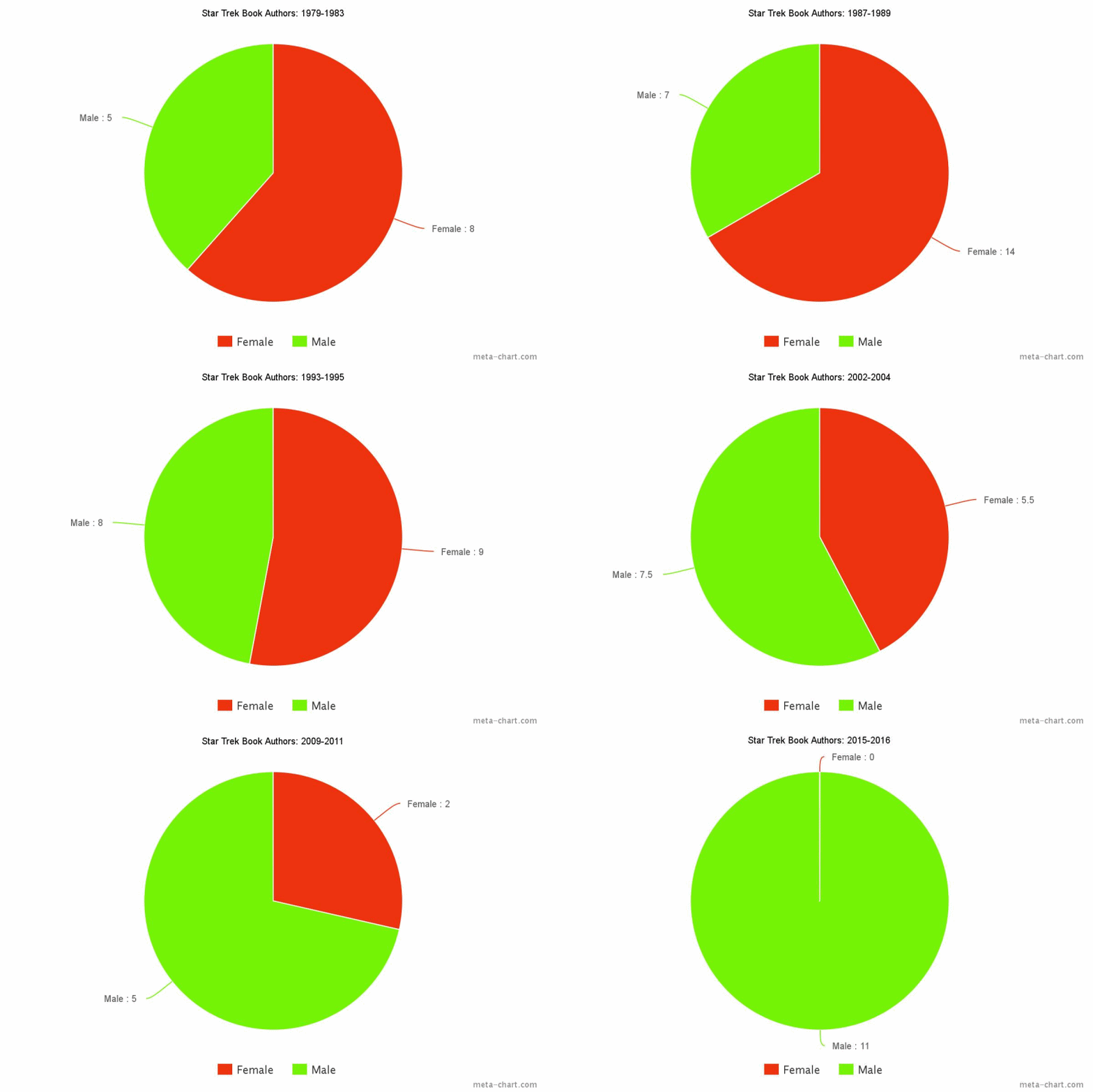
“tl;dr - Star Trek TOS Pocket Books currently have no female authors. This needs changing……….all of the current TOS Star Trek novels are written by men.
Every. Single. One. Obviously men have a place in Star Trek. Obviously
men have a place in science fiction. But women have a hell of a place in
Star Trek too. Women were instrumental in keeping it on our screens and
so instrumental in the early novels and fan fiction. …..
The gif above is the result of my research on
the TOS Pocket Books novels published between 1979 and 2016 (of course
the 2016 ones are as yet unpublished.) Each frame shows the ratio of
authors identified with male pronouns on the internet (in green) to
authors identified with female pronouns on the internet (in red)…..
So, what does this gif
show? An astonishing slide towards a completely male authors……
……They’re ignoring female writers, and they’re ignoring female
readers, too. This needs highlighting, it needs discussing, and it needs
changing.”
isn’t the story that fannish women abandoned the Pocket Books gig when they realized it was a pretty rum deal?? not enough money/creative credit, and you can’t do good fic work under the creative constraints placed on profic writers.
Tell me more about this!
urk, I don’t really have sources to hand, this is more in the line of old remembered hearsay … let’s see what I can pull up …
the fanlore page on tie-ins links to some documentation on drama w/Pocket Books in the 80s; I don’t believe that as a rule the payout was very good? And there’s the case of Della Van Hise’s slashy-as-hell book Killing Time, which was re-issued with the queer toned down (though even bowdlerised it’s still delish); K/S was (explicitly?) disallowed, and of course tie-ins are also really hampered by the need for a reset at the close. This article in TWC mentions the editors at Pocket wanting to avoid authors “tainted” by fanfic, so it doesn’t sound like crossover success was much encouraged.
I feel like the vibe I got irt tie-ins as a young fan at the turn of the
millennium was that they were fine, but not necessarily a venue for fen to count
on for either creative or financial success.
There’s still def. an issue with women’s work being unpaid; but I think it’s the old struggle that was discussed by cupidsbow, among others, back in 2007. Our independence from monetization here in fanspace gives us freedoms undreamed-of by the market - but we don’t get paid, and can’t claim our work in professional contexts.
You see, that raises even more questions. I was talking earlier about how I’d heard a couple of female Star Trek authors discussing how badly they were treated by the publishers. I haven’t read similar from male authors, although there may be complaints out there. Are women treated more badly by the publishers? Are they less willing to put up with it? What’s going on here?
Do the publishers perceive less of a female audience willing to hand over money? Are women going more to fan fiction than pro novels? Is it a vicious circle or something that’s deliberately being pushed? We could ask similar questions about fan fiction. Why is fan fiction so overwhelmingly dominated by women?
The steep decline in women authors across all Trek books started around the time S&S stopped doing open pitches for Trek novels in the late 90s. Since that time one needs an agent to pitch an idea - agents and agencies (and gatekeepers in general) in the publishing business are pretty misogynistic, which means fewer women authors being able to pitch Trek book ideas. That’s my theory anyway!
Honestly, after reading the guidelines about what is and isn’t acceptable material to submit as a novel, I’m surprised anyone is publishing any Trek books. Here’s the official list.
DOs and DON'Ts
There are a number of plots that we would specifically like to avoid:
Any story primarily about a guest star or non-Star Trek regular. This means no stories about other crews, ships, or guest characters that become the focus of the story. The novels should always “star” Kirk, Picard, Sisko et al. Paramount Pictures feels very strongly that Star Trek stories should primarily be about the Star Trek characters, who must be the major problem solvers in any Star Trek novel.
Death of an established crewmember or character, or any other permanent change in the Star Trek characters, settings, or universe, such as introducing offspring or close relations of the characters other than those already in existence. Also no childhood or current sweethearts, although you can create temporary love interests. As with all series, the status quo must be restored at the end.
Any plot that hinges on or describes in detail sexual relations of any kind, especially between humans and aliens. We are not interested in books that suggest anything other than friendship among any of the Enterprise crewmembers.
No mixing of casts is allowed, which means no plots that mix the characters from one series with another. While we do intend to occasionally cross over between series this will always be handled very carefully in-house.
Traveling in time to change history or learn something, rescue someone, etc. Also, we are currently overstocked on alternate universe storylines.
For Deep Space Nine and Voyager, the books should stay current with the programs. Next Generation should, for the moment, be set between the end of the series and Star Trek: Generations, the first movie with the Next Generation cast.
No stories that turn out to have been a dream, a hoax, or a virtual reality sequence. We are also avoiding novels that start out with an action-packed opening that turns out to be taking place on the holodeck.
No “test” stories, i.e. stories where the Enterprise is tested by god-like beings studying humanity or judging our worth.
Avoid trying to definitively map out a character’s history beyond what has already been done in the movies or television episodes. When we do biographical books, we work very closely with Paramount and the writer. As a general rule, the best chance for a Star Trek submission by a first-time Star Trek writer is to submit a “traditional” Star Trek mission story that follows the Problem on Planet/Problem on Ship (or Station) formula. If you’ve been reading the novels, you know that we do take some chances and publish books that push the boundaries somewhat, but be advised that we approach these stories very carefully, working closely with experienced Star Trek writers and Paramount Pictures.
Do not introduce any levels of technology beyond what has been established in the television shows.
As you can see, a lot of these rules are pretty arbitrary at times and fairly stifling to creativity (not to mention that #3 is blatantly aimed at discouraging shippers). And frankly, it really shows as most of the more recent books are often fairly dull in comparison to some of the stuff published in the 70′s (”Child of Two Worlds” is probably the first exception in a long while where I actually enjoyed a Trek book published after 2000).
Maybe I’m just being optimistically naive, but perhaps the female Trek writers felt that these rules were just too constricting and would rather publish their writing in zines or online where they were free to use their imaginations without restraint. I think it is a stylistic tendency that a lot of female Trek writers (at least the ones I tend to read) tend to focus their stories on new possibilities, “what if?” scenarios, and/or complex emotional journeys, and this list tends to discourage nearly all such writings. A lot of male writers (at least nowadays) may be content with writing yet another story about Capt. So-and-So fighting a space battle/avoiding galactic war/saving a planet and so have less problems working around the guidelines.
I know personally, I had an idea for a fic/possible book, but there is no way in hell it would ever get published under such guidelines since it already breaks about five rules.
If you wish to take part in any fandom, you need to accept and respect these three laws.
If you aren’t able to do that, then you need to realise that your actions are making fandom unsafe for creators. That you are stifling creativity.
Like vaccination, fandom only works if everyone respects these rules. Creators need to be free to make their fanart, fanfics and all other content without fear of being harassed or concern-trolled for their creative choices, no matter whether you happen to like that content or not.
The First Law of Fandom
Don’t Like; Don’t Read (DL;DR)
It is up to you what you see online. It is not anyone else’s place to tell you what you should or should not consume in terms of content; it is not up to anyone else to police the internet so that you do not see things you do not like. At the same time, it is not up to YOU to police fandom to protect yourself or anyone else, real or hypothetical.
There are tools out there to help protect you if you have triggers or squicks. Learn to use them, and to take care of your own mental health. If you are consuming fan-made content and you find that you are disliking it - STOP.
The Second Law of Fandom
Your Kink Is Not My Kink (YKINMK)
Simply put, this means that everyone likes different things. It’s not up to you to determine what creators are allowed to create. It’s not up to you to police fandom.
If you don’t like something, you can post meta about it or create contrarian content yourself, seek to convert other fans to your way of thinking.
But you have no right to say to any creator “I do not like this, therefore you should not create it. Nobody should like this. It should not exist.”
It’s not up to you to decide what other people are allowed to like or not like, to create or not to create. That’s censorship. Don’t do it.
The Third Law of Fandom
Ship And Let Ship (SALS)
Much (though not all) fandom is about shipping. There are as many possible ships as there are fans, maybe more. You may have an OTP (One True Pairing), you may have a NOTP, that pairing that makes you want to barf at the very thought of its existence.
It’s not up to you to police ships or to determine what other people are allowed to ship. Just because you find that one particular ship problematic or disgusting, does not mean that other people are not allowed to explore its possibilities in their fanworks.
You are free to create contrarian content, to write meta about why a particular ship is repulsive, to discuss it endlessly on your private blog with like-minded persons.
It is not appropriate to harass creators about their ships, it is not appropriate to demand they do not create any more fanworks about those ships, or that they create fanwork only in a manner that you deem appropriate.
These three laws add up to the following:
You are not paying for fanworks content, and you have no rights to it other than to choose to consume it, or not consume it. If you do choose to consume it, do not then attack the creator if it wasn’t to your taste. That’s the height of bad manners.
Be courteous in fandom. It makes the whole experience better for all of us.
These rules seem very simple and straight-forward. But I’ve been reading the follow-up questions/asks and I can see how tricky they are to apply in the real world setting.
Ex: “You are free to create contrarian content, to write meta about why a
particular ship is repulsive, to discuss it endlessly on your private
blog with like-minded persons.“
This rule hinges on how we interpret (a) contrarian content, and (b) private
blog.
Ex: I see a hurt/comfort story that I feel perpetuates a dangerous and unhealthy attitude towards hurting and comforting.* So I make a post saying this in:
1. My LJ/DW
2. My tumblr blog
3. My twitter
4. My Facebook
It then gets picked up and rebroadcast everywhere.
A. Is what I wrote contrarian content? Probably so, depending on how much analysis I add. Twitter will offer me less space so my post would probably have less meta and more un-nuanced “ick” (”Perfect example of the dangers of hurt/comfort trope http:bitly.com”) But perhaps not…maybe I am simply writing a dry and boring post about the history of hurt/comfort fan-fiction and how many different ways fans have labeled it “unhealthy” over the years.*
B. Are these all private spaces? To me, all 4 places are “my” private spaces. But for others, they are less so. It used to be that fannish discussion took place in public or semi-public spaces (letterzines, Usenet, mailing lists and forums) where everyone was gathered around and no-one “owned” the space.** So you knew going in (or you would soon learn) that there was a bigger sandbox where everyone could and would fling sand about.
But with the shift towards blogging and then even more diffuse social media communications, the line between private and public blurred. Over time, more and more prescriptions are being added to how we “talk” to fellow fans - there are many examples were fans are being told that tumblr blogs are not private spaces where we can run heedlessly naked, but that we have to put “some clothes on” (aka need to tag our posts the “right way”). But from a historical perspective, this focus on the “right vs wrong” way carries its own subjectivity. We didn’t have to worry about tagging in our LJ/DWs - there we were told to use “cuts” to hide possibly objectionable text. I don’t know if there are instructions how to do a responsible tweet - but I am certain someone has a strong opinion on the topic that I am expected to know. And on Facebook I am even less clear on how I am supposed to avoid shoving my contrarian content at others.
Tl:dr: These are good rules to follow. Because it is hard to define what is “anti-ship”, where we can
post it and how we can post it without creating a negative fan
environment, the best we can do is focus on policing our own actions. And assume
that not everyone will agree with our choices.
*Of course the definition of “unhealthy” varies widely. In some corners of fandom, the hurting is more important than the comforting. In others, the comforting is more than the hurting. In yet even further reaches of fandom, the hurting and comforting must be done realistically as possible. And finally, there is a strong movement that feels that all hurt/comfort is unhealthy because it takes away valuable pron word count.
*”Owned” is a bit misleading as moderators often used a heavy hand and would set rules, but most understood that these places were not their own private sandbox.
There are, of course, plenty of people who want both: many more canonically queer characters and relationships, and the right to queer your own reads on characters, regardless of what you’re given on the page or the screen. And it’s in this dichotomy that we see the trouble with conflating shipping and representation: they are separate acts, and we need them both in equal measure. The world that I joined when I started reading slash was one built on decades, perhaps even centuries of subtext and coded readings; our media is slowly – and at times, it feels painfully slow – making that subtext text, and allowing characters to be queer from the start.
“It’s difficult for me to write this article because I think I represent a group of fans who are the cream of the crop. [Actor X] attracts a special kind of fan: intelligent, polite, well-groomed, and in every way the very best in fandom.”
Save. Save everything. Look, everybody is conspiring against fandom archival right now. Tumblr is letting people change their names and break all the links, LiveJournal is objectively a piece of shit for long fics and anything behind the 18+ wall, and I don’t even know if AO3 is good in the longer run. As AO3 is getting more popular more people are going to lock their stuff up, and locked stories can’t be archived by Pinboard. The link you saved 2 years, 2 years! ago is probably shit now.
I don’t know what the solution is, other than firing up MySQL and building your own database or something, which AO3 isn’t making easy for us because it doesn’t want to put out a fucking API. Incidentally, what is up with their donation scheme? I’m getting really worried.
Don’t fandom and politic at the same time? People in fandom have this funny way of making you think you are being political even though you really aren’t doing anything. Fandom has politics like trigger warnings and cultural appropriation; what about politics that change lives and challenge the capitalist structure? Don’t fool yourself, is what I’m saying.
Finally, if you’re not having fun, stop. And you know, prioritize. It’s so, so easy to lose perspective in fandom, because the unsaid thing about fandom is that none of this actually matters. You think it matters that you defaulted in Yuletide, two years from now? You think it matters that this actor said that dumb thing, even a week from now? “Ruining” somebody’s “enjoyment” of something is not a crime anywhere except in fandom, and then saying the thing out loud will make it sound preposterous in and of itself.
All the gears in fandom, you know, are built to sustain the fiction that fandom matters, and the greatest punishment will be meted out not to the people who act like assholes, but to the people who see that the emperor has no clothes.
Re point 1: Whether committed to paper or digital, everything conspires to erase fandom culture. (this is also true of the rest of life so to be clear - we are not special snowflakes in this regard).
To my horror, we’ve found out that many of the old fandom archives that were backed up via the WBM are now being retroactively erased. When a bulk domain reseller snaps up the domain name of some long lost fan website, they put up a no robots.txt file and the WBM honors it and erases everything.
Wikipedia writes: “A quirk in the way the Wayback Machine operates means archived copies of sites sometimes become unavailable, for example, the Freakonomics blog previously hosted at freakonomics.blogs.nytimes.com. Those URLs were then
excluded from archiving by the New York Times’ robots.txt file. This
had the unfortunate effect of also rendering the previously archived
content unavailable.”
[They continued] the discussion on the sometimes differences between writing-for-pro and writing-for-fun. I think the disdain many have for “amateur” lit can be traced back, at least, to Dr. Samuel Johnson with his “No man but a blockhead ever wrote except for money”, from BOSWELL’S LIFE OF DR. JOHNSON. Add that attitude to our culture’s use of money to describe a person’s worth, and you end up with non-profit writing being considered worthless (even for blockheads!). Or suitable only for women… Poetry, for example, which makes very little money in our culture, is considered effeminate by many. Sometimes, when I can’t reconcile my own feelings on the subject, I think of fannish writing as folklore. Like folk songs and folk tales, fanlit fills a need of our social group, it grows and changes with that need and with time and the concept of marketing it does not apply. And just as the concept of growing and catching what we eat, weaving and sewing the clothes we wear, providing directly for our survival has given way to working for money so we can buy what we need to physically survive, so, too, food for mental thought has passed out of the hands of those who use it directly into the hands of those who sell it back to us. What we fans provide for ourselves is self-entertainment, a mighty rare beast these days.
The year was 1986, and Star Wars fans were discussing their changing fandom, the impact of commercialization on fandom and the role of fandom in general. The widespread adoption of the Internets was still 10 years in the future.
Poe/Kylo Ren: Abusive, racist (white guy torturing non-white guy; in this context, Poe is considered a PoC).
Kylo Ren/Hux: Literal Space Nazis don’t deserve to get laid; Nazi-apologism.
Feel free to add your own observations. :)
ah, this reminds me of the good old post-rots days when if you shipped anakin/obi-wan you were a misogynist for ignoring padme, and if you shipped anakin/padme or obi-wan/padme you were homophobic for ignoring the anakin/obi-wan subtext (listen, i’m not saying i fought in the old ship wars, but i might have been involved in, er, some boating skirmishes once or twice >.>)
in short: new star wars fandom is as awful as old star wars fandom, proceed with shipping as you please, because no matter who you ship, you’re a terrible person, so just enjoy your voyage into fandom hell
I am actually kind of glad I wasn’t into this enough to become fannish, because this sounds like a shitstorm of teen wolf proportions.
In short: no matter what you ship, it will be evil trash.
This basically sums up the general gist of every supposedly social - justice based shipwank in every fandom ever lbr
Perhaps it’s my age speaking, but I’m starting to miss the way fandom used to be fifteen years ago. Mostly since back then the concepts of ‘darkfic’ and ‘don’t like, don’t read’ were properly understood and adhered to (usually). The situation with darkfics was interesting in particular, because the entire premise was that the author could write incredibly fucked-up things, with the understanding on their part that shit was indeed very messed-up and with no pretense to the contrary (what usually gets termed ‘romanticization’ these days).
Now? You’ve got to run an entire rigmarole of explaining the difference between romanticization and just straight-up exploring a horrible dynamic in writing as, you know, a writer. And even after that, you’ll probably have to deal with the whole invasive ‘explain every trauma you might’ve gone through, so strangers who otherwise don’t care if you exist can decide if they give you Permission to use writing as a coping mechanism’ mess. Fucking hell.
I’ve said it before. Learn to tell the difference between fantasy and reality. Learn to tell the difference between what someone explores on the page as a writer and what that same person believes and advocates in their day-to-day life.
Truth.
Hey guys, remember squickfics? I remember squickfics.
all too well
*applause* well put
Read this before you read a fanfic, then remember it before you question a writer’s motives.
I think what probably gets me deeply into my feelings about this “JKR should have just made her students Of Color to start with, she can’t ret-con and pretend she did it right the first time” is that I grew up with Anne Rice and Anne McCaffery, two female fantasy writers who hated headcanons and fandom and sued people for deviating from their original vision or doing any kinds of derivative works without their express contractual permission.
I feel like people who get irritated with her about defending black!Hermione don’t appreciate how much healthier JKR’s attitude toward the inclusivity movement in her fandom is than theirs was. Or Moffat’s is. Or Gatiss’s. Or Whedon’s. Or Green’s. Or even, until very recently, Lucas’s.
She’s not a PCR, but goddamn, at least she’s passing us the milk rather than pissing in our cornflakes.
Jo is actually almost entirely responsible for fanfiction being what it is today.
BUT WAIT, I hear older fandomers cry. X-Files, Star Trek, Xena, how dare you. And yes, I say to those fandomers, you held those banners first! Be proud of the paths you forged. But Jo–
Jo did something no author or creator had ever done before.
She was a household name who encouraged fanfiction.
When I first began writing fanfiction in 1998, it was common practice to preface your fic with this massive disclaimer about how you weren’t selling it, and it was for fun, sometimes quoting the Fair Use part of the Creative Commons act, and even begging authors not to sue. Because in those days, that was a very real danger. Eleven-year-old me had reams of fanfiction on floppy disks I didn’t dare send to archives because I might get arrested and taken to Plagiarism Jail.
And then there was Jo. And no, Jo said, this is not a private amusement park at which you may stare longingly from the other side of wrought-iron gates. It is a giant sandbox. Here are my pails, here are my toys. Come sit and play with me. Eventually you may decide you like some other sandbox better, and all I ask is that you leave my toys here for others to play with, and not try to take them with you. But why should I lock you out of my sandbox? It is, after all, far more fun to play in a sandbox with many people than by yourself.
People were boggled. They didn’t get it. They thought she was crazy. And the fans? They kept loving, and writing, and drawing, and creating, and Jo kept loving them back. Potter Puppet Pals, A Very Potter Musical, Potter!, Remus and the Lupins, all stuff Jo just kind of went “whatever, they’re having fun.”
And attitudes began to change. And then someone else threw her lot in with Jo, someone who doesn’t get a lot of credit for contributing something massive to fandom culture and should:
Stephenie Meyer.
Yeah, you read that right. The goddamn author of Twilight, who refused to sue teenage girls who just wanted Bella to end up with Jacob. (And who is way more gracious than I would be about Fifty Shades.) She actually has a fanfiction archive right on her website! I’m serious: Smeyer has links to a personally-curated list of Twilight fanfiction she personally enjoyed or found interesting. Whatever you may think of her writing, that loving attitude of “we’re all here to have fun, I love that you love my world and my characters, please enjoy” was such a departure from the days of C&D letters and page-long disclaimers.
These two women changed the face of how fandom works forever. Yes, their work is flawed. They are products of their time and upbringing. But just the fact that they embrace the concepts of “my world as I see it and my world as you see it are not the same, and that’s not just okay, that’s good” is something to be celebrated.
I have a lot of issues with Meyer, but her treatment of fans is not one of them.
This is fascinating and all credit to Meyer and Rowling for being so instrumental in changing the culture. I do just want to add that the producers of Xena actually hired a fanfic writer to scriptwrite on their final season. As it often did (with a female TV action hero, with a musical episode), Xena helped to point the way.
Look, I don’t want to minimize Rowling’s contribution to
fandom culture. I think she’s terrific, honestly, and kudos to her
in particular for being so awesomely outspoken on issues of class and
race, as the OP pointed out.
But I simply don’t accept that she’s the be-all end-all when
it comes to creator support of fan fiction. Certainly the sheer
enormity of the HP fandom has had an impact on the evolution of
fanfic and fandom in general, but Rowling’s support is far from the
only factor in that.
The very nature of the internet itself has changed dramatically in
the nineteen years since the first Harry Potter book was
published. Technology has advanced in leaps and bounds that we never
could have imagined in such a short time, and we’ve seen the rise
and fall of web sites and social media platforms that have each
impacted the way people band together and interact online. To ignore
theses seismic shifts in the global social and mass media landscape
is to see only a very small piece of the picture.
J.K. Rowling didn’t originate the notion of supporting fanfic,
she simply carried on a tradition that had already been in place for
years before she ever wrote her first word. The tradition of the very
people who inspired her to become a writer in the first place.
She and Meyer and James are merely part of a very long and illustrious line of authors who have
openly supported fan fiction over the years, including (but not in
any way limited to): Diana Wynne Jones, Terry Pratchett, Lois
McMaster Bujold, S.E. Hinton, Bernard Cornwell, Jim Butcher, Ellen
Kushner, Meg Cabot, Neil Gaiman, Michael Chabon, John Scalzi, Lev
Grossman, Cory Doctorow, N.K. Jemison, and of course Naomi Novik. (It’s nice that Meyer has a fanfic archive on her site, but I assure you she’s far from the first author to do so.)
Among TV writers, Gene Roddenberry, Joss Whedon, Paul Cornell, and
John Rogers, among many others, have been outspoken supporters of fan
fiction. Star Trek was one of the last television shows that
actually accepted unsolicited scripts, and hired a number of fanfic
writers over the years (and was still seeking
out fanfic writers to pen their official novelizations, last I
heard). Someone above astutely mentioned Xena. And let’s not
forget that The X-Files actually created a recurring character
in memory of a deceased fanfic writer—and not in a snarky, Aaron
Sorkin way, but as a sweet, tender tribute to the fans’ love of the
show. If that’s not a strong show of support for fanfic I don’t
know what is.
So please don’t tell people that J.K. Rowling was the first household name who ever encouraged fan fiction. You may not
recognize all of the names above, but I assure you that others do.
There are people out there writing fanfic today to whom Terry
Pratchett or Diana Wynne Jones or Gene Roddenberry or Joss Whedon are
far, far bigger names than J.K. Rowling. Just because she was the
most important to you doesn’t mean she was the most
important. The cultural impact of these other creators cannot be
underestimated.
You also seem to be conveniently forgetting that Warner Bros. sent more than its share of C&Ds to Harry Potter fans back in the day, and that Rowling actually sued a fansite over their
intention to publish a companion book. I’m not saying she was wrong
to do so—she has every right to protect her potential earnings from
her own creations—but it certainly wasn’t a triumph of fair use.
The Fair Use Project at Stanford University Law School said of the
suit: “In support of her position Ms. Rowling appears to claim a
monopoly on the right to publish literary reference guides, and other
non-academic research, relating to her own fiction. This is a right
no court has ever recognized. It has little to recommend it. If
accepted, it would dramatically extend the reach of copyright
protection, and eliminate an entire genre of literary supplements:
third party reference guides to fiction, which for centuries have
helped readers better access, understand and enjoy literary works.”
I’m just saying, she’s hardly the patron saint of letting
people play in her sandbox.
As for the disclaimers you mentioned: they were never anything but
a placebo, and the presumed necessity of them a fandom urban myth.
The hysteria about fanfic writers being sued grew largely out of
misinformation about a famous Marion Zimmer Bradley lawsuit, and was compounded by a rash of overreaching C&Ds in the late 1990s/early 2000s. Even
if the threat of being sued had been real, the reality is that disclaimers bestowed
no actual legal protection.
Fandom’s abandonment of these unnecessary bulwarks
was the result of increased education about copyright laws and
fair use, and increased awareness of rampant C&D abuse, due largely to the efforts of Creative Commons and the
Organization for Transformative Works. I could argue that we owe far
more to Naomi Novik, one of the founding members of the OTW, for the
fact that disclaimers have fallen out of use, than to anything Rowling ever said or did.
Like I said, I’m not trying to deny that Rowling has had a
significant impact on fandom culture. But neither am I willing to let
other important contributions be ignored or forgotten so that she can
be crowned the queen of all fan fiction.
I also support any and all fanfiction for my books. I got my first fanzine around 1979 or 1980, before The Empire Strikes Back came out, and it was a huge thing for me. And fan art of any kind makes me profoundly happy.
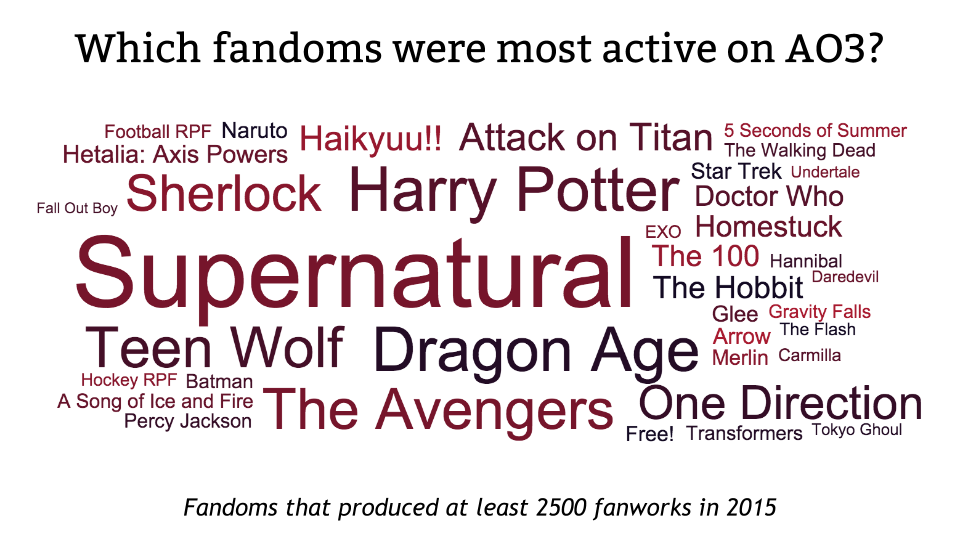
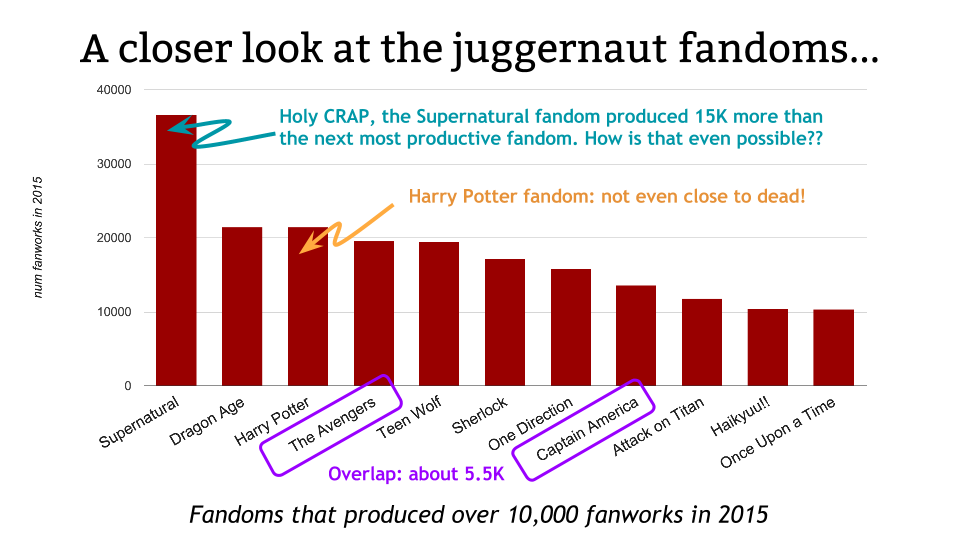
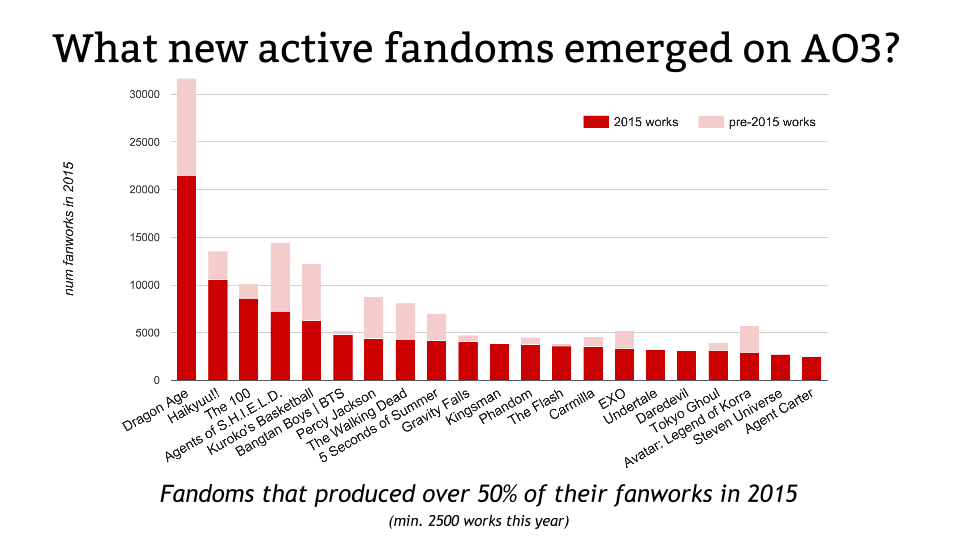
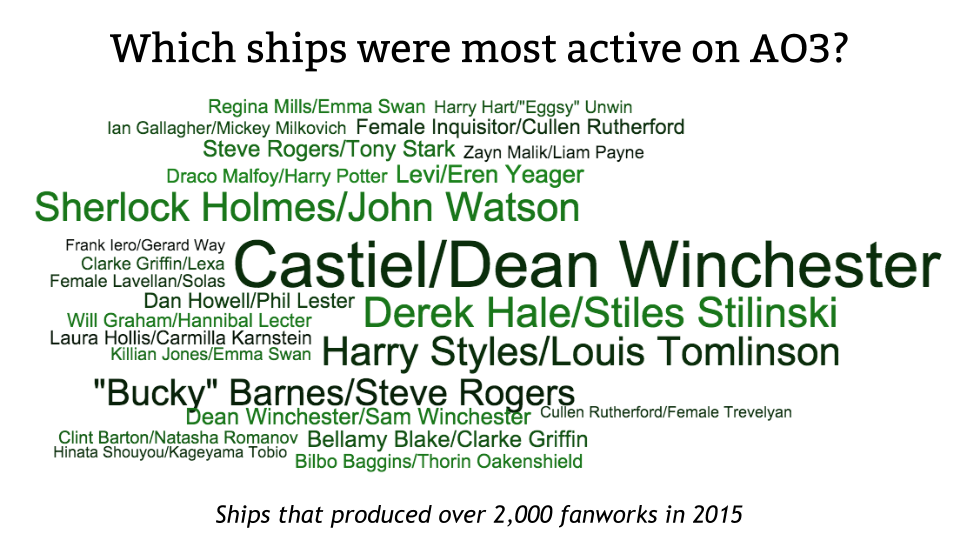
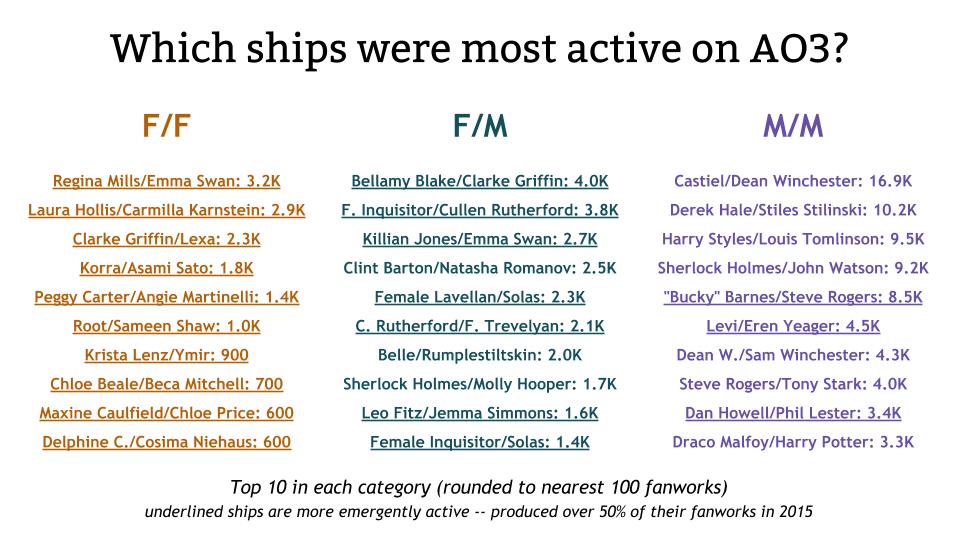
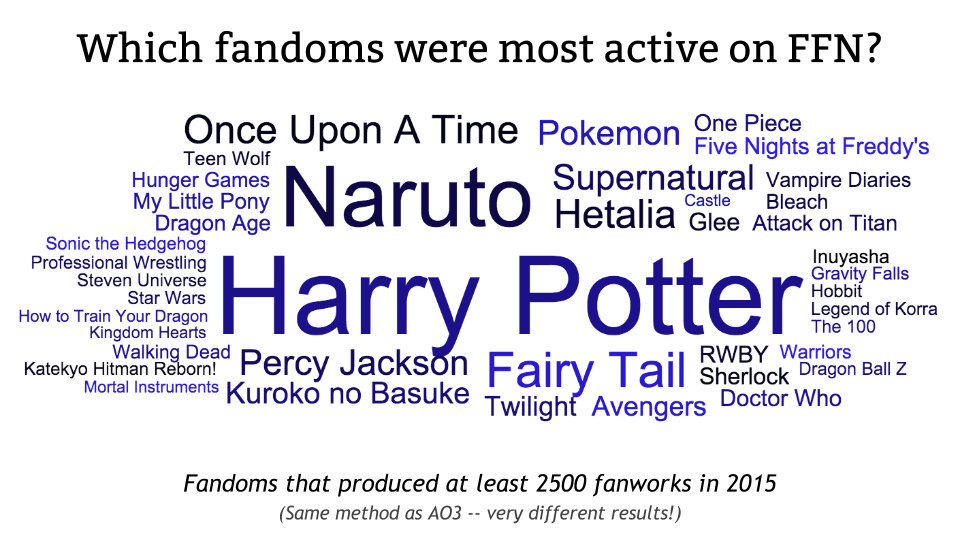
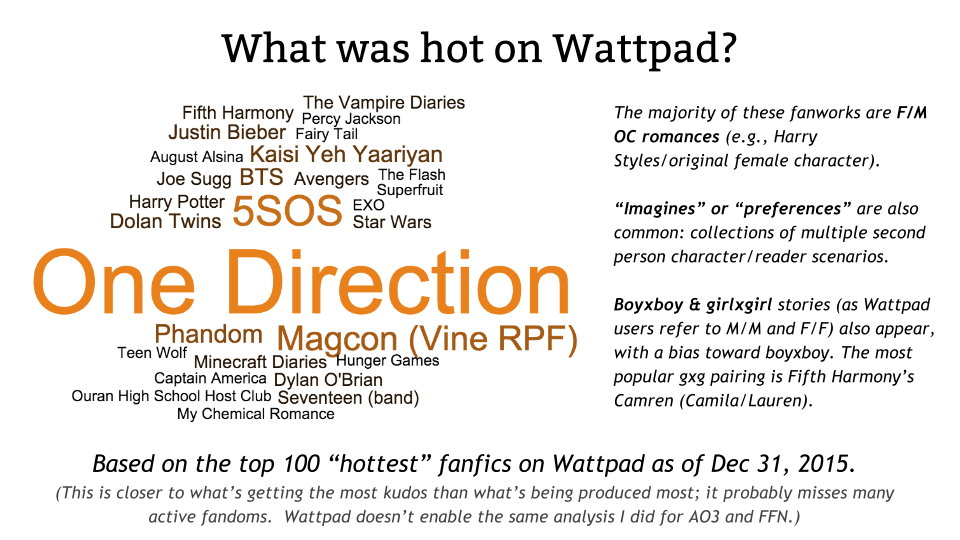
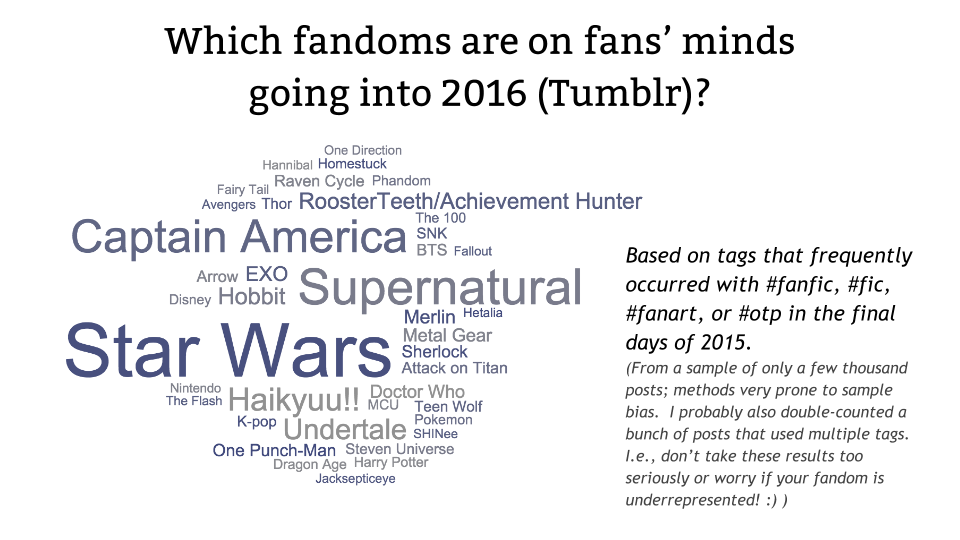
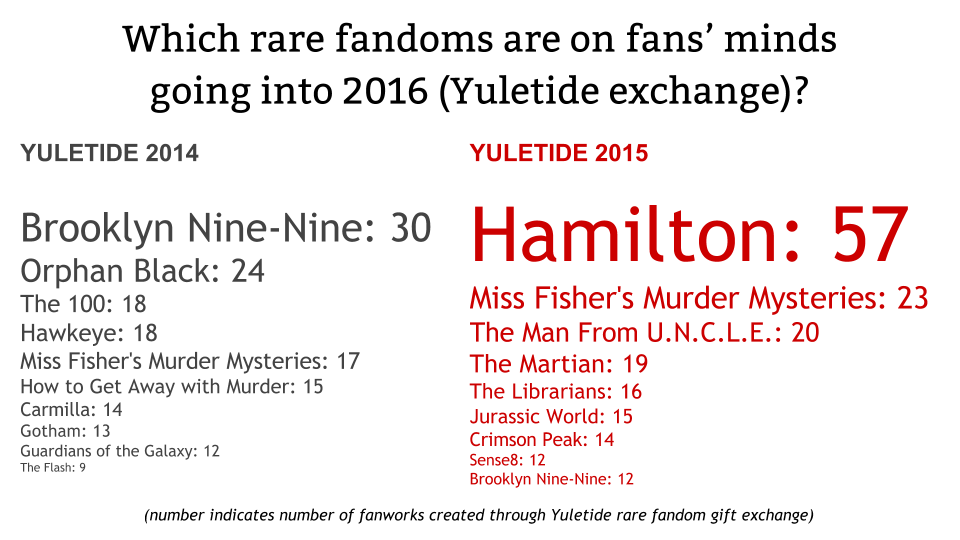
So, yeah… partly inspired by @elizabethminkel and @flourish of @fansplaining talking about the Year In Fandom in their most recent episode, I maaaaaay have gone kind of bonkers overboard in trying to do a “quick” stats look at what was popular this year. :) A few notes below the cut.
when you’ve been in a fandom so long you no longer care about the dramas
When you’ve been through enough enough fandoms to ignore the same drama over and over again.
OMG a million times this! Especially the second one. The same bullshit starts up in every fandom given enough time. I just let it pass me by.
When you’re just doing your own thing and trying to have a good time but unexpectedly wander into the drama and now you’re just trying to avoid and survive it.
I’m always the one earnestly trying to explain why it’s silly to re-enact the same drama from HP fandom circa 2003 or fight that fight we’ve been having since early zine fandom–even though all that ever leads to is people getting huffy and wanking twice as hard. I just can’t help myself.
It’s like every couple of years a new generation has to invent shipping wars.
And kinkshaming and the many ways of justifying liking problematic things while shaming other people for sharing your taste and dogpiling people who disagree with BNFs and dogpiling BNFs on every slim pretext because they remind you of The Mean Girls in High School. Yadda yadda.
But I guess most of those are just cover for shipwars when you look closely.
I’ve definitely had it up to here with bullying on Tumblr though. It was bad on LJ, but now it’s even more intense and the only valid rhetorical strategy is an appeal to emotion–never mind logic, facts, or history. (Then again, it gives me joy to see so many other people on Tumblr speaking up about the same thing and being interested in history, so maybe this is just rose-tinted glasses and LJ was equally bad.)
So, yeah… partly inspired by @elizabethminkel and @flourish of @fansplaining talking about the Year In Fandom in their most recent episode, I maaaaaay have gone kind of bonkers overboard in trying to do a “quick” stats look at what was popular this year. :) A few notes below the cut.
 comments