September 2015

ormondhsacker:

Since some people apparently misunderstood what I was trying to discuss - well it started as a rant, but turned into a discussion somewhere along the way - in this post, I shall try to make my point clearer and tag everyone who participated. Whether they want to continue the discussion then I leave up to them.


So in no particular order of appearance: meeedeee, ageorwizardry, doomhamster, bert-and-ernie-are-gay, centrumlumina, impostoradult, flourish

My rant was born of a frustration that every time anyone tries to discuss why F/F fics and female centred fic in general are ignored to the extent that they are, a common argument to shut it down is ‘well, fandom is dominated by straight women so what do you expect?’.

But there’s no evidence to support this claim and a good deal of circumstantial evidence that indicates the opposite might be true. Hence my rant about a reference for the straightness claim.

My interest is not and never was about women who read fanfic as a source of porn, there are problems in this kind of borderline fetishisation but it is not for this post nor did I intend the other post to go in the direction of discussing porn preferences. (Kindly don’t go there with this post. I know it’ll be difficult but please make another post and tag me in it. I’m sick of this discussion getting derailed into smut land). My focus was on all the rest of the fics, the relationship ones, the romantics, the angsty, the plot based action fics and so on, they too get ignored in a way they never would if it was an M/M or even just M/F fic, even when they’re not about people’s OTP.

But for some reason fandom is so obsessed with two white boys bonking that they’re incapable of seeing beyond the porn in fanfic, which raises the question why a space that is supposedly welcome to LGBTQIA people perpetuates the homophobic hypersexualisation of same gender pairing that the rest of society is so eager to do.

My interest in the sexuality of fandom is actually marginal. It could be an interesting thing to examine, but it is in no way high on my list. My one and only interest in it is insofar at this enforced heteronormativity of fandom is used as an argument to shut down discussion. And being of a particularly non-straight sexuality does not exempt a person from perpetuating this mindset - most whom I have seen use it have been identifying as bi or pan, but this is anecdotal evidence - 

The reasons for reading and writing slash (and no, I don’t fucking mean smut I mean fics with same gender pairings that’s what the term slash means, it does in no way exclusively cover smut fics no matter how much homophobes would claim that jeeze) are multiple and varied and no single study could ever remotely cover everything and anyone who claims otherwise is either ignorant of how academic research works or lying. But saying that there should be no protest, no questioning, no examination of why F/F fics are ignored, of why the supposed heteronormativity of fandom is used as an argument to shut a mere attempt at debate down, is further alienating and shoving under the bus those (female) fans who are uncomfortable with these mechanisms, because in doing so they’re being told, once again, that they’re unwelcome in fandom.

As usual, the topic threads are so complex that it is hard to track what is being said. I often feel like we are talking past one another (which, when you read the diverging threads you will understand that we often are talking past one another)

Several questions have been posted and they don’t always intersect
1. Where did the myth start that fandom was comprised of straight women? (history question and answer)
2. Why does the myth still persist? Why are people relying on outdated research?  (history and current research question)
3. Is there new research going on that will give us better data about the makeup of fans (current research question)
4. Are there methodological limits on what kinds of data  we can obtain? (current research question)
5. Does the discussion of why women write slash run the risk of over emphasizing some aspects of our culture (gender politics) and de-emphasizing  other aspects (female sexuality) (sociological /gender politics question)
6.  Even assuming fandom is mainly queer/bi why does femmeslash constantly get sidelined in favor of male/male slash ?(sociological /gender politics question)
7. Does the continued  discussion of fandom’s gender makeup or motivations for writing  slash marginalize those who want to discuss why femmeslash is being ignored? (sociological)

I am certain there are some that I missed or that I oversimplified or linked to the wrong posts. But it may help further the discussion if we indicate what aspect that we’re focusing on.
edited: DW Crosspost

ormondhsacker:

Where exactly do people get this idea that fandom is dominated by straight women from?

No really, source please. Otherwise it’s just a baseless assumption probably heavily influenced by society’s heteronormativity.

Back in the 1970s and 1980s, that was how media fandom presented our sexuality to both ourselves and the outside world  - it was a mirror or reflection of the fact that many gay and bi fans were closeted. It was not until the 1990s that more and more fans felt comfortable enough to start disclosing that they were not - in fact - heterosexual. This too was a reflection of social trends. Today, some studies show media fandom to self-identify around 35% heterosexual and the rest is a combination of gay, bi and asexual: https://www.academia.edu/8805593/A_Notational_Erotics_Locating_Queer_Female_Desire_in_Supernatural_Slash_Fanfiction  I am certain the numbers vary from fandom to fandom and from country to country.  Now why we still cling to the “facts” of 30+ years ago is, as you pointed out, a whole different set of problems.

Interested in Preserving Vidding History?

Between 2009 and 2011, several vidders hosted a series of interviews and in-depth analysis of fanvids. The Vidder Profiles series is now looking for volunteer transcriptionist to transcribe 10 of the interviews. The profiles are short, between 8-10 minutes long. If interested contact:  oralhistoryfandom @ gmail.com

I've had this q for awhile and since I know you (I think?) started in Star Trek fandom I'll ask you. Was there any RPF going on or was it seen as anathema? Was there a small sect that shipped Shatner/Nimoy? What do you think of/where did RPF start?

meeedeee:

cesperanza:

There was RPF but that’s not the same as RPS - I myself do not recall any Shatner/Nimoy but there were these famous RPF stories particularly those where the Enterprise Crew were switched with their actors, like in the SPN episode. Visit to a Weird Planet was one. Galaxy Quest before Galaxy Quest!

In my recollection, RPS existed but was considered to need all these additional special protections (the name changing of Trix/Alex for example) and it wasn’t really until popslash that most people sort of decided it was okay so long as the public persona was sufficiently mediated–I mean, NSync were great for that since they literally framed themselves as puppets: you can’t give fandom an invitation like that, we know what to do with Barbies, right?  I think fandom still –okay, now I’m going to philosophize - but I think fandom is divided and confused on the relationship with celebrity and if anything it’s gotten a bit worse now that you have this blurring of private and public spaces, commercial spaces and fannish spaces, etc. I also–and this is me, my own thing here–but I have my own feminist issues with the objectification of celebrities in certain contexts, especially mainstream ones like photoshoots; one of the things I like about fic is that I see it as an exercise as subjectification rather than objectification, but that’s a subject for another day.

Starsky and Hutch fandom also had some early RPS  in the 1970s but it was very much under the table (keep in mind that a few fans tried to make trouble for the first slash fanzine publishers in Starsky & Hutch fandom so you can imagine how tricky it was to acknowledge RPS).

I know of at least one US slash convention that struggled over whether to allow RPS panels for fear of liability (but apparently live demonstrations of BDSM techniques was fine). Still by 2003 they had RPS panels so the struggle was brief.

A friend did some more digging on Fanlore: there was an early Star Trek RPS story called Shadows in the Rain (1986). It was very controversial.

In 1985, a single RPS story was circulated among fans of The Professionals TV series.

I've had this q for awhile and since I know you (I think?) started in Star Trek fandom I'll ask you. Was there any RPF going on or was it seen as anathema? Was there a small sect that shipped Shatner/Nimoy? What do you think of/where did RPF start?

cesperanza:

There was RPF but that’s not the same as RPS - I myself do not recall any Shatner/Nimoy but there were these famous RPF stories particularly those where the Enterprise Crew were switched with their actors, like in the SPN episode. Visit to a Weird Planet was one. Galaxy Quest before Galaxy Quest!

In my recollection, RPS existed but was considered to need all these additional special protections (the name changing of Trix/Alex for example) and it wasn’t really until popslash that most people sort of decided it was okay so long as the public persona was sufficiently mediated–I mean, NSync were great for that since they literally framed themselves as puppets: you can’t give fandom an invitation like that, we know what to do with Barbies, right?  I think fandom still –okay, now I’m going to philosophize - but I think fandom is divided and confused on the relationship with celebrity and if anything it’s gotten a bit worse now that you have this blurring of private and public spaces, commercial spaces and fannish spaces, etc. I also–and this is me, my own thing here–but I have my own feminist issues with the objectification of celebrities in certain contexts, especially mainstream ones like photoshoots; one of the things I like about fic is that I see it as an exercise as subjectification rather than objectification, but that’s a subject for another day.

Starsky and Hutch fandom also had some early RPS  in the 1970s but it was very much under the table (keep in mind that a few fans tried to make trouble for the first slash fanzine publishers in Starsky & Hutch fandom so you can imagine how tricky it was to acknowledge RPS).

I know of at least one US slash convention that struggled over whether to allow RPS panels for fear of liability (but apparently live demonstrations of BDSM techniques was fine). Still by 2003 they had RPS panels so the struggle was brief.

oneterabyteofkilobyteage:

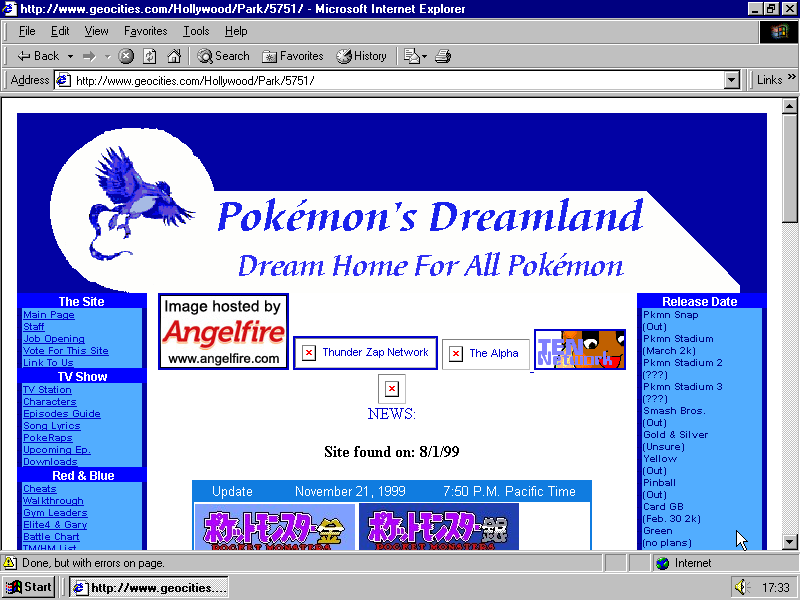
original url http://www.geocities.com/Hollywood/Park/5751/

last modified 1999-11-22 04:48:08

#homepage #Hollywood #1999 #Explorer501 #Windows2000 #800x600  (other fandom sites were parked at Hollywood

A Note about the X-Files Fandom

fierceawakening:

notimpossiblejustabitunlikely:

linzeestyle:

mustangsally78:

dashakay:

stoplookingup:

adieangel:

Note: I wrote this right around the time dashakay wrote her version, and am posting it with her blessing. I’m sorry if they overlap. I swear it’s entirely coincidental.

I don’t want to get involved in the whole drama, but I feel like maybe the OP should learn a little X-Files fandom history. And since my master’s happens to be in broadcasting and X-Files has been my fandom for 21 years, I can help you out.

Keep reading

No idea what this is in response to, but just want to affirm its truth. I was in my early 30s when XF started. I hung around on alt.tv.x-files.creative a lot through the mid- to late-90s, pre-Haven. I communicated with a lot of other fans during those years. I don’t recall ever being aware that any were teenagers. Given that online access was still limited to early adopters, many of whom gained access through their jobs, that’s no surprise. We were absolutely operating under the assumption that the fandom consisted primarily of adults – I remember discussions about rating fics to protect ourselves from liability should minors stumble across our work (not to mention the disclaimers we included because of our worries that Fox would crack down on copyright violation). 

And at the risk of stirring controversy, I have to say, older fandom was, on the whole, nicer fandom. While there was certainly some conflict (remember shippers vs. noromos?), much of it was pretty civil, and the worst of it was nothing compared to what came later. I returned to online fandom a couple of years after the relaunch of Doctor Who, and I was pretty shocked at the flame wars, sporking, anon hate, etc. And it only got worse as time went on.

So if anyone is saying us old folks should GTFO, that’s just…amusing. I’ll be over here, enjoying the company of some of the lovely XF fandom friends I’ve had for a couple of decades now, and hoping to make some news ones, young and old. 

Interesting perspective from another OG Phile…

A LOT OF IT HAD TO DO WITH MONEY. I WAS A WORKING ADULT AND HAD TO PLUNK DOWN ABOUT TWO GRAND FOR A COMPUTER IN ‘95. NOT EVERYONE HAD THE ACCESS THAT THEY DO NOW.

I was 13 when I started watching XF, and 14 when my family got our first computer: in the living room, on a 56k modem that could only be used after 10:30 because we had one phone line and my parents have a family business (they do not save people nor hunt things).  I was one of only five, perhaps six fans I knew who (after a fair amount of time) admitted to being under 21, and I was publicly “around eighteen” for a good, long while.

I’m rather finished finding kind ways to say this: fandom is not a youth space.  It is a subculture, a rich one with a very long history, pre-dating your parents, mine, and arguably even theirs (fun fact: the term “fan” was first used derisively to refer to largely female-identifying theater-goers at the turn of the 20th century, in reference to the belief they were ‘taking up seats’ by going to shoes they were not appreciating, only to ogle the actors.  Gee, sound familiar?).  Youth-oriented spaces within fandom are a fairly new construction, enabled by the rise of the internet and the ability of fans to connect with other fans, and share their enthusiasm for the texts they love, at lower and lower entry cost.  It’s a wonderful addition to fan culture but it is a ripple in the pool of fan history.  Fan space is not “youth space.”  There is a good deal of overlap, and it is very possible to make your space consist of only your peer group – regardless of your age.   But it is not a default and Tumblr’s insistence otherwise is absurd, particularly as it continues to utilize the aspects of fan-culture that are, let’s be honest, very clearly the work of older fans, from the OTW and AO3 to the changes in copyright law that allow for the sharing of high-quality gifsetst and fanvids, to a good portion of the fanfic and fanart you consume.

This isn’t to say we shouldn’t be aware of age differences online; we should be conscious of how we handle ourselves in all public spaces, particularly those of us on the adult end of the scale.  But that is exactly what fandom is: a public space.  And one that was built by, and for everyone.  There are other replies to this post that have backed this up with tumblr user-statistics and facts, and I’m not going to do that because frankly, I’m tired of chasing my tail over the absolute obvious:  fandom is not an age-related hobby.  Your younger sibling might be reading that Sherlock story you wrote, but it’s just as likely (if not more) that the last Destiel fic you read was written by your intro to American Literature instructor.  Because you might grow out of wearing that Cosplay Tardis dress in public on a day-to-day basis, but you no more grow out of having a Mulder funko pop on your office desk, or the “Star Spangled Man With A Plan” as your ringtone, than you will your love of listening to glam rock, or buying anything  with subtle rivets, or incorporating doc marten boots into reasonable day wear.  Because, say it with me now: fandom is a subculture.  You don’t “grow out of it.”  It incorporates.

Tumblr will just have to incorporate, too.

I am not really in this particular fandom, but really? People are age-policing fandoms and saying adults should gtfo?

I can’t speak for this fandom, but I have periodically run into young people in Transformers fandom who feel that they can tell older fans that we are making things unsafe for them, and basically expect that we will do whatever they ask.

I think the reasoning is that minors are less privileged than adults, and in that ubiquitous SJ-boilerplate way, one gets told “you are ‘an ally’ to minors, so you need to ‘sit down, shut up, and listen.’”

Which troubles me. I think someone who feels unsafe should absolutely be able to say they do. But I also think that adults should be allowed to create content some people might find disturbing or triggering without ending up on “people to avoid” callout lists.

Like this last part:

“Which troubles me. I think someone who feels unsafe should absolutely be able to say they do. But I also think that adults should be allowed to create content some people might find disturbing or triggering without ending up on “people to avoid” callout lists.”

In Defense Of Fandom

clearancecreedwatersurvival:

Thinking very seriously about spending myWinter Term researching and writing an extended treatise on fandom. Here’s where I’m at with the plan.

I’d start with the historical roots of fan practices (spoilers, everything the Greeks and Romans wrote was fanfiction of The Iliad and The Odyssey fucking fight me. Also Shakespeare wrote a lot of Ovid fanfiction. Also Dante’s Inferno is a self-insert fanfic.). Get distracted for a while about how most of the famous pieces to come out of the Renaissance are either bible or Greek mythology fanart. Then I’d talk about just how many of your favorite modern authors are writing fanfiction, and go a little bit into feminist perspectives on revisionist narratives.

Then I’d go into the creation of modern fan communities, probably talk a lot about Star Trek and zines and cosplay and fan conventions. I’d spend a lot of time talking about the divides in fan communities between transformative fanworks and participatory fanworks and why that divide often causes shaming even within fan communities (hint: it’s often rooted in misogyny. Surprise!)

I’d also like to spend a lot of time thinking about slash fandom and tackling some of the common criticisms therein. Talk about the roots of why people focus on creating queer narratives so often in fandom and fandom as an inclusive creative space that has often served as a safe environment for lgbt fans. But like, I also don’t want to gloss over a lot of the fucked up stuff that happens in fandom spaces (there’s a lot of issues related to transmisogyny and racism and internalized misogyny)

I’d also like to trace, mostly for fun, the histories and implications of some of the weirder fanfiction tropes.

And then, for the real kicker, I’d like to really get into the meat of just how often content creators fuck over their fans. Talk about the way that yes, media with large scale slash fandoms are queerbaited like no tomorrow. Also cover the way fandom and fanfiction and fanart are treated by the mainstream media and how that interacts with the sort of celebrity/tabloid/reality TV culture that defines the entertainment industry. And most importantly the way that content creators shame fan practices, while still relying on the engagement provided by fandom in order to make a profit on their content. Yes. Once again, you guessed it, it’s related to misogyny.

This way, next time someone casually tries to put me down for reading and writing fanfiction, I can throw this at them instead of being stricken by the urge to forcibly remove their head from their body.

So yeah, if you have any suggestions for resources, tropes, fandoms, interviews, books, people, perspectives, intersectional social justice theories, or weird fanfic pairings you think I should include, hit me with them. 

Also feel free to reblog this so I can get a wider variety of perspectives. 

What do you think?

But yeah, you don’t wanna piss off the old XF fans. They fought the fandom Reavers of early internet days. They’re freakin’ SEASONED.

http://badforthefish.tumblr.com/post/128800978786/forgive-my-snippage-but-adies-xf-fandom-history

olderthannetfic:

Dear VCR vidders, you will be happy to know that some things NEVER EVER DIE. ;D

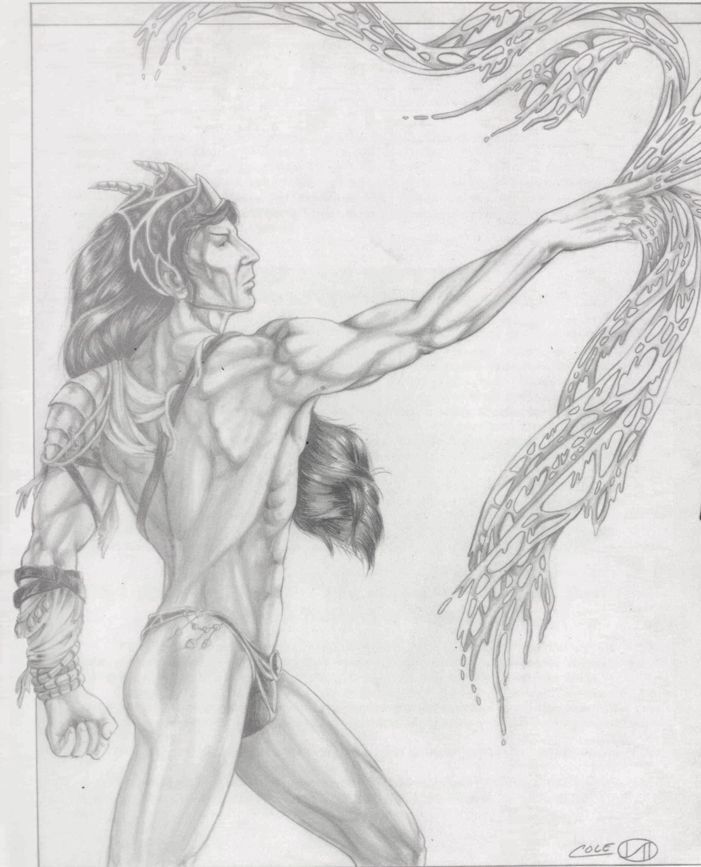
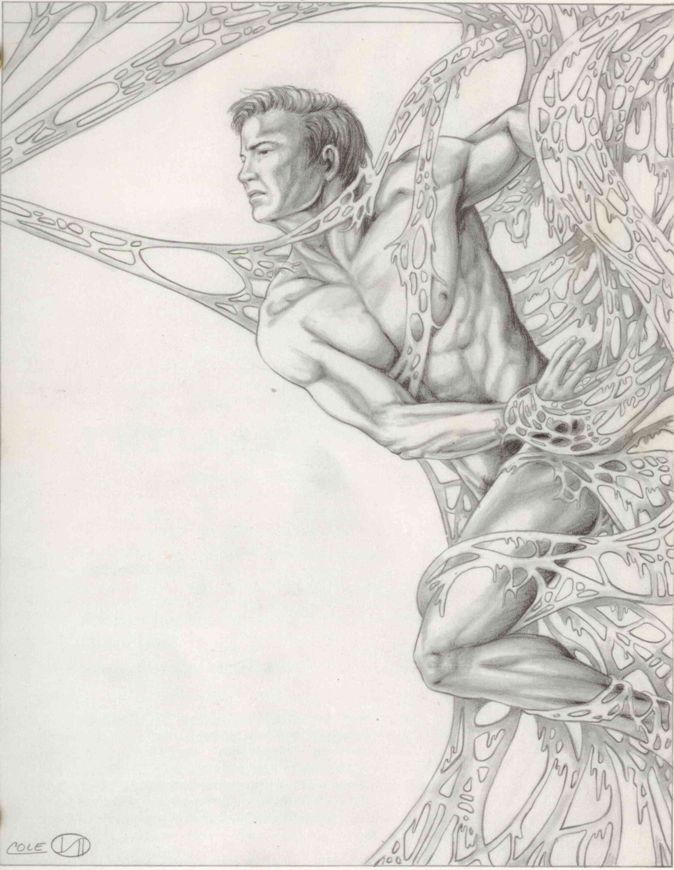
back cover T'hy'la #12 by Marilyn Cole

front cover T'hy'la #12 by Marilyn Cole

                                  Interested in reading K/S fanzines? 

             The US K/S Press Fanzine Library has fanzines to loan.

The K/S Press is a free monthly newsletter that any K/S fan can subscribe to by contacting catalenamara

The Press offers two lending libraries - one in the US and one in the UK.

The US librarian has run the KS Press Fanzine Library for many years. She knows the zines very well and can assist new readers, guiding them to zines that will be just what they’re looking for. To borrow from the library, you need to become a K/S Press member.  There is a small yearly fee charged to use the library.  Here is a listing of the US Libraries holdings.

Why The Library?

Although the library does not lend out zines that are still in print, there is a whole legacy of zines available.  Zines with art and poetry.  Zines with stories that will never be published on the internet or archives such as AO3 or The K/S Archive.  Classics such as Courts of Honor that may be difficult to read off of a computer screen. 

Borrowing

The US library will mail up to three zines for a period of five weeks; a week to read each zine plus a week at each end for mailing.  They usually mail zines at the Media Mail rate, which is the cheapest way, but of course will mail at any rate the borrower wishes.  When the zines are returned the postage costs to get the zines to the reader are returned as well. 

The Chris Soto Memorial Library

The US KS Press librarian also administers The Chris Soto Memorial Library which consists of tapes and professional books about Star Trek including all the episodes and the animated series. All titles in the zine library including hard-to-find gen zines galore, are printed each month in the KSP.

Questions?  Contact Carolyn Spencer @ Carspence @ aol.com (please contact catalenamara first as you need to be a member of KS Press in order to borrow from the library)

*The covers for T'hy'la #12 merge to form a panoramic view of Spock spinning a web around Kirk. Artwork by Marilyn Cole

When someone is making money from fan labor, there is always an opportunity for censorship. When fans have to depend on someone else, that someone else might take something down that they don’t like, and we don’t have to think too hard about why they might not like it—maybe they won’t like it for copyright reasons, maybe they won’t like it for trademark reasons, maybe they won’t like it for content reasons, maybe they won’t like it for personality reasons. But there’s a sort of personal autonomy element to fandom that I think is a really important thing to preserve. Maybe not the only important thing to preserve, but a thing that matters, and I think that’s part of what mattered to the [Organization for Transformative Works].

Betsy Rosenblatt in the newest episode of fansplaining, talking about some of the driving ideas behind the founding of transformativeworks (via fansplaining)

AO3 = Archive Of Our Own = A Room Of One’s Own   = “noted in its argument for both a literal and figural space for women writers within a literary tradition dominated by patriarchy. “

hevelincollection:

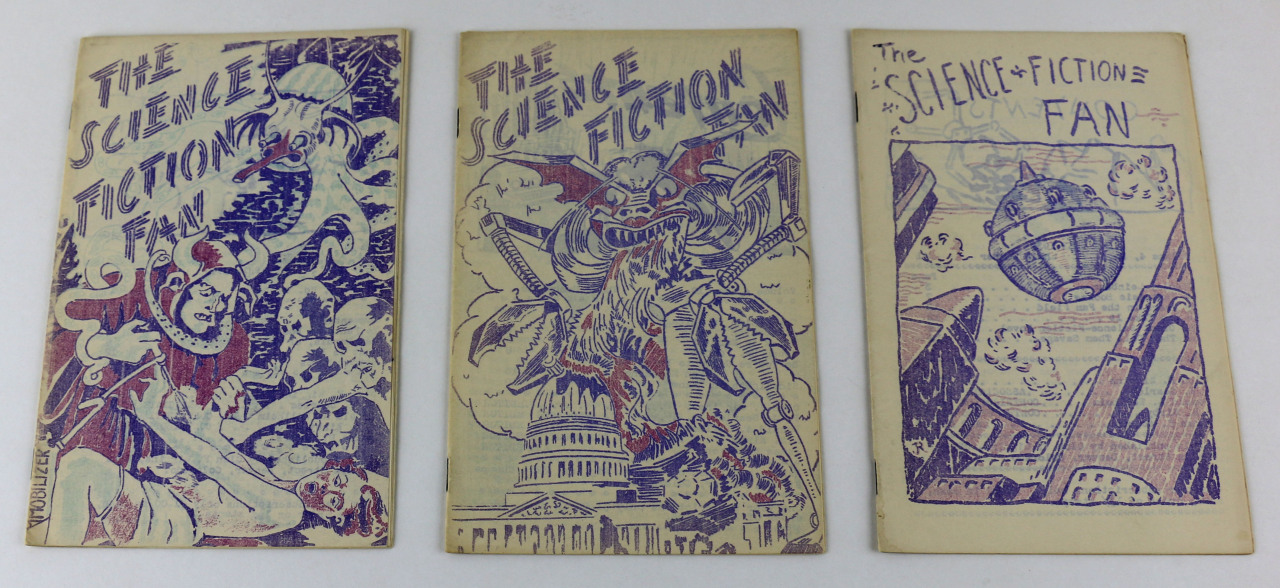
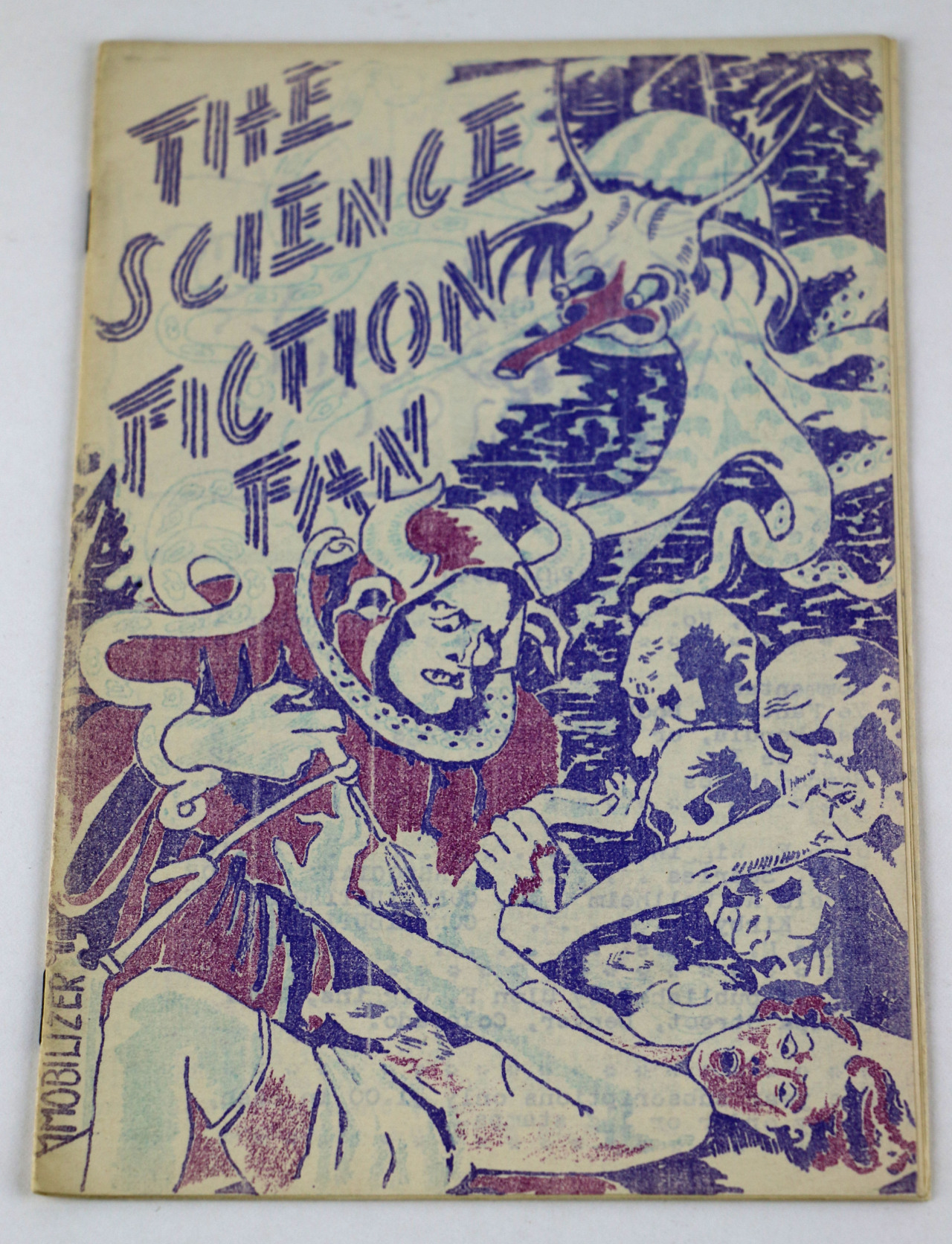
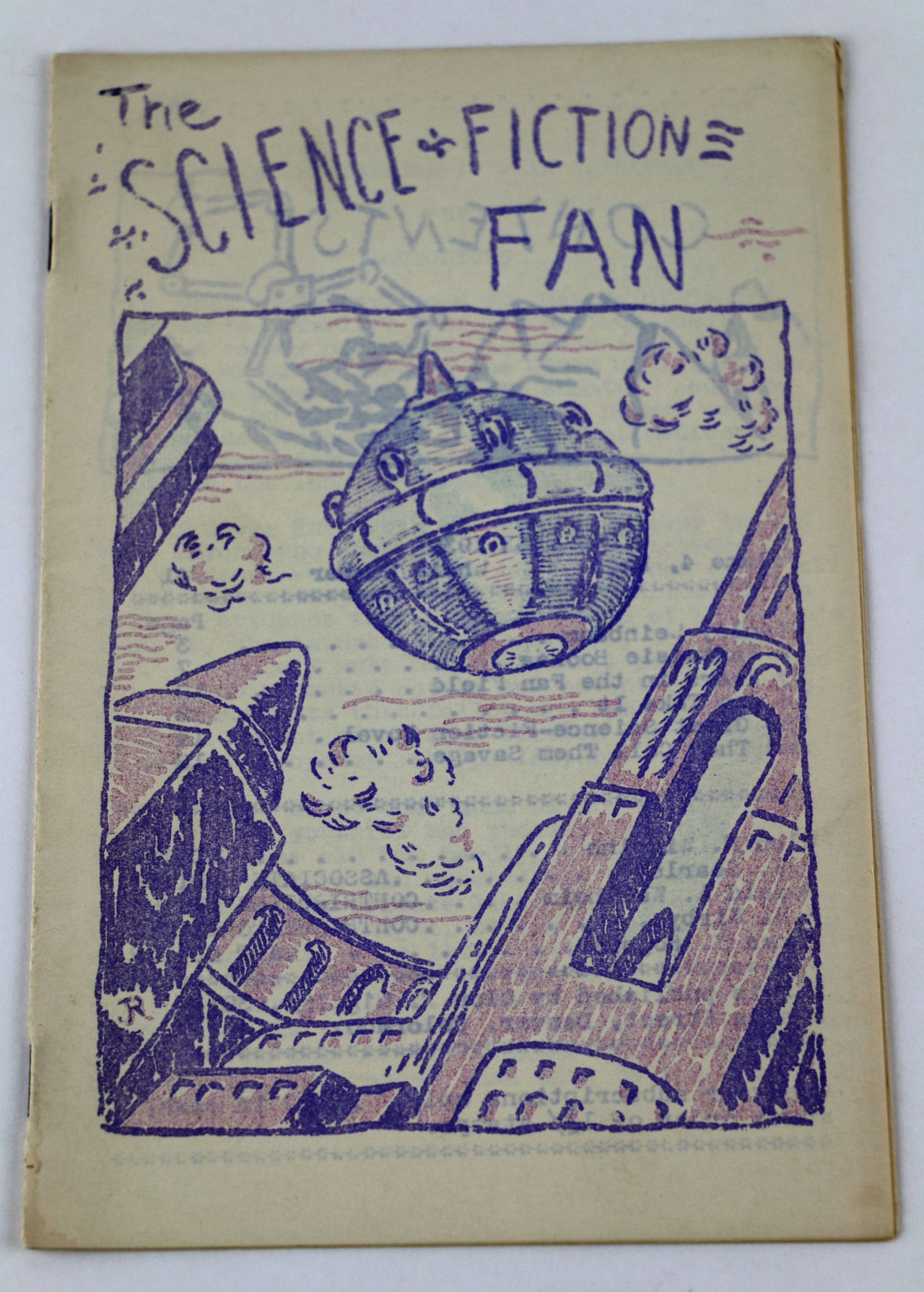
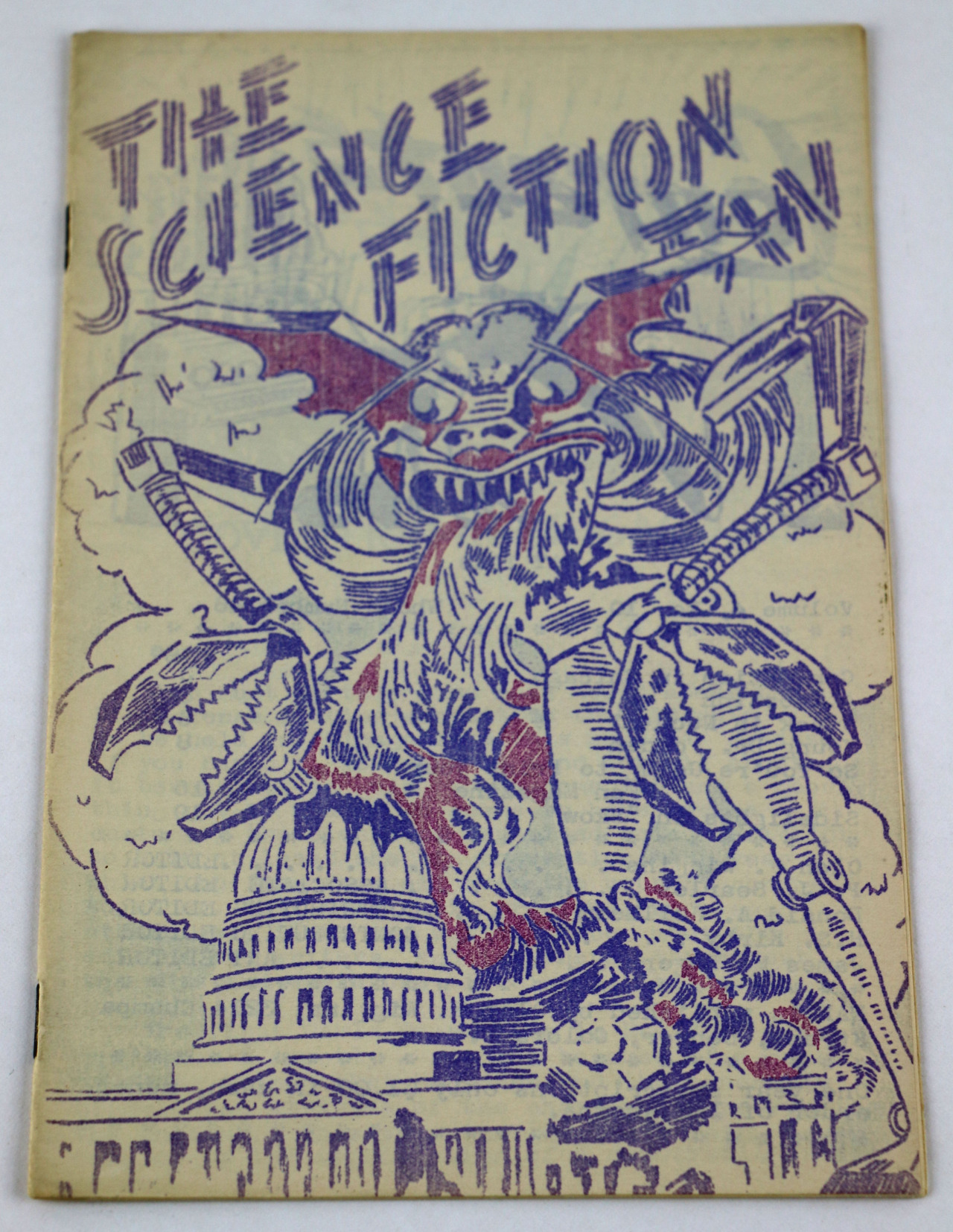
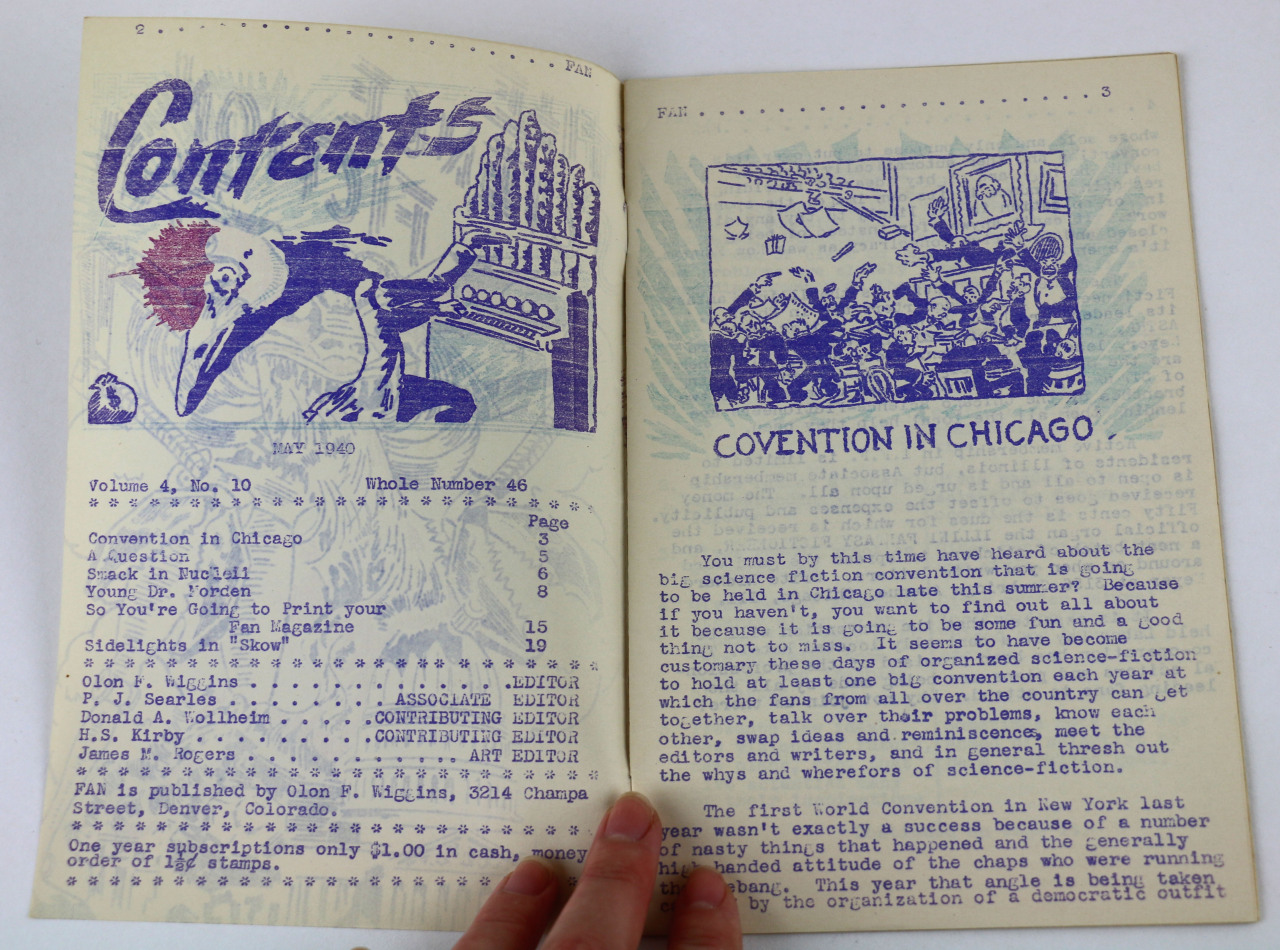
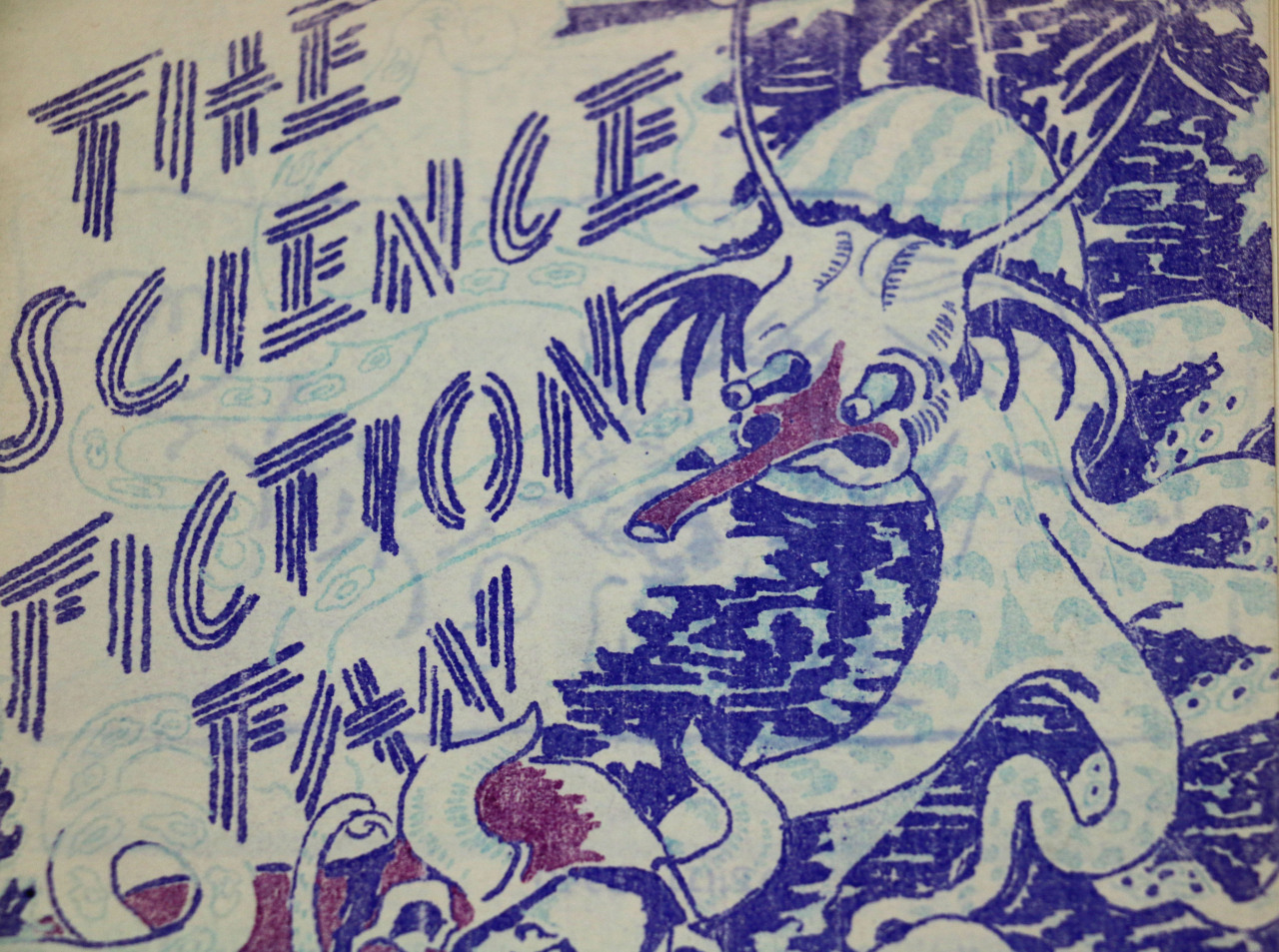
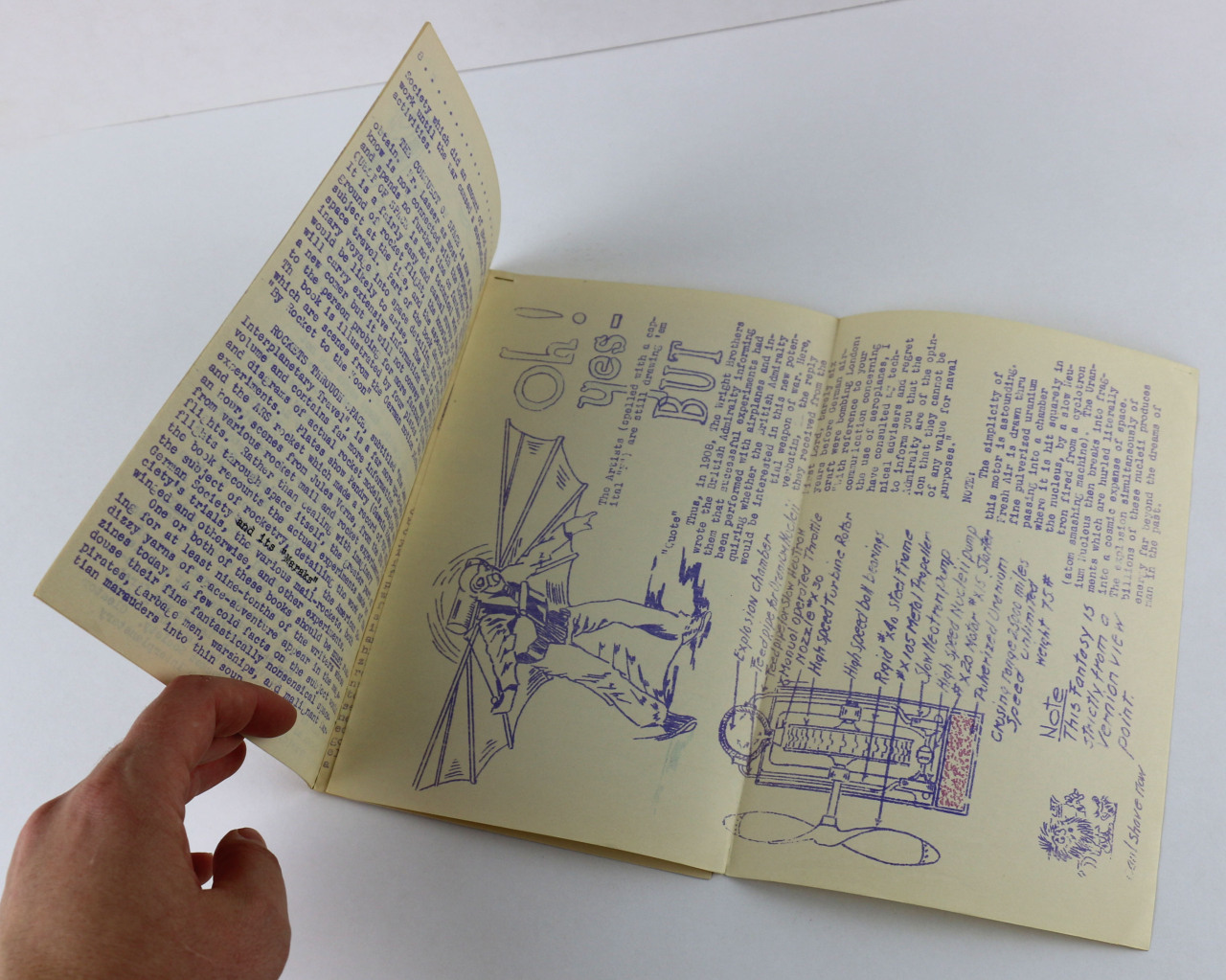
I love these issues of The Science Fiction Fan, ca. 1939-40.  These are nice examples of hectography in fabulous condition.

The Science Fiction Fan. Ed. Olon F. Wiggins. Vol. 4, No.9, Whole 45. April 1940. 

The Science Fiction Fan.  Ed. Olon F. Wiggins.  Vol.4, No.10, Whole 46. May 1940.

The Science Fiction Fan.  Ed. Olon F. Wiggins.  Vol.4, No.5, Whole 41. December, 1939. 

-Laura 

A Note about the X-Files Fandom

destinaf:

linzeestyle:

mustangsally78:

dashakay:

stoplookingup:

adieangel:

Note: I wrote this right around the time dashakay wrote her version, and am posting it with her blessing. I’m sorry if they overlap. I swear it’s entirely coincidental.

I don’t want to get involved in the whole drama, but I feel like maybe the OP should learn a little X-Files fandom history. And since my master’s happens to be in broadcasting and X-Files has been my fandom for 21 years, I can help you out.

Keep reading

No idea what this is in response to, but just want to affirm its truth. I was in my early 30s when XF started. I hung around on alt.tv.x-files.creative a lot through the mid- to late-90s, pre-Haven. I communicated with a lot of other fans during those years. I don’t recall ever being aware that any were teenagers. Given that online access was still limited to early adopters, many of whom gained access through their jobs, that’s no surprise. We were absolutely operating under the assumption that the fandom consisted primarily of adults – I remember discussions about rating fics to protect ourselves from liability should minors stumble across our work (not to mention the disclaimers we included because of our worries that Fox would crack down on copyright violation). 

And at the risk of stirring controversy, I have to say, older fandom was, on the whole, nicer fandom. While there was certainly some conflict (remember shippers vs. noromos?), much of it was pretty civil, and the worst of it was nothing compared to what came later. I returned to online fandom a couple of years after the relaunch of Doctor Who, and I was pretty shocked at the flame wars, sporking, anon hate, etc. And it only got worse as time went on.

So if anyone is saying us old folks should GTFO, that’s just…amusing. I’ll be over here, enjoying the company of some of the lovely XF fandom friends I’ve had for a couple of decades now, and hoping to make some news ones, young and old. 

Interesting perspective from another OG Phile…

A LOT OF IT HAD TO DO WITH MONEY. I WAS A WORKING ADULT AND HAD TO PLUNK DOWN ABOUT TWO GRAND FOR A COMPUTER IN ‘95. NOT EVERYONE HAD THE ACCESS THAT THEY DO NOW.

I was 13 when I started watching XF, and 14 when my family got our first computer: in the living room, on a 56k modem that could only be used after 10:30 because we had one phone line and my parents have a family business (they do not save people nor hunt things).  I was one of only five, perhaps six fans I knew who (after a fair amount of time) admitted to being under 21, and I was publicly “around eighteen” for a good, long while.

I’m rather finished finding kind ways to say this: fandom is not a youth space.  It is a subculture, a rich one with a very long history, pre-dating your parents, mine, and arguably even theirs (fun fact: the term “fan” was first used derisively to refer to largely female-identifying theater-goers at the turn of the 20th century, in reference to the belief they were ‘taking up seats’ by going to shoes they were not appreciating, only to ogle the actors.  Gee, sound familiar?).  Youth-oriented spaces within fandom are a fairly new construction, enabled by the rise of the internet and the ability of fans to connect with other fans, and share their enthusiasm for the texts they love, at lower and lower entry cost.  It’s a wonderful addition to fan culture but it is a ripple in the pool of fan history.  Fan space is not “youth space.”  There is a good deal of overlap, and it is very possible to make your space consist of only your peer group – regardless of your age.   But it is not a default and Tumblr’s insistence otherwise is absurd, particularly as it continues to utilize the aspects of fan-culture that are, let’s be honest, very clearly the work of older fans, from the OTW and AO3 to the changes in copyright law that allow for the sharing of high-quality gifsetst and fanvids, to a good portion of the fanfic and fanart you consume.

This isn’t to say we shouldn’t be aware of age differences online; we should be conscious of how we handle ourselves in all public spaces, particularly those of us on the adult end of the scale.  But that is exactly what fandom is: a public space.  And one that was built by, and for everyone.  There are other replies to this post that have backed this up with tumblr user-statistics and facts, and I’m not going to do that because frankly, I’m tired of chasing my tail over the absolute obvious:  fandom is not an age-related hobby.  Your younger sibling might be reading that Sherlock story you wrote, but it’s just as likely (if not more) that the last Destiel fic you read was written by your intro to American Literature instructor.  Because you might grow out of wearing that Cosplay Tardis dress in public on a day-to-day basis, but you no more grow out of having a Mulder funko pop on your office desk, or the “Star Spangled Man With A Plan” as your ringtone, than you will your love of listening to glam rock, or buying anything  with subtle rivets, or incorporating doc marten boots into reasonable day wear.  Because, say it with me now: fandom is a subculture.  You don’t “grow out of it.”  It incorporates.

Tumblr will just have to incorporate, too.

Is this sort of like ‘damn grannies, get off my lawn’? Because I’m pretty sure Granny planted the lawn upon which the children frolic.

Did fanfic exist before X-files? Or did X-files give birth to it?

How To Find The Best Fanfiction On the Internet 

(link)

Considering that women in gaming receive death threats, that Steven Moffat of Doctor Who talked about how women are only now discovering Doctor who and there weren't any female fans during classic Who days, and how every day we hit new posts from guys talking about how women are "ruining" gaming, scifi, comics, and other genres where women have been uberfans ALL ALONG, how pay and harassment and abuse and erasure of women and PoCs are predicated on fandom amnesia, t's not just academic.

all excellent points about why we need to preserve our fandom history.

Why is fan history so important?

resist-much-obey-little-fan:

There is a saying: That which does not get recorded ceases to exist.  While fandom will (hopefully) be around in one form or another for many more years, without some record of who we were, we run the risk of being misrepresented and dismissed as “those silly women doing silly things”. And being able to point to a 50+ year history of amazing creativity and community may be the best defense against corporations that seek to co-opt and commercialize everything around them. If we want to continue to be free range fans, we may need to show (not tell) the world that we were here and that we deserve to continue to exist without interference from TPTB.

it-is-bugs:

andromedalogic:

direcartographies:

a moment of silence for all the fanfiction lost to the ravages of time, unsalvageable even by the wayback machine, condemned to its final resting place in the deactivated archives of fansites for now-syndicated television shows

#in the name of geocities angelfire and freewebs amen

If you know what that hashtag means, you’re old as balls.  

blessings unto all the fandom archivists and their children.

Our Platforms, Ourselves

I’ve blogged before about how fandom keeps trying to police one another by invoking etiquette when too often that etiquette is shaped over time by ever changing technology and cultures.herehere and hereThe short version: We do not use technology, technology uses us.) 

I came across today a  comment that spoke to my earlier points. It was responding to the ongoing discussion as to why fans today feel they can blog/reblog content without permission or context.

“I think generations and etiquette have much less to do with it than the technology itself. Tumblr, just like DW or any other social media platform, actively shapes what kind of activity they want to occur by the features they offer and those they neglect.

DW, or LJ before it, presents you first and foremost with a large text box. If you were to find a zine picture you really loved, even if it did not occur to you to ask for permission to post it first, you would probably talk about how you found it, wonder who the author was and if they had a local internet presence, etc. Probably you would put the picture behind a cut (also a habit shaped by technology - slow connections and breaking layouts). Conversation would then proceed within the comments of that entry, and the whole thing would stay relatively secluded - this, IMO, naturally feels much more respectful of the artist, no matter whether the person posting thought anything through beforehand.

On Tumblr, you have a photo post, which will always always show the picture first, and any explanation of what this is and why you are talking about it second. This picture will then be shown to wild strangers via the tagging system, and they can appropriate it, and even remove the last shreds of context by removing the "caption” (just note the name of what all that fannish interaction has now become!), with a single click of the reblog button. Any kind of discussion also necessitates appropriation: you cannot comment on anything without first copying it to your own post! With this kind of architecture, even the same person, with the same original intention, produces wildly different results…“


comment count unavailable comments

x-posted to morgandawn | comment there
Anonymous commenting enabled or use OpenID to log in to comment.

Diane Marchant & Kirk/Spock [SF Women of the 20th Century]

transformativeworks:

tabithadarlingsbedroomfloor:

Fanfic, and slash fiction in particular, is a huge part of SF fandom history – and its overlapping communities have mostly been built and shared by women.

Diane Marchant is generally regarded as the writer of the first published fic featuring Kirk/Spock – the ship which popularised slashfic as a fan phenonenon. And she was Australian, to boot!

You’re welcome, rest of the world.

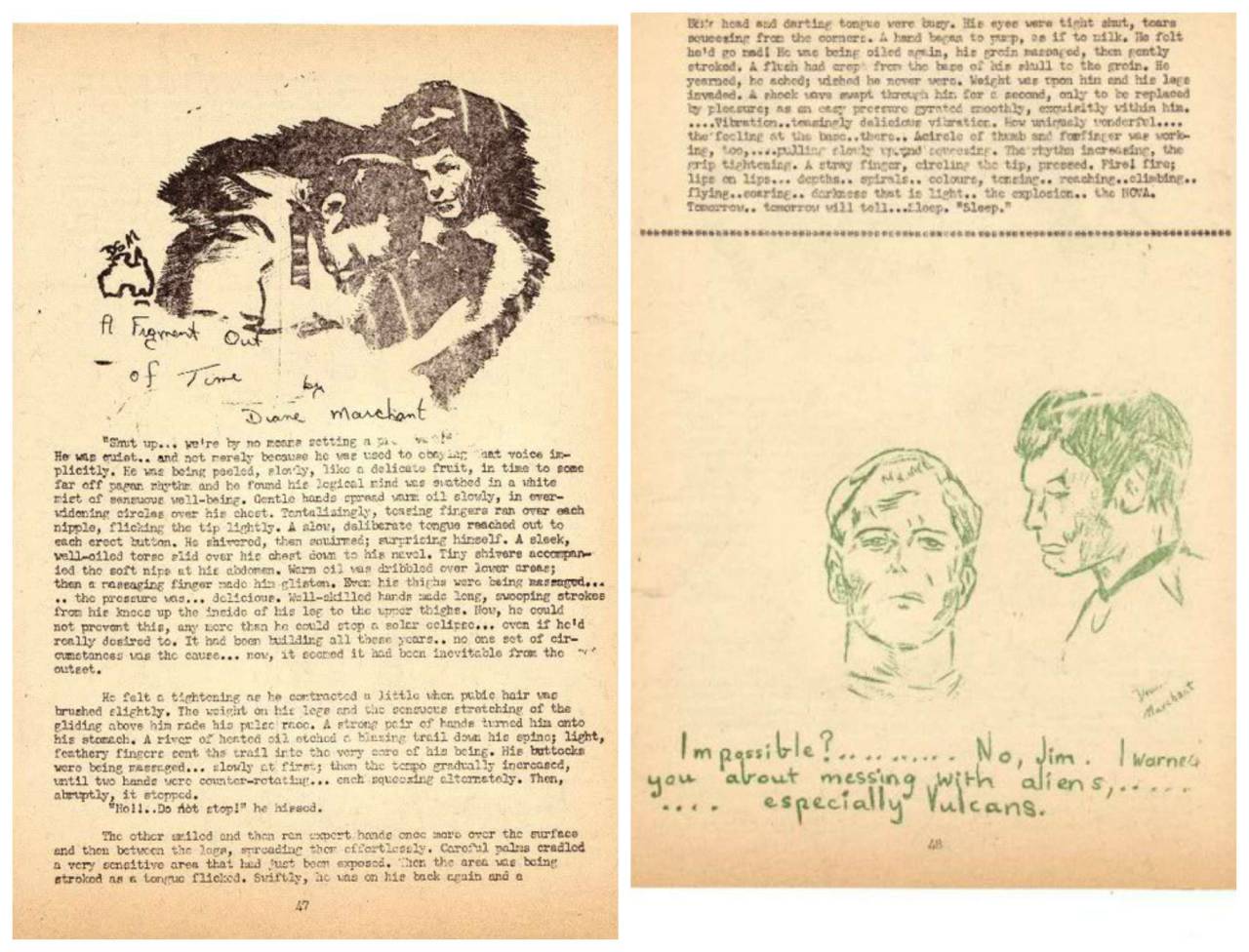
The story, “A Fragment Out of Time,” published in Grup #3 in 1974, contained a steamy sex scene but named no names (and played the pronoun game, so it wasn’t even clearly marked out as a m/m relationship).

Still, the piece was illustrated with a Kirk & Spock picture drawn by Diane, making her intentions fairly obvious, and a cartoon underneath the final page of the story shows Bones saying to Kirk: “Impossible….. No, Jim. I warned you about messing with aliens…….. especially Vulcans.” (The look on Kirk’s face in the cartoon implies he has just been told about the existence of slash fiction. Oh, sweetie.)

Keep reading

Slash fans have been vocal in their support of LGBTQ+ civil rights and representation in media, causes which have seen significant advancement in recent years.  And Kirk/Spock was one of the first modern slash pairings.  Read more about slash on fanlore!

I remember when I finally got a copy of the 2 page story and realized that the art added an additional layer of meaning to the story.  Up to that point, none of articles about the story had ever mentioned the art and the clear signal is was sending [SLASH!!!]  which is why I added the info to Fanlore. One of the many reasons to include as much as we can about the original source text. 

Note: the full page scans are not on Fanlore; they appear to come from an unrelated blog article.

oneterabyteofkilobyteage:

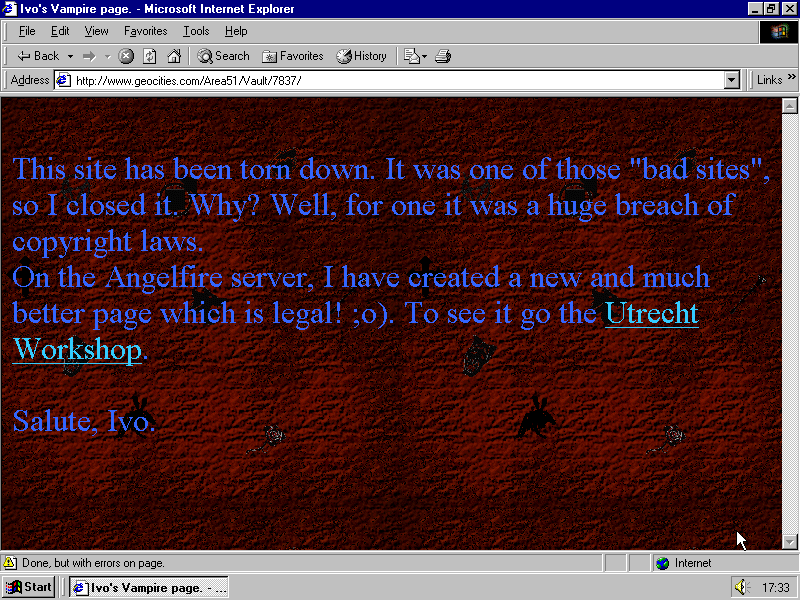
original url http://www.geocities.com/Area51/Vault/7837/

last modified 1999-11-11 09:11:52

Here is the “new” site: http://web.archive.org/web/20010517020221/http://www.angelfire.com/ga2/utrechtworkshop/

Fandom History Resources

comtessedebussy:

At Destielcon, I was on a panel on The Evolution of Fan Fiction (which quickly turned into a panel on simply The Evolution of Fandom) with the wonderful Dori (@obsessionisaperfume), and I was asked by a few audience members afterwards to give them some resources to read more about fandom history, the study of fanfiction, and the like. I promised to make a post, and here, finally, it is, starting with general sources and then getting specific about fandoms. 

General Sources

Textual Poachers - Henry Jenkins 
If you read one book about fandom, this should be the book. Written back in 1992, it was one of the first books to really take fandom (including fan fiction, slash fiction, fanzines, and the like) seriously, to analyze it in a completely respectful way, and to come up with a lot of terminology to talk about how fandom functions. Jenkins talks about how being a fan tends to be looked down upon (and the way that these criticisms are gendered), studies the way that fans combine knowledge gleaned from many episodes put together to create “metatexts” of the show they love, and devotes a chapter to slash, where he very eloquently theorizes the way that women write slash fiction to, in many ways, undermine patriarchal, heterosexual norms of gender, gender roles, and sexuality. Basically, everything you’ve ever heard or suspected about fandom, you can probably find here, said eloquently by Jenkins. 

Henry Jenkins’ Blog
If Textual Poachers isn’t enough for you, then Jenkins also has a blog, where he posts about fandom all the time. He even has a post about Supernatural. 

Fic: How Fan Fiction is Taking Over the World - Anne Jamison
This is an excellent introduction to the history of fan fiction for the lay reader. Jamison’s a college professor who studies fan fic for a living, and she gives a history of it starting in the middle ages and proceeding to the modern day, including talking about how various forms of media (the internet, television, etc…) have influenced the way fan fic is written and the way communities form around it. Also, she interviews a lot of authors and other people who were around in fandom for a long time. 

Fan Fiction and Fan Communities in the Age of the Internet - ed. Kristina Busse
This is like the 21st century version of Textual Poachers: it talks about fandom, the nature of slash, the way that fic is created, gender, masculinity, romance, performativity, all that stuff - but takes into account internet communities and emerging forms of communication and media. This essay collection has all the big names in fandom studies right now.

Organization for Transformative Works’ Journal 
Use AO3? It’s hosted by the Organization for Transformative Works, which also published a journal that studies fandom and fan fiction (called transformative work) in all its incarnation. They even published an issue dedicated to Supernatural back in 2008(?) and all their essays are accessible online, for free, on their search-able website. Search Supernatural and you’ll get loads of hits.

Fanlore
This is the wiki hosted by the Organization for Transformative Works, and if you’re ever in doubt about a piece of fandom history, check there instead. They have extensive pages on most slash ships, the history of slash, shipping, fanzines, etc….and a lot of art and media files. They have the very first slash fic ever written up there.  

As If - Michael Saler
This book is ostensibly about the change in the way in which the imagination was perceived in the 19th century, but really it’s more about the way that ficitonal worlds started to be perceived as “virtual realities” that could be communally inhabited in the 19th century, and the first “worlds” that were examples of this: Sherlock Holmes, Tolkien, and Lovecraft. An absolutely fascinating read. 

Book Series, Publishers, Etc

Popular Culture and Philosophy: These books can be hit or miss, but a lot contain insteresting essays about TV shows and books with accessible philosophy.

SmartPop: I absolutely love SmartPop. They published the above book on Fic, a Supernatural collection of essays called In the Hunt (reviewed below), Star Wars on Trial (a book of debates about issues in Star Trek like sexism, racism, the extended universe, etc..)  and books of essays on pretty much ever TV show ever. They are written to be really accessible, yet still contain really interesting insights into a lot of shows. A lot of the essays have humor and are written tongue in cheek and they don’t just focus on shows; they focus on fandom as well. 

McFarland - They’re a more academic publisher, but they do occasionally put out books about stuff like popular culture and specific TV shows. Check out their website for various titles. 

Intellect Press- They have a “Fan Phenomena” series where they dedicate a book to the “fan phenomenon”/fandom of a lot of shows, books, and fandoms, including Supernatural, Buffy, Sherlock Holmes, Twilight (blech) and a lot of other things. 

Star Trek fandom
Star Trek was kind of the “original” media fandom - the first “real” fandom around a TV show. It was also the fandom that created slash fiction - i.e. if you’re crying over that male pairing, it’s thanks to Kirk and Spock and how very not platonic they were. 

Star Trek Lives!
Written sometime in the 1970s by three of the big names in the Star Trek fandom, this talks about the organizing of the very first Star Trek convention, the making of the show, a visit to the set when the last episode was being filmed, and Star Trek fandom back in the 60s and 70s, when media fandom was just getting started.

Get a Life! - William Shatner
Note: the title is ironic. William Shatner puts together an amazing book after going undercover at conventions (literally) for a year, talking to fans, figuring out why they love the show and are so passionate about it, and writing a book about fandom. This is one of the most respectful and interesting books on fandom I’ve ever read. 

Supernatural 

In the Hunt
Part of the aforementioned SmartPop series up there, it was published right after season 3, and yet despite being published so early in the series has SO MANY great insights into the show, its themes, like family, good and evil, etc….there’s also an article about fan fiction, and an essay that predicts (at the end of SEASON 3) that Sam is basically Lucifer incarnate (which is pretty close to reality imo). 

Supernatural Issue of Transformative Works and Cultures
See above for my description of the Journal for Transformative Works. This issue is dedicated especially to SPN.

Fangasm! 
I”m sure you guys have heard about this book and its companion. It’s written by two SPN fan ladies who are also academics, who write about the difficulty of navigating the line between fandom and academia, and give a really interesting insight into the show. They also go to a lot of cons and blog about it. 

Sherlock Holmes Fandom
With Sherlock Holmes, there is a LOT of history - more than a hundred years, so I really can’t even begin to give a good list of sources. Obviously check out Saler’s “As If” (above) for an overview, and message me if you are interested in a particular area of Sherlock Holmes fandom, because there is just SO MUCH content. 

Names in Fan/Fandom Studies
These are the people doing absolutely spectacular work in the field right now. If you want to know more about fandom history, fan fiction, fandom, and the academic study of it all, just read everything these people have ever written. A lot of them have contributed essays to various journals or essay collections; these aren’t always accessible for free/in the public domain. If you search for these people and explore their bibliography through academia.edu or other sources and find an article of theirs that strikes your fancy, I likely have it saved on my computer so just shoot me an ask! 

This is just to get you started. If you want a very long bibliography of, like, every book on fandom studies and media ever written, check out the bibliography here (this is where I got started). If you need very specific sources, feel free to message me, as I can likely direct you in the right direction or give you suggestions, because it’s honestly impossible to include everything here. There’s a lot of fandoms I missed and a lot of titles I didn’t include, because it can get overwhelming. 

oneterabyteofkilobyteage:

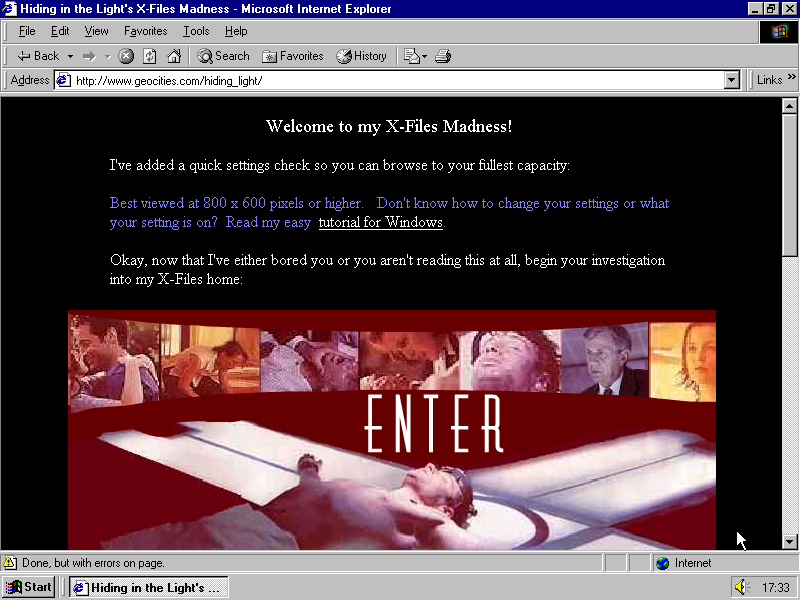
original url http://www.geocities.com/hiding_light/

last modified 1999-12-05 08:08:28

#homepage #vanity #1999 #Explorer501 #Windows2000 #800x600