OMG I am so old. SO OLD. Guys, I have to preface this by saying I am sincerely still as cute as the proverbial button, because otherwise you guys will think I am so old that I might crumble into dust before your eyes, but—GUYS.
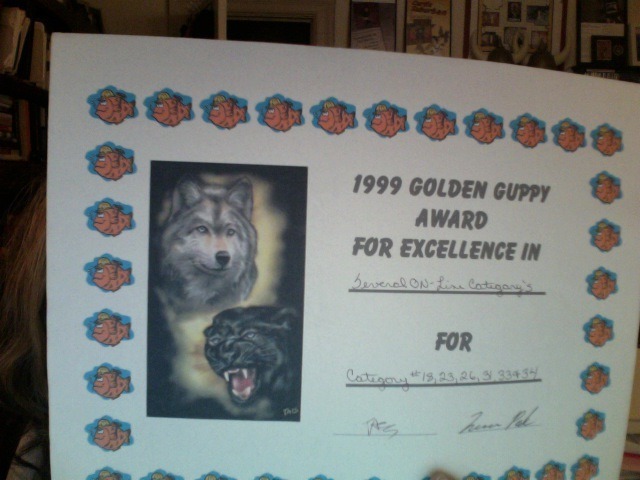
I have been cleaning out my file cabinets this weekend, and I found an envelope of fanfiction awards that I won in the 1990s back in the days when if you didn’t show up at the con THEY MAILED YOU THE PAPER CERTIFICATE. PAPER. CERTIFICATE. TO YOUR HOUSE. I have like a whole bunch of these! —Huggys, Z-con awards, etc. Young ‘uns, this is how we did it 15 years ago or whatever—note that I am the winner above in several “on line” categories because of course there were awards just for zine fic, right? right. down there. Why I don’t have these up I don’t know! (Come on, that wolf/panther ship was fierce!)
Also I seem to have a signed copy of the script of The Sentinel’s final episode—where did I get that?
Yes put them up on Fanlore. If you can send scans I’ll see if we can find someone who has time to add them to the awards pages.
“I have a question. As years go by, paper zines are getting fewer and fewer, as people retire from zine publishing and no one new comes along to keep the fire burning as it were. In addition, with the rise of social media, tumblr, and digital outlets, it’s eventually going to get to the point where there aren’t going to be enough zines out there to have a Fan Q around anymore. That said, will the Fan Q ever update and branch out to include artists and writers who publish to online outlets and to fandoms where zine culture hasn’t existed because it’s too new?”
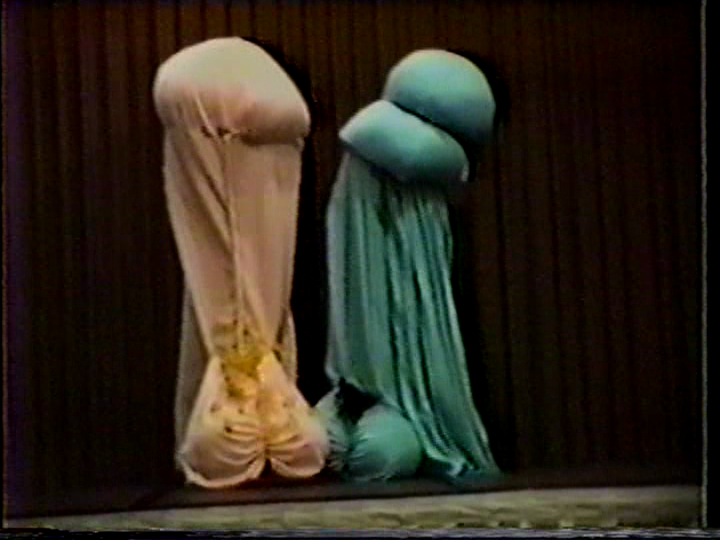
“…..the skit opened to I Am a Rock by Simon and Garfunkel, while Spock drooped with disinterested unhappiness. Then Kirk entered, all jauntiness, to The Village People’s Macho Man. Nobody struts and turns those jaunty shoulders like [name redacted] does! And hey, guess what, Spock perked up a little! Then the guys swayed next to one another during Bread’s Baby I’ma Want You, occasionally rubbing, ah, heads and otherwise expressing the highest of emotions. This produced considerable interest and an expansion in length and energized movement during Let’s Get Physical. Finally, the event reached the heights, and its most logical conclusion, during The War of 1812 Overture.”
IT’S WIKIPEDIA FOR TUMBLR explaining memes and fic tropes WITH MULTI-FANDOM EXAMPLES INCLUDING URLS.
weirdest fucking thing is reading a wikipedia article explaining the “you can break my soul, take my life away” meme, including breaking down how the gifs are separated and what/who is included in each gif.
also attempting to explain basically every AU that has ever existed is pretty hilarious.
OMG I am so old. SO OLD. Guys, I have to preface this by saying I am sincerely still as cute as the proverbial button, because otherwise you guys will think I am so old that I might crumble into dust before your eyes, but—GUYS.
I have been cleaning out my file cabinets this weekend, and I found an envelope of fanfiction awards that I won in the 1990s back in the days when if you didn’t show up at the con THEY MAILED YOU THE PAPER CERTIFICATE. PAPER. CERTIFICATE. TO YOUR HOUSE. I have like a whole bunch of these! —Huggys, Z-con awards, etc. Young ‘uns, this is how we did it 15 years ago or whatever—note that I am the winner above in several “on line” categories because of course there were awards just for zine fic, right? right. down there. Why I don’t have these up I don’t know! (Come on, that wolf/panther ship was fierce!)
Also I seem to have a signed copy of the script of The Sentinel’s final episode—where did I get that?
Yes put them up on Fanlore. If you can send scans I’ll see if we can find someone who has time to add them to the awards pages.
The post generated 73 responses about an author’s “responsibility” to make sure their story did not have a duplicate title to a fanfic already written.
The discussion is an example of some the tensions that the new world of online fandom could have. Fans were no longer siloed in print zines, the fandom was supposedly small enough that all fans were expected to be in each other’s business, and the X-Files world of fandom was still small enough that a repeat of titles was seen as careless and thoughtless.
Post topics mutated into discussion about BNFs, public scoldings, cliquish behavior, and who gets to decide the rules for everyone else.”
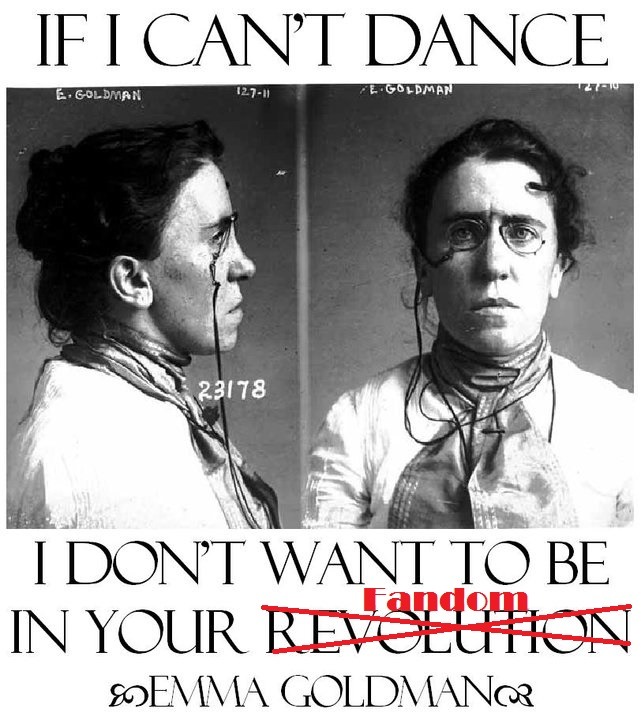
Of course, one fan’s form of dancing may be another fan’s form of trampling.
[From NutureCon]:“Con members are encouraged to bring a piece of fanfic which they have written, whether they’ve ever written anything at all in their lives before, so that we can have plenty of material for the Friday Night Ego-Boost Read-a-thon. At this event, members will read their work aloud while people In the audience will be strictly restricted to smiling warmly, clapping a lot, and shouting "Ooh, that was peachy!” Audience members will be frisked at the door for blue pencils, dictionaries, bad attitudes, or copies of Strunk & White.“”
[From SnobCon]:“At first, we didn’t want to offer any panels at all, since they are generally far too democratic for our tastes. Who wants to listen to the hoi polloi, even if it’s us? But then we came up with a solution: all con members will be provided with "aural delete keys” - a kazoo which, when blown, will alert any panel or audience speaker that her remarks are considered inane, irrelevant, boring, annoying, grammatically incorrect, or just plain stupid. Anytime more than 10% of the audience is blowing kazoos, the speaker must cease and desist.“ ~ Fanlore Essay “Coming Soon To A City Near You” (1996)
Remixing Culture And Why The Art Of The Mash-Up Matters
“He goes on to make the point that “Copying stuff is never, ever going to get any harder than it is today. Hard drives aren’t going to get bulkier, more expensive, or less capacious. Networks won’t get slower or harder to access. If you’re not making art with the intention of having it copied, you’re not really making art for the 21st century.”
The best examples of this kind of creative work are often marked by a reframing of the original narrative, and so produce a fresh perspective on both the source material and the context in which it first existed.
One could argue that remix culture has been around as long as the idea of “culture” itself.
The art form known colloquially as “vidding” for example – editing found footage from TV shows and movies to music – actually dates back some 40 years and has often celebrated, what the theorist Francesca Coppa describes as, “a distinctly female way of seeing.” That progression represents an important engagement with the gender politics of pop culture, specifically as a critique on the historical dominance of the male perspective in dramatic storytelling.
Whatever your feelings about the artistic merits of the mash-up as a form or the efficacy of modern copyright legislation, there’s a far higher set of principles at stake here…..
……A specific sub-genre of this, vidding itself is commonly thought to have emerged from Star Trek fandom, with Kandy Fong’s 1975 slide mixes. The best known of these is an alternative take on Spock’s character set to Leonard Nimoy’s rendition of the Joni Mitchell song Both Sides Now. It was a clear influence on a later piece by T. Jonesy and Killa, a racy and subversive take on Kirk and Spock’s relationship set to the Nine Inch Nails track Closer.
Vidding evolved with the technology, from slideshows (Fong actually used to live “mix” using two projectors) to video recorders to computers. Aided by the evolution of editing software, it has fed into the diverse and vibrant field of DIY media production that includes GMV, AMV, Machinima and Political Remix Videos.
The latter provide critical (and often humorous) perspectives on social issues, the media, economics, gender, culture and the environment and can be seen as perhaps the most recent incarnation of the long tradition of political satire. Again this form pre-dates the Internet by many decades, but has flourished in recent years…..”
But fanfiction as we conceive of it today isn’t quite the same as Rhys tilting the focus of Jane Eyre to the “madwoman in the attic.” Modern fanfic practices are communal, with roots in mid-20th century sci-fi magazines. They’ve grown up through paper zines* and collating parties* to message boards and digital archives, fanfiction.net and LiveJournal,* Archive of Our Own (AO3)* and Tumblr and Wattpad. There are broad conventions that link the millions of people reading and writing fanfiction today (the vast majority of whom are wholly uncompensated for their hours of labor, enormous fanfic-to-traditional publishing deals like 50 Shades of Grey and After aside). Transformative fans share a language — tropes and kink memes* and rec lists and OTPs* — and in any given corner of fandom, stories talk to one another in fascinating ways.
Another Day In The Journal Of Fandom History Preservation
Dear Diary, my DVD recorder died this weekend, in the middle of archiving old Betamax songvids on videotape. “No problem’, I thought, “I’ll get a new one.” But alas they no longer manufacture DVD recorders in the US, so we had to find a used one on eBay (and hope it works).
Then one of my external backup drives began giving me the click clack whir of death. Trips to the freezer only have made it worse. The drive housed static projects and was only partially backed up (in fact I no longer recall all the projects it housed, they were that static.) In the process of trying to recover some of these older projects from an eMac, I reformatted my last spare external drive to FAT32 so it could be read by said eMac. Now the spare drive cannot be recognized on any OS - Mac, PC or Linux. Reformatting it back to NTSF produced the same results. Something about a missing partition……?
We won’t know how many projects were lost until my partner brings home the “offsite” backup drive from work. Yes, with our bandwith limits, we have to resort to the sneakernet.
So I leave you with this:
Never underestimate the bandwidth of a station wagon full of tapes hurtling down the highway.
Decades before 3-D printers brought manufacturing closer to home, copiers transformed offices, politics and art…
And now the fandom/copyright angle:
“This same force catalyzed the world of alternative culture: Fans of TV shows, sci-fi or movies began to produce
zines, small publications devoted to their enthusiasms. The Riot Grrrl
movement of young feminist musicians in the ’90s, appalled by mainstream
media’s treatment of women, essentially created their own mediasphere
partly via photocopiers. “Beyond its function as an ‘office tool,’ the
copier has, for many people, become a means of self-expression,” said
the authors of Copyart, a 1978 guide to DIY creativity.
But all that copying worried traditional authors: Surely they
were losing sales if someone could copy a chapter from a book, or an
article from a magazine, without paying for the original. Libraries and
universities were hotbeds of so much duplication that publishers
eventually took their complaints to the courts—and, in the ’70s, lost.
The courts, and Congress, decided that making copies for personal use
was fine.“It was really a great moment in the late ’70s when it was a
wonderful loosening of copyright,” says Lisa Gitelman, professor of
English and media studies at New York University.
These days, Congress
is working hard—often at the behest of movie studios or record
labels—in the opposite direction, making it harder for people to copy
things digitally. But back in the first cultural glow of the Xerox,
lawmakers and judges came to the opposite conclusion: Copying was good
for society…..”
Decades before 3-D printers brought manufacturing closer to home, copiers transformed offices, politics and art
“Once, 3-D printers were expensive, elite tools wielded by high-end designers who used them to prototype products like mobile phones or airplane parts. But now they’re emerging into the mainstream: You can buy one for about $500 to $3,000, and many enthusiasts, schools and libraries already have. Sometimes they print
objects they design, but you can also make copies of physical objects by
“scanning” them—using your smartphone or camera to turn multiple
pictures into a 3-D model, which can then be printed over and over. Do
you want a copy of, say, the Auguste Rodin statue Cariatide à l’urne—or
maybe just some replacement plastic game pieces for Settlers of Catan?
You’re in luck. Helpful folks have already scanned these objects and put
them online.
As 3-D printing gets cheaper and cheaper, how will it change
society? What will it mean to be able to save and share physical
objects—and make as many copies as we’d like? One way to ponder that is
to consider the remarkable impact of the first technology that let
everyday people duplicate things en masse: The Xerox photocopier…..”
And here is the fandom angle - fans in the 1990s used industrial sized work/university copiers to make copies of slash fanfic. How many times did *that* page with the explicit sex scene get stuck in the copier and how many burns did we suffer trying to pull it out from the machine with its metal parts made so hot because we had copied thousands of pages…..well, I can’t tell because I was never there (cough cough)
Back to the article….
“Copying also infected everyday life. Employees would sneak their own personal items on the machine, copying
their IRS returns, party invitations, recipes. Chain letters began
demanding participants not only forward the letter, but send out 20
copies—because, hey, now anyone could! And people quickly realized they
could make paper replicas of physical objects, placing their hands—or,
whipping down their pants, their rear ends—on the copier glass. This
copying of objects could be put to curiously practical purposes. Instead
of describing the physical contents of a perp’s pockets when jailing
him, police would just dump them onto the 914’s glass and hit copy.The bizarre welter of things being replicated made even the folks
at Xerox worry they had unleashed Promethean forces. “Have we really
made a contribution by making it easier to reproduce junk and nonsense?”…”
If they only knew. Well maybe they did. Fan fic readers and writers are everywhere. Even the “folks at Xerox” I bet.
Okay, when I joined tumblr, I was experienced the backlash against “social justice as a fandom”. I read more and saw it more as a backlash against thinking about media representation or individual identity opposed to collective identity. Then GishGallop happened and I got annoyed. I would like to add the shit I observed, but I am not sure how to while keeping objective.
I would create a page for GishGallop (both as a glossary term and an event) and use quotes and/or links to multiple people to have as many voices as possible. Then slap on the PPOV Needed notice (it is the one that acknowledges that more points of view may be needed). On Fanlore they have adopted the PPOV (Plural Points of View) because when did fandom ever agree on anything? You don’t have to represent all fandom POVs - just yours. Wikis articles are built piecemeal and over time - we don;t expect a perfectly formed, well rounded essay from the beginning.
And last, if you are really far off base, someone will cheerfully come along and work on the page (”Something is wrong on the Internets” is a great motivator).
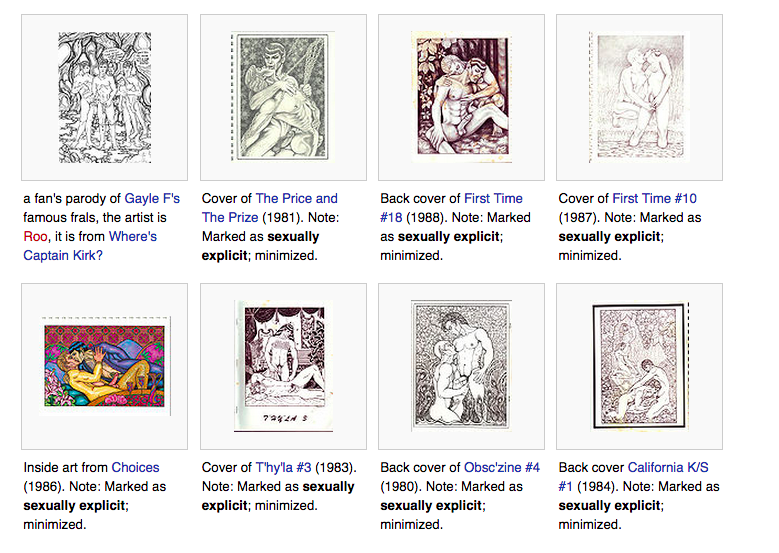
Yikes, I realized it’s been a damn long time since I’ve posted anything fandom-history related. As always, please click the links and you will be taken to the appropriate fanlore.org article, which gives more details and sometimes more art as well!
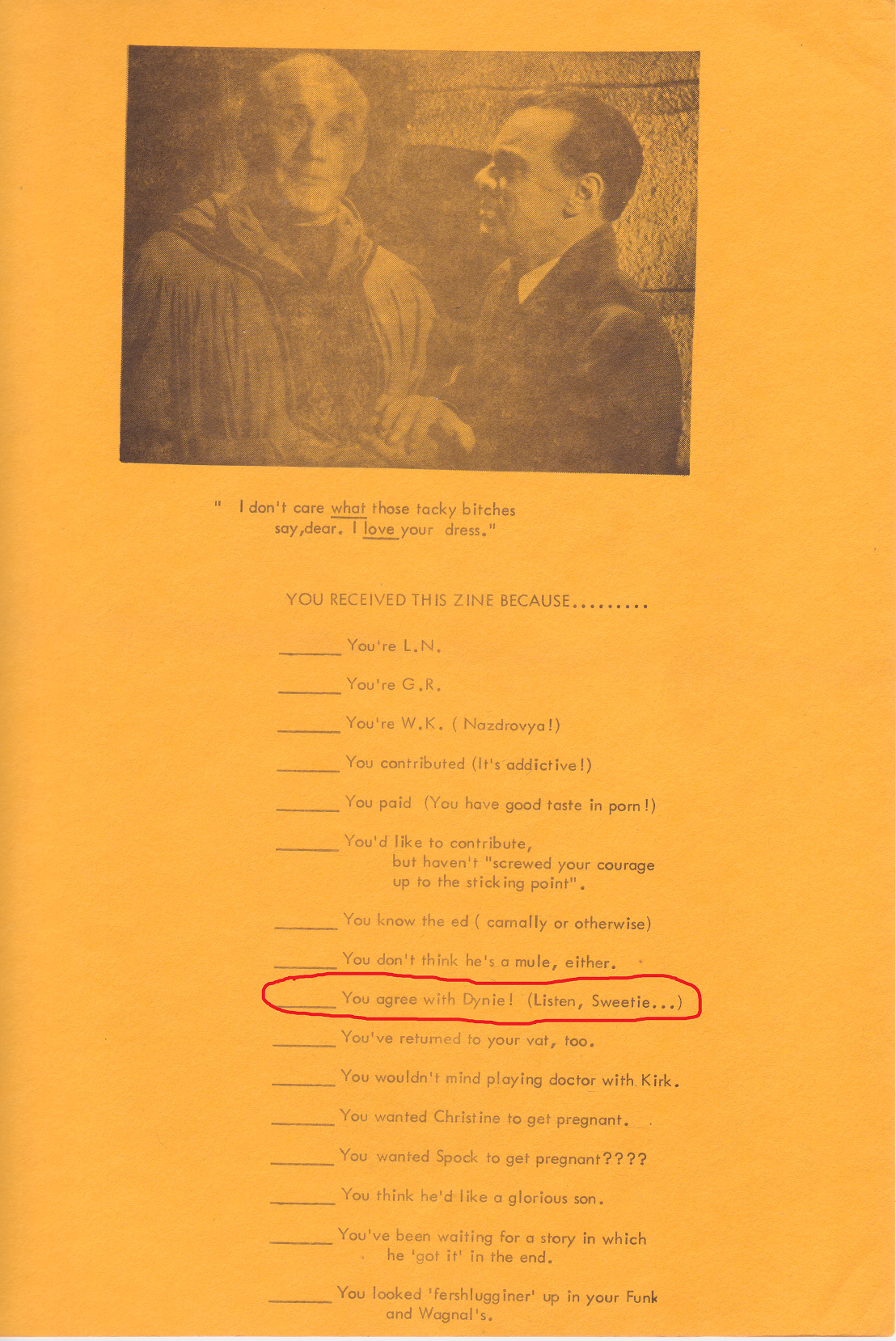
I chose this page and circled one particular “reason” in red (which reads “You agree with Dynie! (Listen, Sweetie…)” because it highlights something very important beginning to brew in Trek fandom at this time: widespread and open discussion/debate of “the premise”, aka the idea that Kirk and Spock’s feelings for each other might be more than platonic- that they might, in fact, be in love with each other. Note that I don’t say “Kirk and Spock might have slashy feelings for each other”; let’s take the time to remember that while the term slash was first created and used to describe fan reactions to the K/S relationship, the word did not come into use until the later 1970s and early 80s.
“Dynie” is short for Diane Marchant, the author of the first published K/S fanfic (with twoaccompanying pieces of fanart!), which was published in Grup 3. The next issue, Grup 4 (the one whose photo you are seeing) contained “Pandora’s Box… Again”, which can be described as something between a proto-ship manifesto for K/S and more general piece of meta about Spock’s psychology and emotions.
Diane Marchant, as well as Carrie Peak and Carrie Brennan, the women who published Grup, was truly breaking new ground, slashing where no fan had slashed before! We owe so much to them!
Keep on (classic) K/S-in’ across the fandomverse, everyone! <3
P.S. I can’t leave without pointing out that mpreg was being discussed in the 1970s >:D
Truly, there is nothing new under the sun.
In her later years, Diane Marchant did not talk much about “Fragment of Time.” It was not until I finally found a copy and saw the illustration that she drew to accompany the story, that I understood how carefully “coded” this first slash story had been. The drawing made it clear that the two characters in the story (who were never named) were Spock and Kirk. But you had to look both at the story and illo carefully to make the connection.
Another factoid: Diane Marchant lived in Australia and was the Australian representative of the Star Trek Welcommitee. She once received an audio letter from Gene Roddenberry which is preserved here.
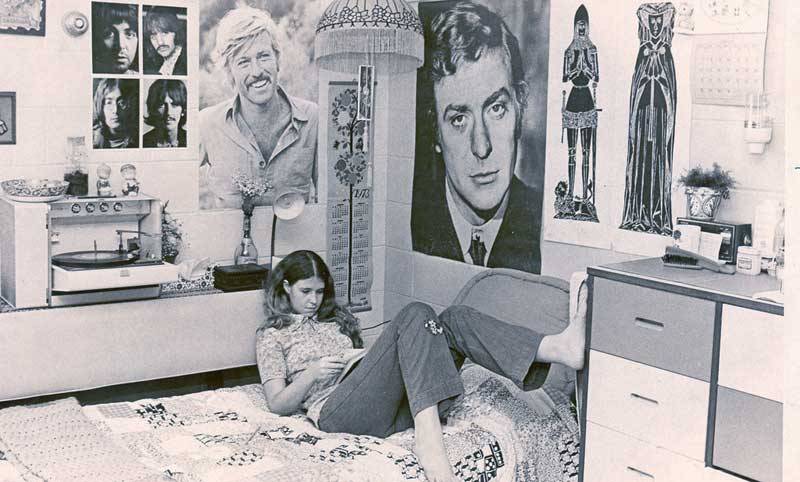
A brief history of fandom, for the teenagers on here who somehow think tumblr invented fandom:
1960s: with the advent of Star Trek, fandom moves into the public sphere for the first time with a television in almost every home, creating a large group of people…
I’ve seen a few comments pop up questing why this tumblr exists, and I expect that we’ll eventually get some accusations of, I don’t know, arrogance? Age pride? Something, anyway.
This isn’t about one-upmanship, though. This isn’t about proving how elder fans are better fans, or waving a cane at…
In three years there will be all these teenagers who were too young to get into PacRim fandom the first time around, and everything will be so new to them and they’ll go digging around tumblr and ao3 and find all these old posts and fics and drawings that we made and…
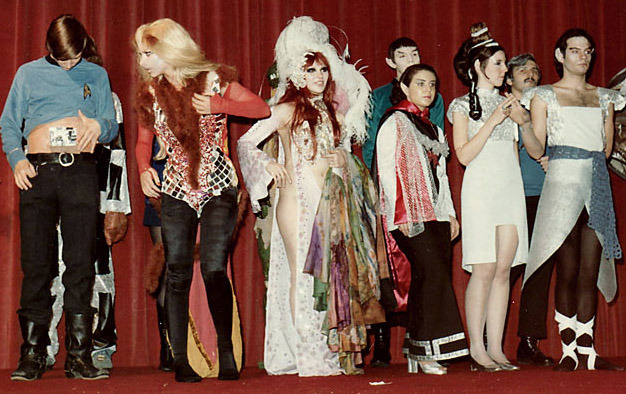
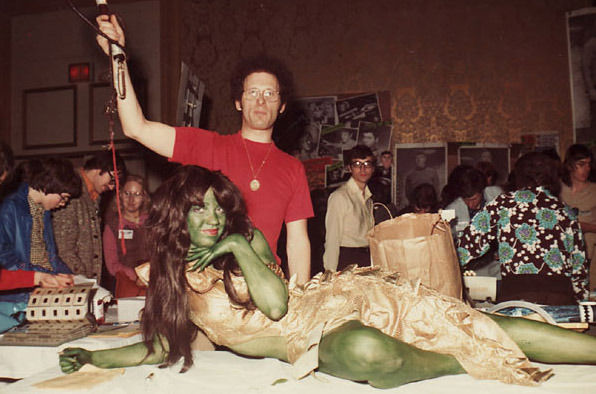
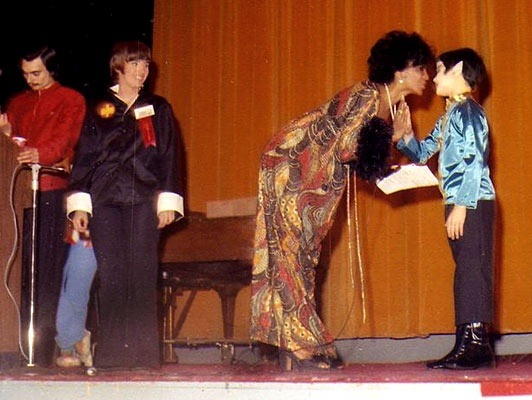
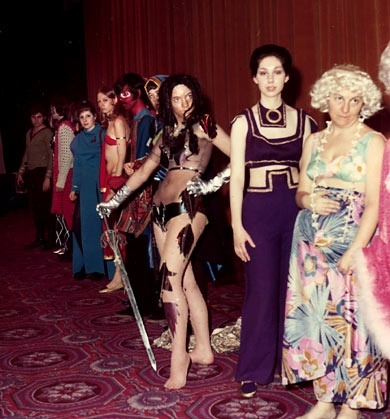
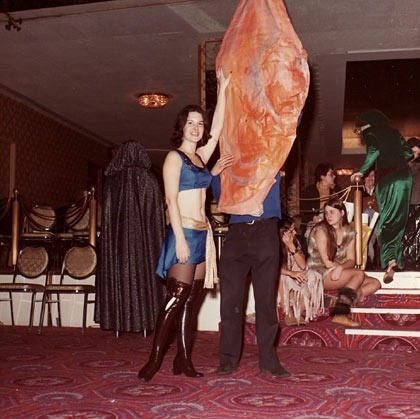
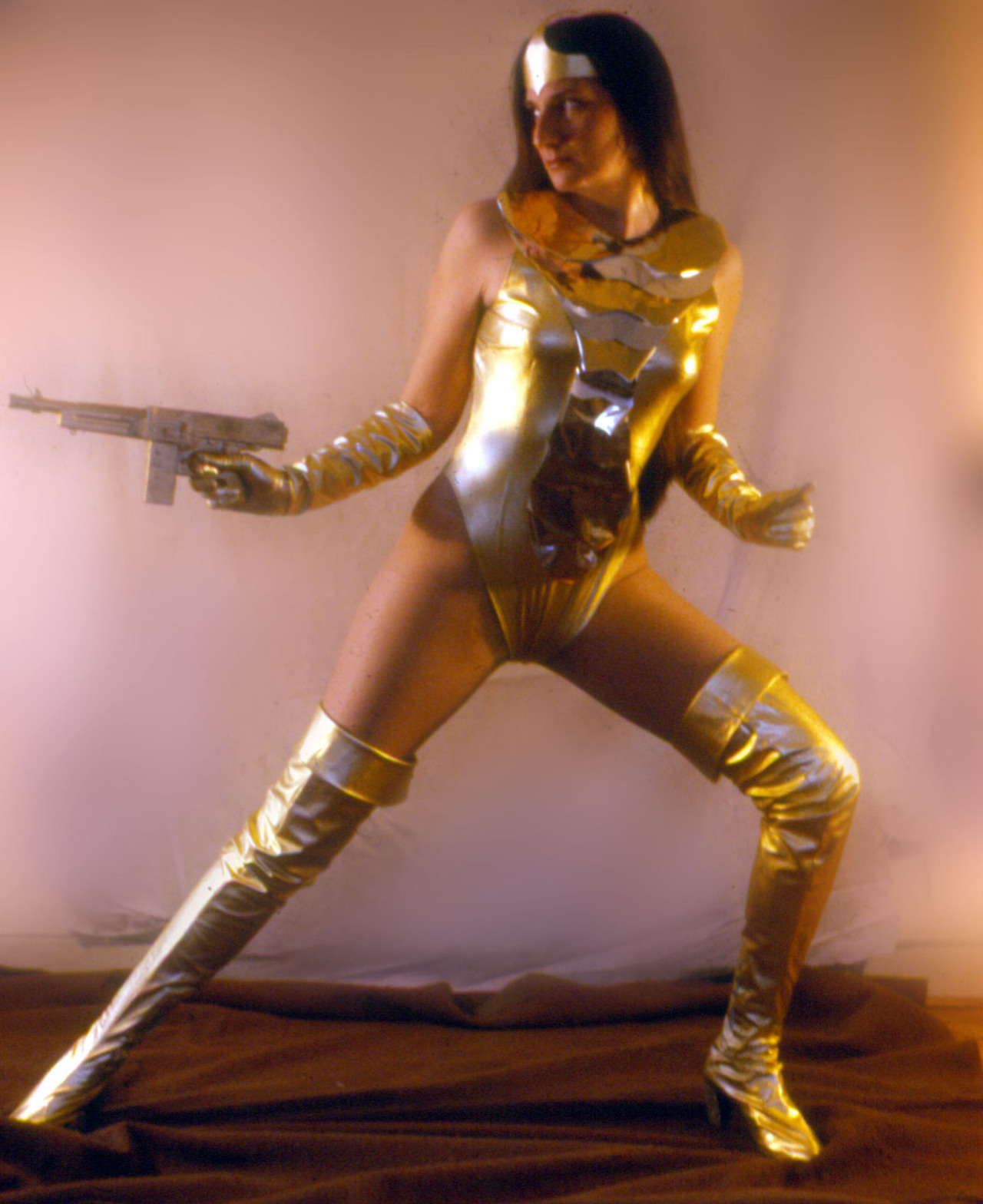
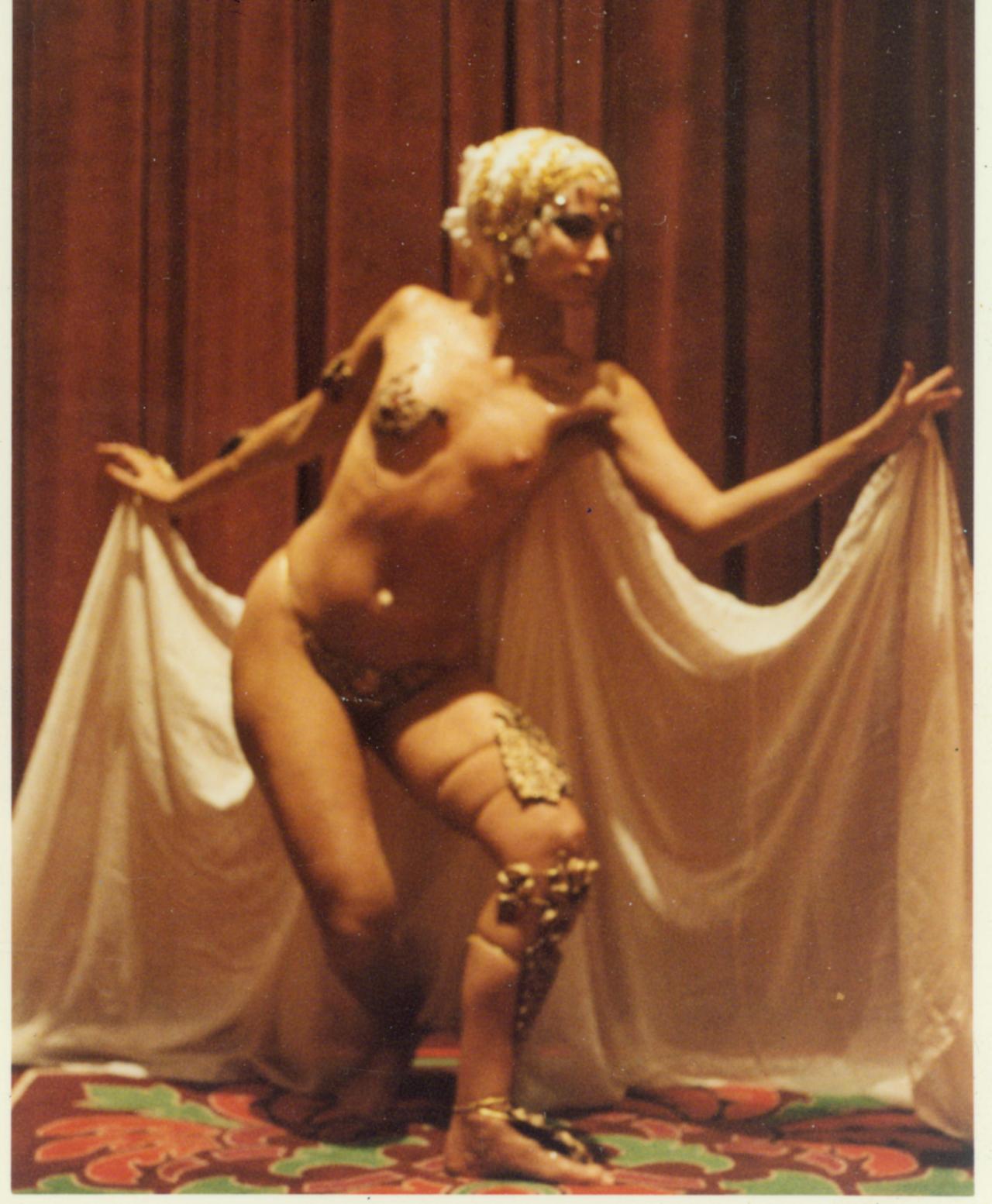
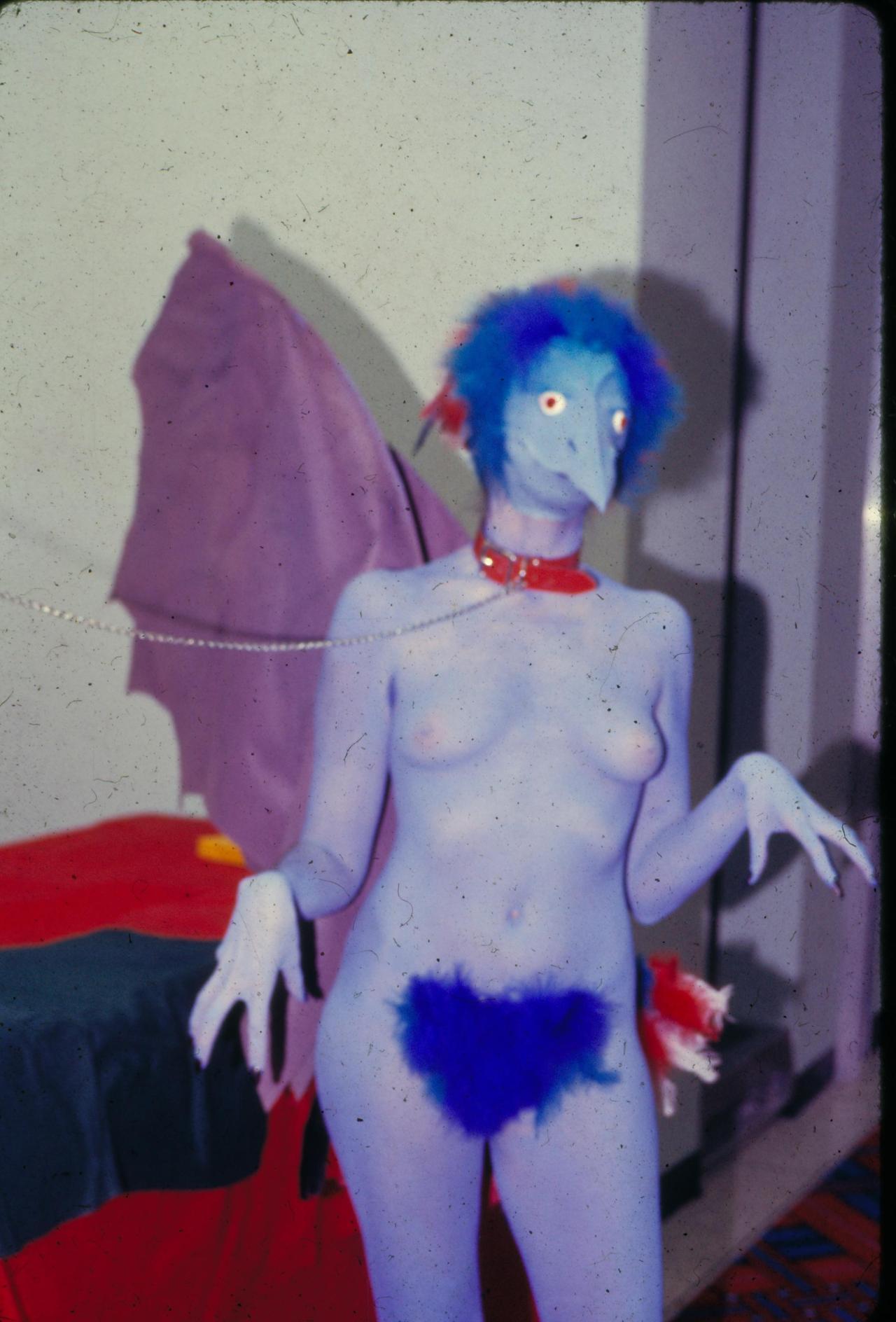
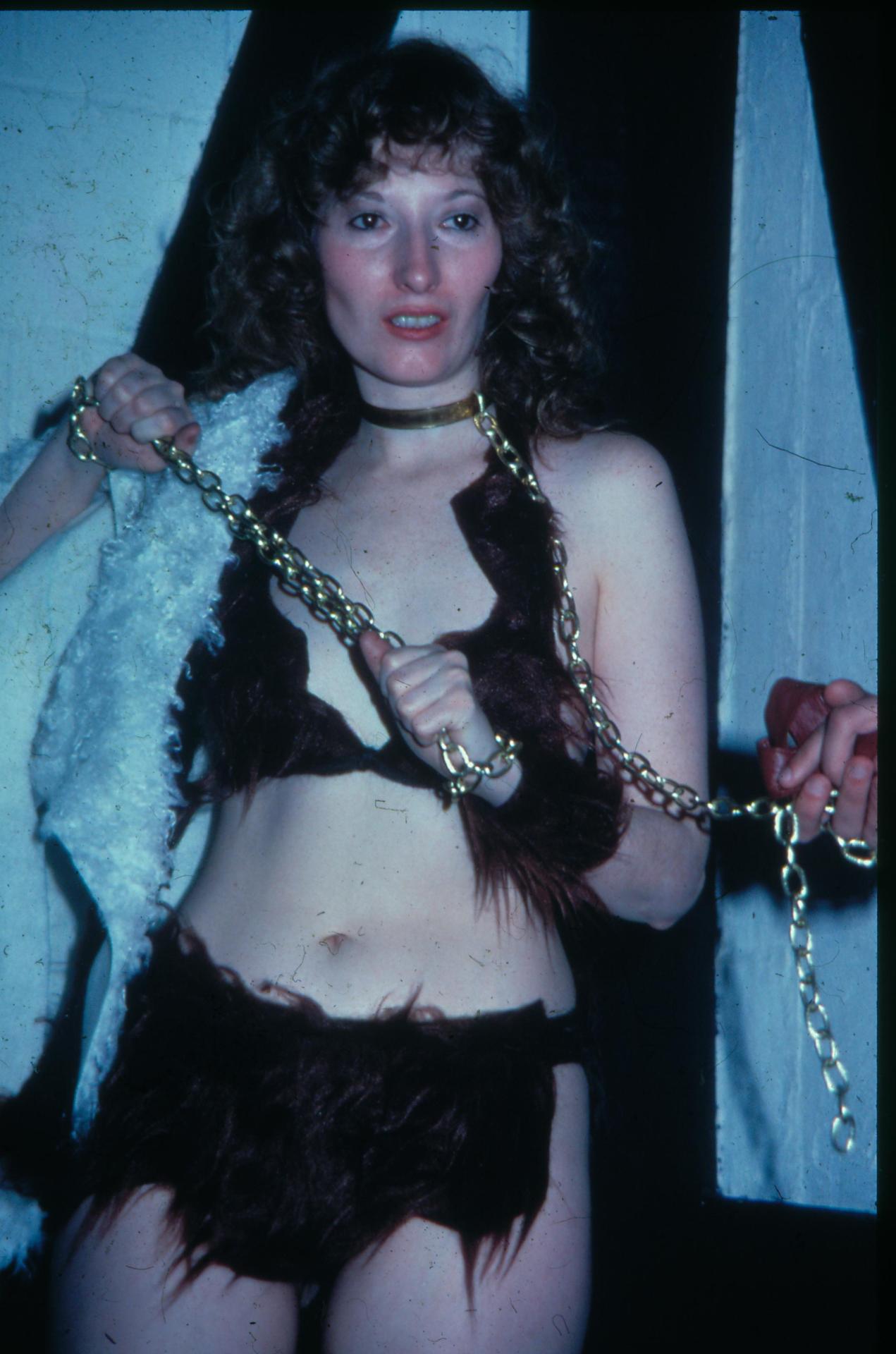
1970’s cosplay from various Star Trek cons and WorldCons. Apparently, you could be mostly nude and still wander a convention freely back then! (Far out!) I recognize T’Pring, an Orion slave girl (with totally grody looking “handler”), a Mirror Universe science officer and then I got nothing. Except Nichelle Nichols giving a prize to a tiny Vulcan. I also like how hotel carpeting is hideously ugly then and now!
The guy at the left of the first photo is certainly Mr. Norman, the bomb-carrying android from “I, Mudd;” and the woman near the right front of the fourth photo in the purple dress is definitely Losira, whose image is used to kill trespassers in “That Which Survives.” (“I am for you, James Kirk.”)
I’m sure that guy at the podium in the red tunic is someone. It looks rather like Khan’s dress outfit, but I’m not sure.
Reblogging for the best Star Trek, the old school cosplay, and historic fandom.